Entryway Organization · THE GUIDE
Buffer Kitchen Counters When the Front Door Opens Near Cooking Areas
In compact urban apartments, front doors frequently swing directly into open-plan kitchen prep spaces without an intervening hallway. This abrupt transition invites street dirt, stray mail, and outerwear directly onto sanitary food preparation surfaces. Creating a physical and functional buffer preserves culinary hygiene while providing the home with an organized transition point. By treating the outer edges of cabinetry as defensive entryway stations, you can redirect daily personal belongings away from cooking counters. Thoughtful layouts create intuitive separation, ensuring food safety and entryway order coexist comfortably within limited square footage.
Jump to the checklist ↓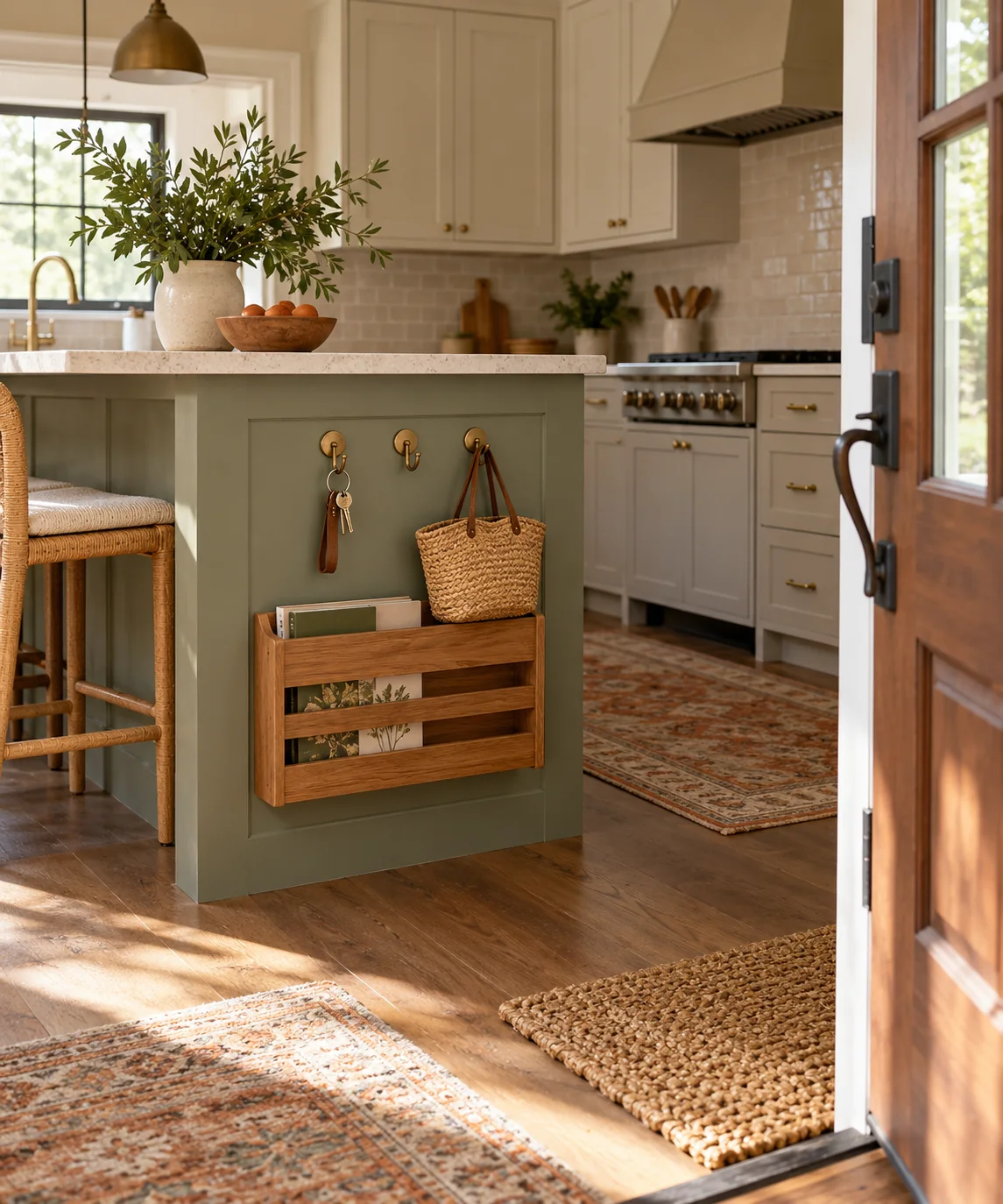
Establish a Clear Functional Boundary
When food prep areas sit immediately adjacent to an entry door, distinct zoning helps protect food preparation surfaces from outdoor debris and household clutter. In tight layouts where adding walls or structural partitions is impractical, designate the section of counter closest to the door strictly as a non-prep transition space. Using a freestanding cutting board, a sturdy weighted tray, or a decorative crock creates an unmistakable visual boundary for food tasks. This clear division provides household members with a recognizable line where outdoor items like keys, bags, and mail must stop, keeping prep surfaces reserved for chopping, mixing, and cooking.
Utilize Cabinet End Panels for Drop Storage
The vertical end panel of a base cabinet or kitchen island can provide functional organization without consuming usable counter space. Removable, adhesive-backed organizers—such as shallow file pockets, letter bins, or non-damaging utility hooks—can be affixed directly to finished cabinet sides. This establishes an immediate resting zone below counter height for daily essentials like lanyards and mail. When mounting accessories, verify the finish compatibility of the adhesive strips and confirm that hanging items remain clear of the door's swing path to prevent accidental collisions.
Deploy Freestanding Upright Dividers
To prevent physical migration of items between the entryway and culinary zones, consider placing a freestanding riser, heavy cutting board on edge, or weighted backboard along the boundary. A low portable barrier physically separates incoming personal effects from food prep areas while catching stray splatters from routine kitchen tasks. Because permanent installations may damage rented countertops or violate lease agreements, opt for self-supporting materials with non-slip silicone feet. Clean both sides of the divider regularly with food-safe cleaners to ensure grease or moisture does not accumulate near paperwork.
Select Enclosed Trays for Mail and Belongings
Loose mail, receipts, and transit cards tend to spread across available horizontal surfaces when a dedicated drop spot is absent. Placing a small lidded box or enclosed bin on a designated transition shelf or counter tray keeps paperwork neat and protected. An enclosed container prevents paper items from absorbing cooking steam, oil droplets, or countertop spills. Periodically recycling circulars and sorting envelopes prevents the container from overflowing onto adjacent food preparation zones.
Manage Entry Flooring and Threshold Clearances
Entrances naturally introduce dirt and grit from outside, which quickly transfers onto kitchen floors if unmanaged. Place a low-profile, washable runner or mat equipped with a slip-resistant rubber backing between the doorway threshold and the kitchen workspace. Confirm that the bottom of the entry door swings freely across the mat without catching or binding. Vacuum and wash the mat according to manufacturer care instructions, keeping street debris contained before it reaches primary food preparation paths.
YOUR STARTING POINT
A little checklist.
Original editorial guidance. Images are AI-generated concepts, not photographs of completed projects. Our sources and approach.
Questions to consider
How can I prevent cooking grease and aromas from settling on coats near the kitchen?
Store outer garments inside an enclosed closet or breathable wardrobe bag rather than on open pegs near cooking appliances. Operating the kitchen exhaust hood on high during cooking helps capture airborne aerosolized oils before they drift toward entry storage.
What clearances should be considered between an entry door and kitchen counters?
Clearances depend on the specific floor plan, local building egress codes, and door swing arcs. As a practical guideline, ensure the door can open fully without striking counter edges, cabinetry, or individuals working at appliances, adjusting transition furniture to maintain an unobstructed pathway.
Can adhesive hooks support entryway items on cabinet end panels?
Removable adhesive hooks generally hold lightweight essentials like keys, badges, and small mail organizers on sound cabinet surfaces. Always check the manufacturer's rated load limit and test a discreet area first, avoiding heavy bags that exceed the adhesive's shear strength.