Reading Corners · THE GUIDE
Build a Book Lover's Nook Around an Architectural Chimney Breast
Recessed alcoves flanking an architectural chimney breast often become underutilized voids in modern and older homes alike. Rather than leaving these recesses empty, you can convert a shallow alcove into an intimate reading nook. Introducing freestanding, snug-fitting vertical shelving alongside a compact armless slipper chair creates purpose without encroaching on central room traffic. This setup respects existing walls while organizing book collections neatly within natural recesses. With thoughtful layout planning, an unused chimney alcove evolves into a peaceful, practical sanctuary for daily reading.
Jump to the checklist ↓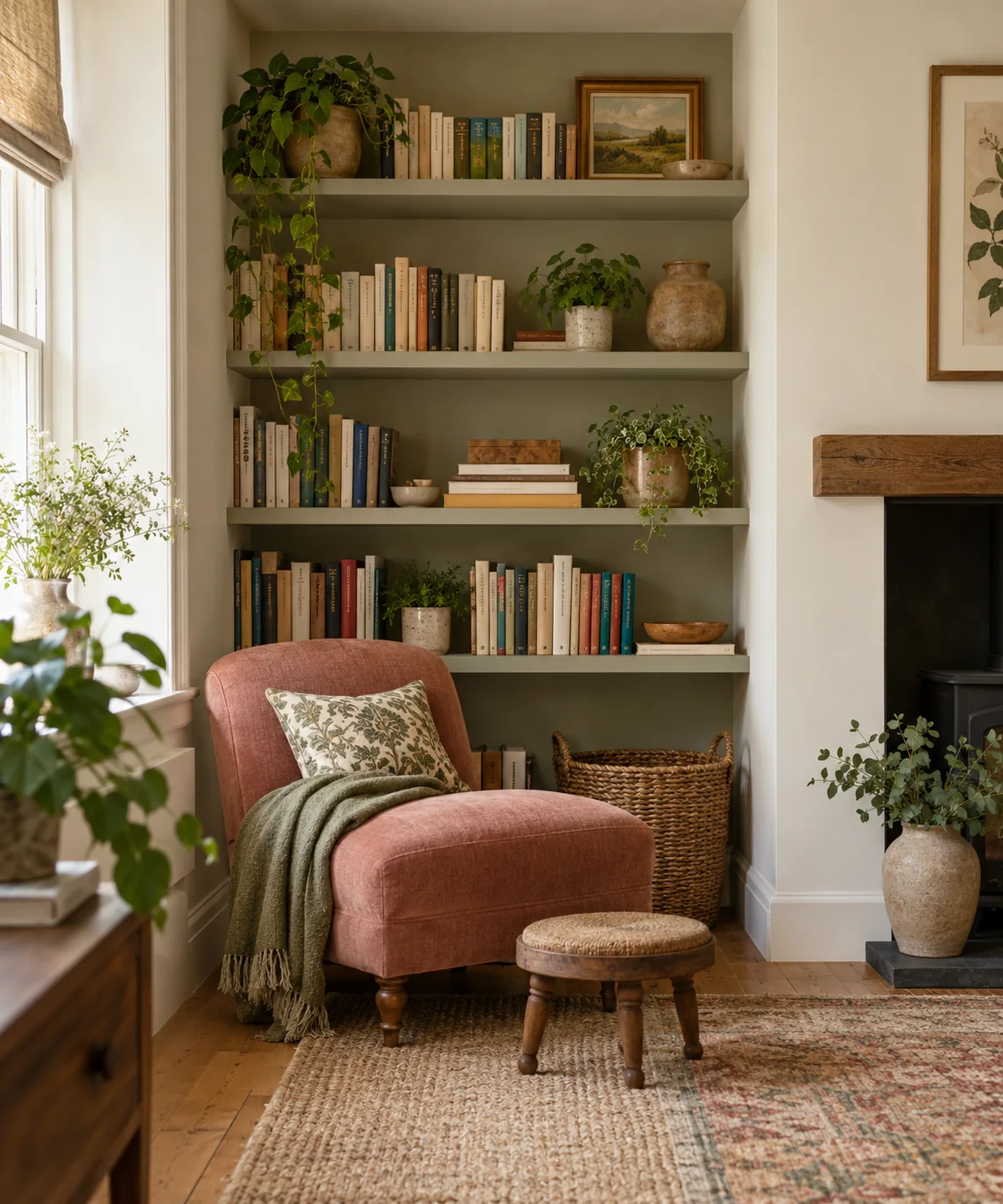
Alcove Measurements and Circulation Planning
Before purchasing or building furniture, measure the recess depth, width, and baseboard profile of the alcove flanking the chimney breast. Chimney alcoves vary widely in depth and vertical squareness, especially in older construction. Choosing shelving that sits neatly within the recess depth prevents the unit from extending past the chimney breast into the room's main footprint. Allow sufficient clearance between the chair and surrounding furniture to maintain unobstructed pathways, and mark the layout on the floor with painter's tape to confirm that door swings and everyday room traffic remain clear.
Selecting Stable Freestanding Shelving
Choose freestanding bookcases sized to fit comfortably within the alcove opening, allowing a slight margin for uneven plaster or baseboard trim. Books add significant cumulative weight, so prioritize sturdy shelving with robust shelf supports and follow manufacturer instructions regarding wall anchoring hardware to prevent tip-over accidents. Adjustable shelf pins allow you to customize heights for varying book formats while placing denser, heavier hardcovers on lower tiers to keep the center of gravity low and stable.
Positioning Compact Accent Seating
An armless slipper chair or petite low-profile accent seat works well in narrow chimney recesses where wide armrests might impede movement. Angle the chair slightly into the room toward ambient or window light to ease sitting access and create an inviting focal point. If desired, pair the seat with a small footstool that can slide under the chair frame when not in use, keeping the immediate floor space clear for smooth movement around the hearth area.
Arranging Focused Reading Illumination
Alcoves often sit in shadow because central ceiling fixtures direct light elsewhere in the room. A slender floor lamp with an adjustable neck placed beside or slightly behind the chair shoulder provides targeted light directly onto reading material. If floor space is tight, a compact table lamp set on a sturdy shelf at seated eye level can serve the same purpose. Ensure electrical cords are routed neatly along baseboards without stretching across walkways where they could become tripping hazards.
Weight Distribution and Long-Term Upkeep
Because book collections can represent substantial weight, inspect shelf ledges periodically for deflection or bowing. Distribute dense reference volumes across lower shelves and spread lighter paperbacks across upper levels. Leaving a modest margin between book spines and shelf fronts helps prevent accidental bumps. Periodically dust shelving surfaces and clean behind the chair to prevent dust accumulation in alcove corners, and attach felt floor protectors beneath furniture feet to safeguard flooring.
YOUR STARTING POINT
A little checklist.
Original editorial guidance. Images are AI-generated concepts, not photographs of completed projects. Our sources and approach.
Questions to consider
How do I choose between an armless slipper chair and a standard armchair?
Slipper chairs lack bulky armrests, saving valuable inches in compact alcoves. This streamlined profile lets you sit and stand comfortably without brushing against surrounding bookshelf edges or alcove walls in spaces under thirty-six inches wide.
Can shallow chimney alcoves accommodate oversized art books?
Alcoves under twelve inches deep cause wide books to overhang shelf edges. Store oversized volumes horizontally on bottom shelves, or reserve shallow alcoves for standard paperbacks while keeping large art folios in deeper storage elsewhere.
How can I manage electrical cords for reading lamps in an alcove?
Route extension cables along baseboards using paintable peel-and-stick cord clips. Ensure plugs remain accessible, and never run electrical cords under chair feet or area rugs where repeated foot traffic can wear the insulation.