Garden Tool Organization · THE GUIDE
Set Up a Canvas Wall Pocket Station for Daily Pruners and Snips
Quick gardening excursions often stall when bypass pruners, snips, and ties are scattered across cluttered potting benches or tucked away in sheds. Setting up a dedicated hanging canvas pocket organizer on a sheltered porch or inside an entryway provides immediate, orderly access to primary cutting implements while keeping sharp edges off flat surfaces. Sturdy canvas offers structured, breathable compartments that organize everyday hand gear when properly cared for and paired with blade sheaths. Arranging tailored pockets for hand pruners, twine, and gloves creates a tidy staging area that streamlines daily garden maintenance and keeps primary cutting tools clean, visible, and protected from accidental drops.
Jump to the checklist ↓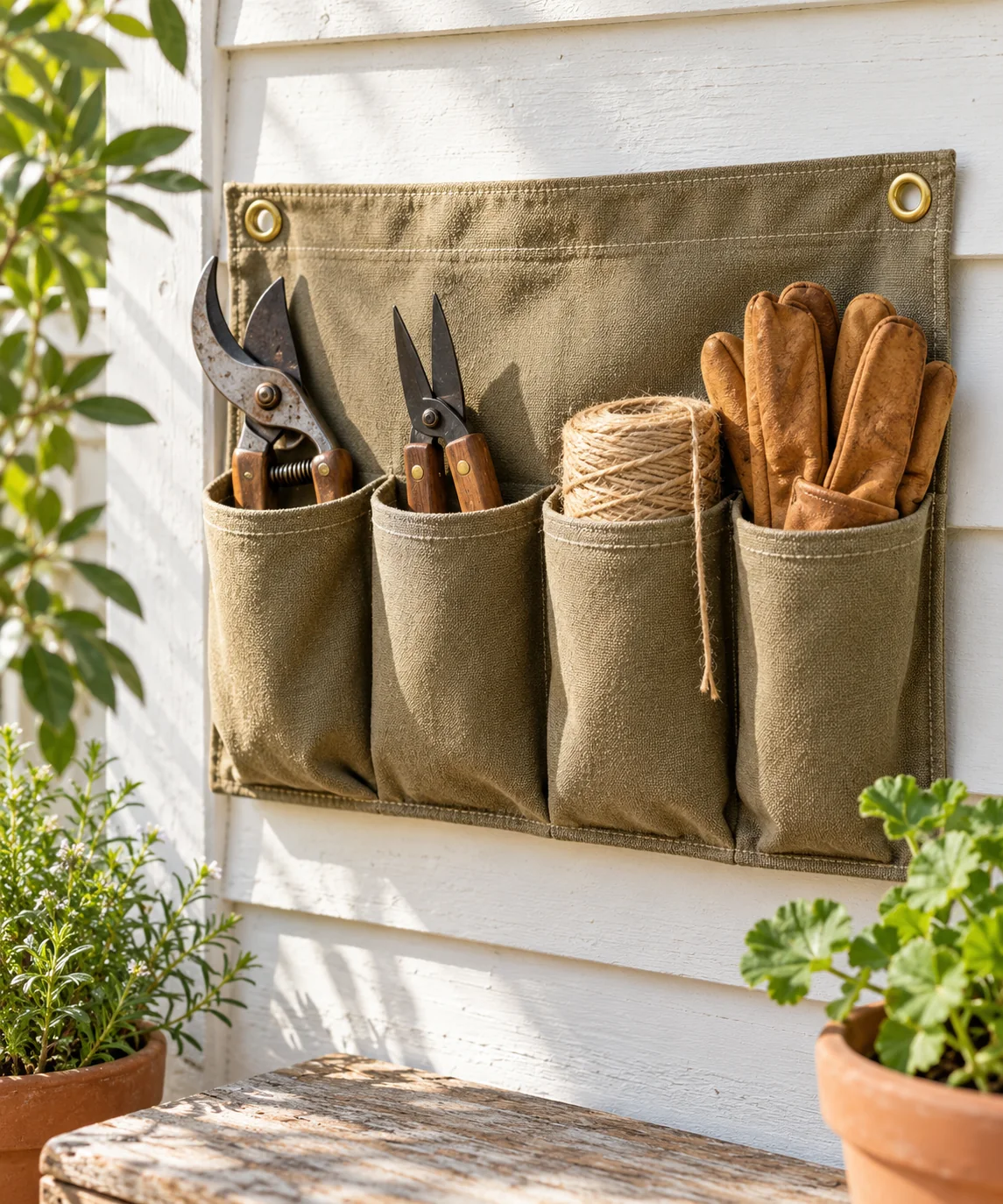
Selecting Suitable Canvas and Hardware
When choosing a fabric pocket organizer for outdoor or semi-sheltered garden zones, look for heavy-duty cotton duck or reinforced canvas featuring robust stitching along all pocket dividers and hem lines. Fabric storage should be substantial enough to support the weight of multiple metal hand tools without sagging or stretching out of shape over time. Inspect the hanging hardware, prioritizing reinforced metal grommets that distribute hanging tension evenly across the top hem. Because outdoor air carries fluctuating humidity, corrosion-resistant brass, stainless steel, or coated metal eyelets help avoid rust staining against backing surfaces. While canvas provides durability, sharp snip tips can still penetrate woven fibers under repeated pressure, so plan to pair pointed tools with protective blade guards or dedicated leather sheaths.
Sheltered Placement and Clearance Planning
Position the organizer in a thoroughly sheltered location, such as beneath a broad porch roof, veranda overhang, or inside an enclosed potting shed or mudroom. The mounting surface should remain protected from wind-driven precipitation, roof runoff, and continuous direct sun exposure, which can degrade fabric fibers and heat metal tool components. Choose a wall position set comfortably within your natural working reach, hanging the organizer flat against a stable wall surface using appropriate wall anchors matched to your wall substrate and manufacturer weight guidance. Maintain ample clearance around the hanging area so handles do not snag against swinging doors, screen frames, or regular household pathways, ensuring a clear, safe approach when retrieving or replacing sharp tools.
Safe and Ergonomic Pocket Allocation
Organize pocket contents logically based on tool dimensions, weight, and frequency of use, keeping safety at the forefront. Heavy hand pruners, floral snips, and folding saws should occupy lower, deeper pockets to keep the organizer's center of gravity stable. Always insert cutting tools handles-up with closed, locked blades pointing downward into the pockets, ensuring sharp working edges remain safely enclosed rather than exposed to reaching hands. Middle compartments work well for lightweight consumables like spools of natural jute twine, plant ties, and wooden garden labels. Reserve upper or broader pouches for clean gardening gloves and clean marking pens, keeping everyday essentials separated and readily accessible.
Tool Maintenance Before Pocket Storage
Fabric pocket stations perform best when garden cutting tools receive basic cleaning before being slipped into their slots. Never store wet, muddy, or sap-coated tools directly in canvas pockets; trapped grit abrades the fabric fibers, while moisture held against steel fosters surface rust and mildew. Wipe pruner blades clean of plant juices, sticky resin, and damp soil with a dry shop towel or stiff rag after finishing your garden rounds. For sap-heavy jobs, a quick wipe with isopropyl alcohol or mineral spirits removes residues before storage. Periodically applying a light wipe of protective mineral oil or camellia oil to clean metal blades shields edge steel from atmospheric humidity while keeping pocket interiors clean and dry.
Routine Fabric Maintenance and Seasonal Care
Porch-based storage systems inevitably collect drifting dust, dried foliage fragments, and potting soil particles over an active growing season. Every few months, empty all pockets completely and take the canvas station down to gently shake out loose debris over a compost bin or waste receptacle. For stubborn grime, spot-clean soiled canvas areas with a soft-bristled brush, cool water, and a mild vegetable-based soap, avoiding harsh detergents or machine washing that could shrink duck canvas or distort pocket alignment. Allow the fabric to air-dry completely in a well-ventilated, shaded space before returning tools. At the end of the growing season, bring the organizer indoors or pack it into dry winter storage along with your cleaned, oiled edge tools.
YOUR STARTING POINT
A little checklist.
Original editorial guidance. Images are AI-generated concepts, not photographs of completed projects. Our sources and approach.
Questions to consider
Can pointed snips pierce through canvas storage pockets?
Pointed snips and floral shears can penetrate woven canvas if forced downward repeatedly against bottom seams. To prevent punctures and extend organizer life, cap sharp tool tips with fitted blade sheaths, leather tip guards, or rigid plastic covers before sliding them handles-up into the pockets.
How do I prevent metal tools from rusting in porch-hung canvas pockets?
Preventing rust requires complete shelter from windblown rain and avoiding the storage of damp tools. Always wipe off soil, plant sap, and water before returning pruners to their pockets, and occasionally wipe metal blades and pivot joints with a light coat of protective mineral oil.
Is it safe to hang a canvas tool organizer on an open garden fence?
Hanging untreated canvas on an exposed garden fence is not recommended because direct rain and continuous outdoor humidity quickly saturate the fabric. Saturated canvas traps water against metal blades, accelerates rust, and promotes mold growth. Restrict canvas organizers to covered porches, sheds, or outbuildings.