Dining Nooks · THE GUIDE
Build a Corner Banquette with Lift-Up Bench Storage
Kitchen corners can become underutilized spaces when standard dining chairs collide with walls or restrict circulation paths. Planning an L-shaped corner banquette with lift-up bench seating provides practical dining capacity while introducing enclosed storage for infrequently used household items. Rather than undertaking custom structural carpentry without verified plans, homeowners can evaluate modular banquette units, freestanding storage benches, or professionally built millwork that suits the room footprint. Success depends on assessing seat proportions, verifying hinge mechanisms with built-in safety stays, and coordinating cushion placement so that storage access remains manageable during everyday kitchen use.
Jump to the checklist ↓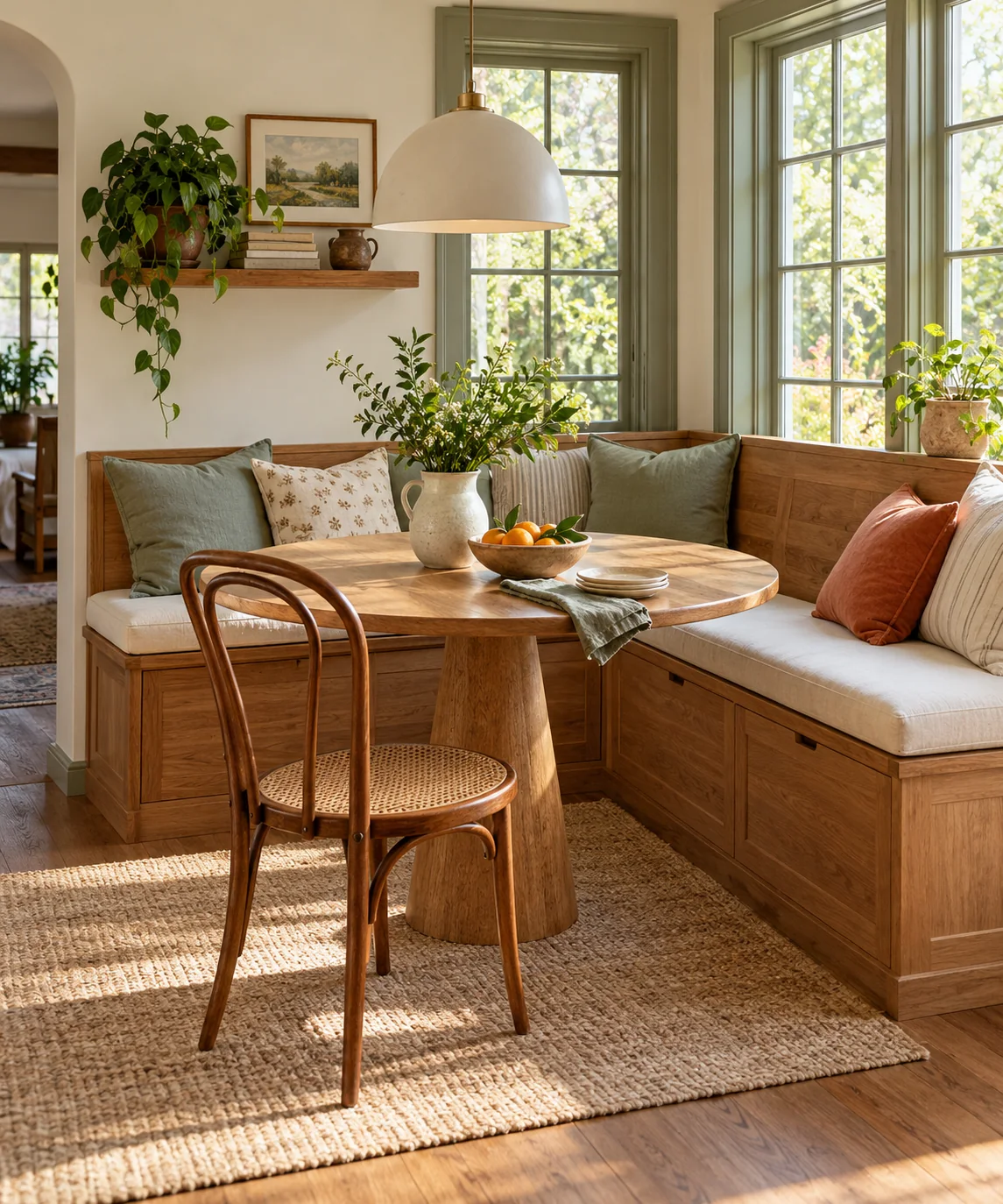
Assessing Seat Proportions and Ergonomics
Comfortable dining banquettes require balancing finished seat height, cushion compression, and bench depth. Standard dining surfaces typically align best with finished seat heights between seventeen and nineteen inches above the floor, accounting for cushion give under body weight. Bench depth generally functions best when measuring between eighteen and twenty inches from the front edge to the backrest; excessively deep seating can prompt slouching, while shallow benches restrict leg support. Coordinate the placement of the dining table so the perimeter slightly overlaps the bench seat without pinching the knees of people sliding into the corner. Because room dimensions and user preferences differ, verifying dimensions with a temporary mock-up helps confirm comfortable proportions before committing to a permanent arrangement.
Evaluating Lift-Up Lids and Hardware Safety
Top-access storage benches require reliable lid hardware to prevent unexpected closures and protect hands. When selecting modular or custom storage benches, look for lids partitioned into manageable sections rather than a single long, heavy board. Hardware should incorporate slow-close dampers or mechanical torsion stays rated specifically for the weight and dimensions of the lid panel. Piano hinges distribute weight evenly along the rear perimeter, but adequate clearance must be maintained against the adjacent wall or baseboard to prevent binding. Avoid basic friction hinges that can slip under the weight of upholstered panels, and consult manufacturer specifications to verify that stay hardware is rated for overhead lid retention.
Table Selection and Base Clearance
The base design of a dining table significantly influences how easily diners access a corner banquette. Conventional four-legged tables place corner posts directly in the entry path, creating physical obstacles for legs and knees when sliding along the bench. Pedestal tables or trestle bases with inset supports offer more open floor clearance, allowing smoother movement into and out of the interior corner. When positioning the table, ensure surrounding walkways maintain adequate clearance from active kitchen zones, such as range doors or primary pathways, so seated diners do not obstruct regular household circulation.
Interior Storage Protection and Ventilation
Enclosed bench cavities located against exterior walls or unheated floor perimeters can trap ambient moisture or harbor stagnant air. Check that interior surfaces are smooth and dry before placing textiles inside, as rough wood surfaces can snag delicate fabrics. Storing linens, surplus tablecloths, or seasonal kitchen accessories inside breathable fabric bins or zippered canvas organizers keeps items separated and clean. Avoid packing the compartments to capacity, as moderate air space helps prevent musty odors. Periodically inspect the bench interior during seasonal weather transitions to confirm that wall condensation is not developing behind or inside the unit.
Selecting Cushions and Upholstery Materials
Dining nook seating requires resilient padding and durable, cleanable fabrics capable of handling regular mealtime use. High-density foam inserts wrapped in protective batting maintain their shape longer under frequent pressure than soft, low-density fills. Removable cushion covers equipped with durable zippers simplify periodic spot cleaning and care according to textile manufacturer instructions. If using loose bench pads, place non-skid underlays or low-profile ties beneath them to keep cushions from shifting during entry and exit. Selecting separate cushions for each lid section ensures you can access individual storage compartments without needing to lift the entire continuous seating surface.
YOUR STARTING POINT
A little checklist.
Original editorial guidance. Images are AI-generated concepts, not photographs of completed projects. Our sources and approach.
Questions to consider
Why is a pedestal table generally preferred with corner banquettes?
A pedestal table places support in the center, eliminating corner table legs that typically obstruct knees and feet when diners slide along the perimeter bench.
How do you access bench storage without removing all the cushions?
Dividing the seating into independent cushions that correspond to individual lid segments allows you to lift one section at a time without disturbing the entire dining area.
What items are best suited for lift-top bench storage?
Because accessing the interior requires clearing the bench seat, lift-up storage works best for occasionally used items such as seasonal linens, spare placemats, or bulky party supplies rather than daily kitchen essentials.