Dining Nooks · THE GUIDE
Build a Corner Settle with a Raised Kickplate for Robot Cleaners
Corner settles maximize seating capacity within compact dining alcoves, yet traditional built-in benches that extend completely to the floor create enclosed dead zones where crumbs, pet hair, and loose dust accumulate. Moving heavy dining tables and contorting into tight spaces with manual cleaning attachments makes routine upkeep cumbersome. Planning a corner settle with an elevated base and recessed plinth addresses this cleaning challenge. Ensuring appropriate vertical and horizontal ground clearance allows autonomous robotic vacuums to navigate underneath the seating perimeter, helping maintain clean floors with minimal manual disruption.
Jump to the checklist ↓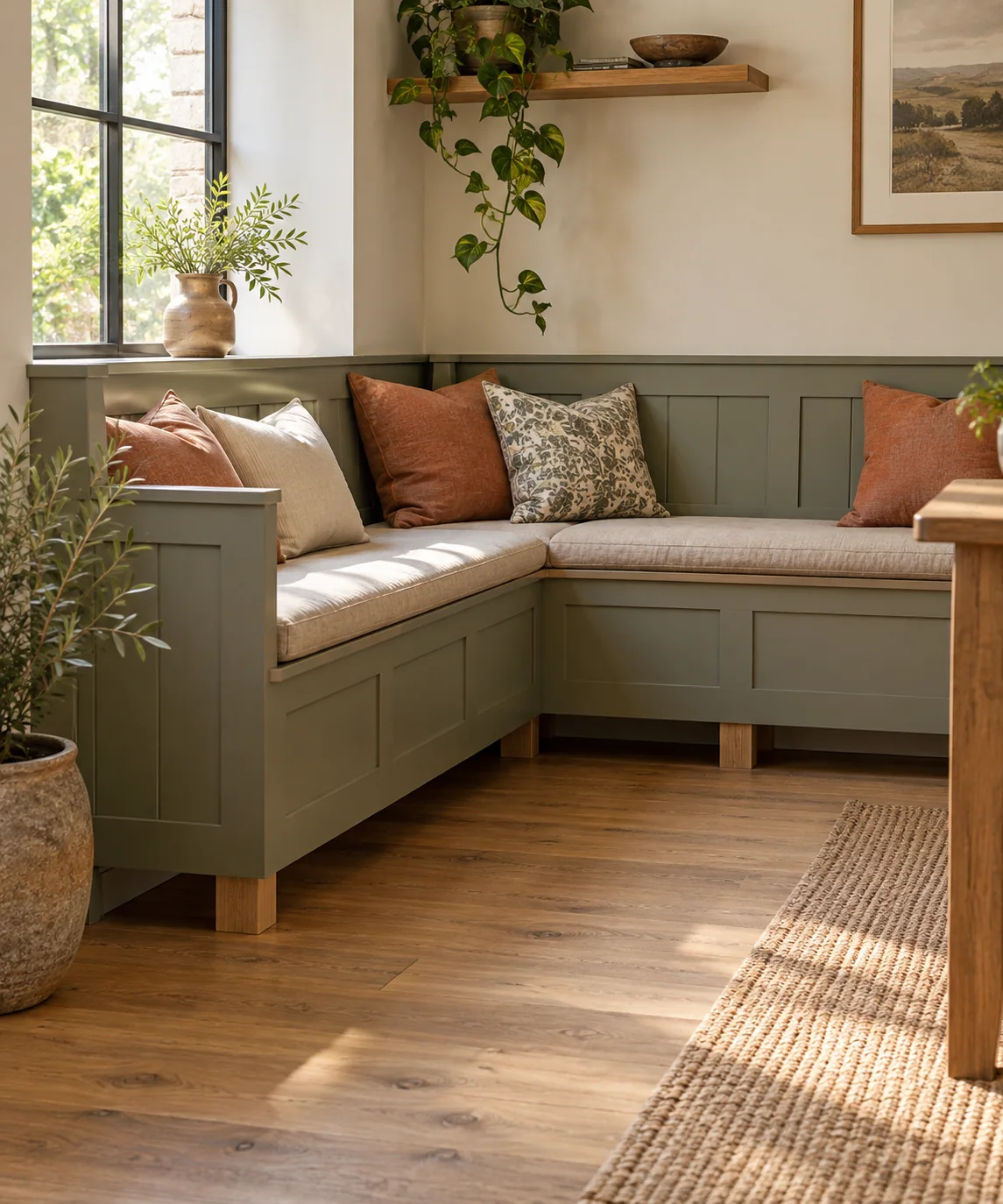
Confirming Vertical Clearance with Manufacturer Specifications
Autonomous vacuum and mop models vary significantly in body height and sensor housing dimensions. While lower-profile units may measure under four inches tall, models equipped with top-mounted laser turrets or specialized navigation hardware frequently require greater clearance. Reviewing the manufacturer specifications for your specific device is necessary before establishing the elevation of the bench base. Incorporating an additional margin above the highest point of the vacuum accommodates minor floor irregularities and prevents equipment from becoming wedged beneath the furniture frame.
Recessing Plinths for Sensor Line-of-Sight and Turning Radii
A settle base that sits flush with the front seat edge can create abrupt obstacles for robotic cleaners, resulting in missed spots and repetitive bumper strikes. Recessing the structural supports or plinth several inches behind the front edge of the seat creates an open boundary along the floor. This setback allows the robotic unit's side brushes to sweep cleanly along the base without scraping the main cabinet face, while also providing room for the machine to execute smooth turns around corners.
Evaluating Floor Surfaces and Threshold Clearances
Robotic cleaners operate most effectively across uniform, level flooring. In dining nooks, transitioning abruptly between bare hardwood, thick tile grout lines, or elevated rug edges directly beneath a low-clearance bench can trap vacuum wheels or trigger error sensors. Planning a consistent flooring surface across the entire nook footprint ensures smooth passage. If floor coverings are desired, low-profile, firmly bound runners with non-slip backings minimize the risk of edges curling upward into the cleaning path.
Addressing Electrical Outlets and Cable Management
Dining alcoves often incorporate baseboard electrical outlets intended for supplementary lighting, device chargers, or small appliances. Trailing cords beneath low-clearance furniture present snagging hazards that can stall robot vacuums or dislodge connected appliances. Outlets should remain safely accessible, and cords should be routed through dedicated cable management tracks away from floor-level navigation corridors. Never compress or pinch electrical wiring behind or under structural framing where inspection is difficult.
Evaluating Open Bases Versus Integrated Storage
Opting for a raised settle base involves balancing easy maintenance against interior storage capacity. Solid, enclosed bench designs provide extensive concealed storage for seasonal linens or bulky kitchenware, but they seal the floor perimeter. An elevated base design prioritizes daily floor hygiene and automated maintenance. Homeowners requiring supplementary storage can consider pairing elevated seating with nearby standalone cabinetry or specifying open shelving baskets that can be lifted during cleaning cycles.
YOUR STARTING POINT
A little checklist.
Original editorial guidance. Images are AI-generated concepts, not photographs of completed projects. Our sources and approach.
Questions to consider
How much vertical clearance do robot vacuums typically need under furniture?
Clearance requirements depend entirely on the model. While slim units might pass under four inches, models with top navigation domes often require five inches or more. Always check the exact dimensions listed in your vacuum's user manual before finalizing millwork plans.
Can robot mop attachments damage wooden bench plinths?
Frequent exposure to damp mopping pads can affect unsealed wood over time. Applying water-resistant sealants or durable painted finishes to the lower edges of the settle plinth helps protect the millwork against incidental moisture during regular cleaning cycles.
What if an electrical wall outlet is located directly behind the bench?
Avoid trapping power cords between the bench structure and the wall. Keep outlets unobstructed and accessible for maintenance, and route all cables through surface-mounted raceways or dedicated chases that prevent cords from dangling into the cleaning zone.