Dining Nooks · THE GUIDE
Build a Deep Corner Settle with Pull-Out Shoe Trays Below
Combining breakfast dining seating with entryway storage requires careful attention to dimensions, clearances, and daily cleanliness. In homes where an entrance connects directly to an eat-in dining space, a corner settle bench paired with low, sliding shoe trays can provide organized storage without disturbing seated diners. Planning this arrangement around realistic seat heights, toe clearances, and proper tray liners ensures that dining comfort is maintained while keeping outdoor footwear and residual grit away from primary kitchen pathways.
Jump to the checklist ↓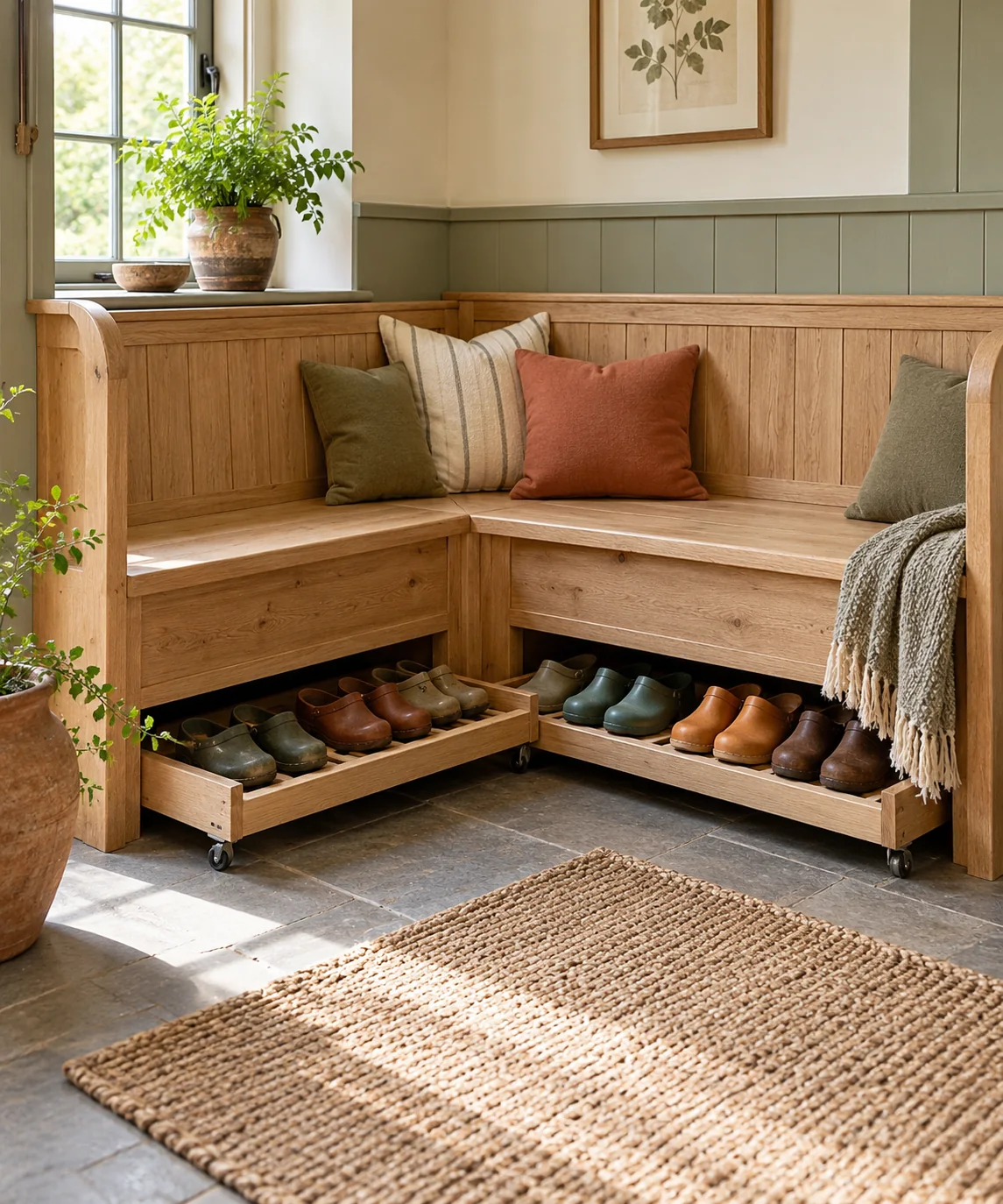
Planning Settle Bench Proportions and Clearances
A comfortable dining bench generally balances ergonomic seat depth with accessible floor clearance. When planning or sourcing a settle bench to accommodate low storage trays, verify that the finished seat height aligns with standard dining table heights, typically leaving twelve inches between the seat and tabletop underside. Providing adequate toe space—either through an open base rail or an intentional recess—helps diners sit down and rise comfortably without repeatedly striking stored trays with their heels.
Sizing and Selecting Under-Bench Storage Trays
Before choosing or assembling low storage trays, measure the clear vertical opening beneath the bench rail and account for flooring variations such as area rugs. Footwear heights vary substantially between low slippers, athletic shoes, and outdoor shoes, so the clear vertical clearance should accommodate your intended footwear collection. Select sturdy, shallow trays fitted with smooth floor glides or low-profile multidirectional casters, keeping tray dimensions manageable so individual units slide out smoothly without binding.
Protecting Bench Finishes from Moisture and Grit
Shoes worn outdoors carry street dirt, moisture, and fine abrasive particles that can degrade surrounding woodwork and flooring. Protect tray bottoms by inserting removable, wipeable rubber or silicone liners that catch residual debris before it reaches the tray surface. When selecting or finishing a bench, review manufacturer care guidelines for the chosen wood or laminate surface. Regularly wipe down the bench interior using a slightly damp cloth and mild neutral cleaner rather than applying unverified sealants over factory finishes.
Coordinating Table Base Style with Tray Paths
A traditional four-legged dining table can impede the forward slide path of under-bench shoe trays. To minimize physical obstructions, pair corner settle seating with a pedestal or trestle dining table. Centralized pedestal columns leave the perimeter floor space unobstructed, allowing trays to slide fully forward during loading and cleaning. If using a table with perimeter legs, measure the span between legs to verify that tray modules can pass through without snagging.
Routine Maintenance and Footwear Separation
Because dining corners naturally accumulate food crumbs while shoe storage gathers outdoor dust, frequent cleaning helps keep both functions sanitary. Slide trays out periodically to vacuum bare floor surfaces underneath and wipe out tray liners. For optimal hygiene, reserve under-bench dining trays for clean, dry indoor shoes, house slippers, or everyday casual footwear, diverting heavily soiled, soaked, or muddy outdoor work boots to a dedicated entryway mat or ventilated utility area.
YOUR STARTING POINT
A little checklist.
Original editorial guidance. Images are AI-generated concepts, not photographs of completed projects. Our sources and approach.
Questions to consider
Why choose sliding under-seat trays over a lift-up storage bench?
Lift-up bench lids require diners to stand up and remove cushions whenever footwear is needed. Independent sliding floor trays allow access from the front without disturbing people seated at the table.
What type of dining table works best with under-bench storage?
Pedestal and trestle tables work best because their supports are centered beneath the tabletop, leaving the floor perimeter clear so under-bench trays can slide forward without hitting table legs.
How can shoe odors be prevented near an eating area?
Restrict under-bench storage to dry indoor slippers and clean, dry walking shoes. Damp, heavily worn athletic shoes and wet outdoor boots should remain in a dedicated, well-ventilated mudroom or entrance zone.