Reading Corners · THE GUIDE
Build a Deep Window Shelf Extension with Birch Plywood
Standard residential window sills often measure only a few inches deep, providing limited surface area for plants, books, or resting a cup while enjoying natural outdoor views. Extending the depth of a sill using sturdy birch plywood creates a generous, functional shelf that enhances an interior reading nook. Birch plywood offers clean edge banding potential, dimensional stability, and a warm wood grain suitable for indoor spaces. Successfully planning a shelf extension requires checking window sash operation, assessing wall structure beneath the opening, and understanding weight limitations to ensure the project remains a safe, durable surface for reading essentials rather than an unverified structural seating bench.
Jump to the checklist ↓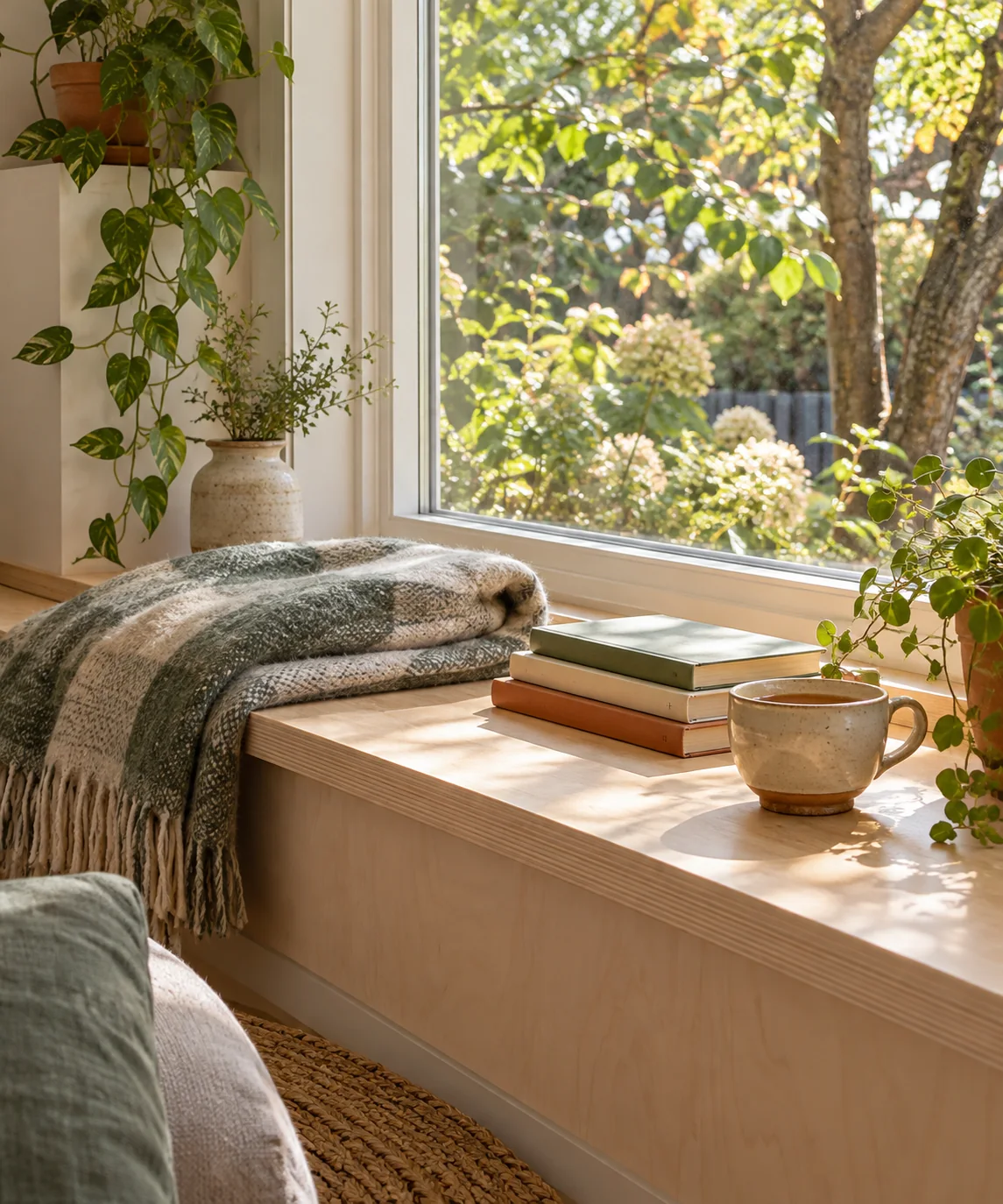
Assessing Window Mechanisms and Sill Clearance
Before selecting materials, examine how your window opens and closes. Inward-opening tilt-and-turn sashes or hopper windows will collide with an extended ledge, whereas casements that crank outward or vertical double-hung units typically clear an expanded horizontal surface. Check for low-lying obstacles beneath the sill, including electrical baseboards, radiators, and heating vents. Ensure any extended projection does not obstruct room walkways, emergency egress, or window crank operation.
Understanding Structural Loads and Support Limits
An extended plywood ledge cantilevered beyond a standard sill is intended for books, mugs, and decor, not dynamic human seating. Standard window framing aprons, drywall, and decorative trim are not engineered to carry adult body weight. To safely support personal reading items, install rigid, heavy-duty shelf brackets anchored directly into vertical wall framing studs beneath the opening. Avoid relying solely on hollow-wall anchors or adhesive bonds to the existing sill plate.
Material Selection and Edge Preparation
Cabinet-grade birch plywood provides flat, void-resistant stability that resists warping under changing interior humidity. Three-quarter-inch thickness provides excellent stiffness across moderate spans between supporting brackets. When cutting the plywood to dimension, use a fine-finish blade to prevent splintering along the veneer edges. Sand all cut edges thoroughly with fine-grit sandpaper to remove sharp corners, and vacuum away wood dust before applying finishes.
Dry Fitting and Ergonomic Observation
Before permanently fastening brackets or the shelf board, perform a temporary dry fit. Position a stiff cardboard template or the cut board in place to evaluate its reach and relationship to adjacent seating. Sit in your nearby reading chair to confirm the extended ledge acts as a convenient side surface for books and lighting without crowding your legs or restricting movement. Verify that natural daylight reaches the room comfortably and window latches remain accessible.
Surface Finishing and Moisture Protection
Window perimeters experience direct sunlight and seasonal condensation from temperature shifts across the glass. Protect both faces and all cut edges of the birch plywood with a durable, water-resistant clear finish, such as matte polyurethane or quality hardwax oil. Unsealed wood can absorb condensation drips, leading to swelling, veneer lifting, and staining. Clean the shelf with a dry or lightly dampened cloth, and use coasters beneath beverages to preserve the top coat.
YOUR STARTING POINT
A little checklist.
Original editorial guidance. Images are AI-generated concepts, not photographs of completed projects. Our sources and approach.
Questions to consider
Can an extended window sill safely support a person sitting or lounging on it?
No. Standard window framing, sills, and shelf brackets are not engineered to safely hold dynamic human weight. Dedicated built-in window seats require floor-supported framing and professional structural assessment.
How do you protect birch plywood from window condensation and sunlight?
Apply several coats of a water-resistant finish, such as polyurethane or hardwax oil, sealing all exposed edges. Regularly wipe away any standing condensation from the glass to prevent moisture damage.
What is the best way to secure the extension to an existing wooden sill?
Support the extension from below using sturdy wall brackets fastened into wall studs. The rear edge can be secured to the existing solid sill with finish fasteners or appropriate wood joinery, avoiding reliance on glue alone.