Compact Home Offices · THE GUIDE
Build a Floating Triangular Corner Desk for Dead Room Corners
Unused ninety-degree intersections in small dining areas or bedrooms often become neglected zones that accumulate household clutter. A wall-mounted triangular corner desktop converts these dormant angles into streamlined, functional writing stations without sacrificing precious floor space. Floating designs eliminate obstructive table legs, making room cleaning effortless and enhancing the visual flow of tight spaces. By analyzing wall squareness, weight distribution, and comfortable seat clearances, you can establish an unobtrusive, dedicated study nook that serves daily computing needs while maintaining tidy household circulation.
Jump to the checklist ↓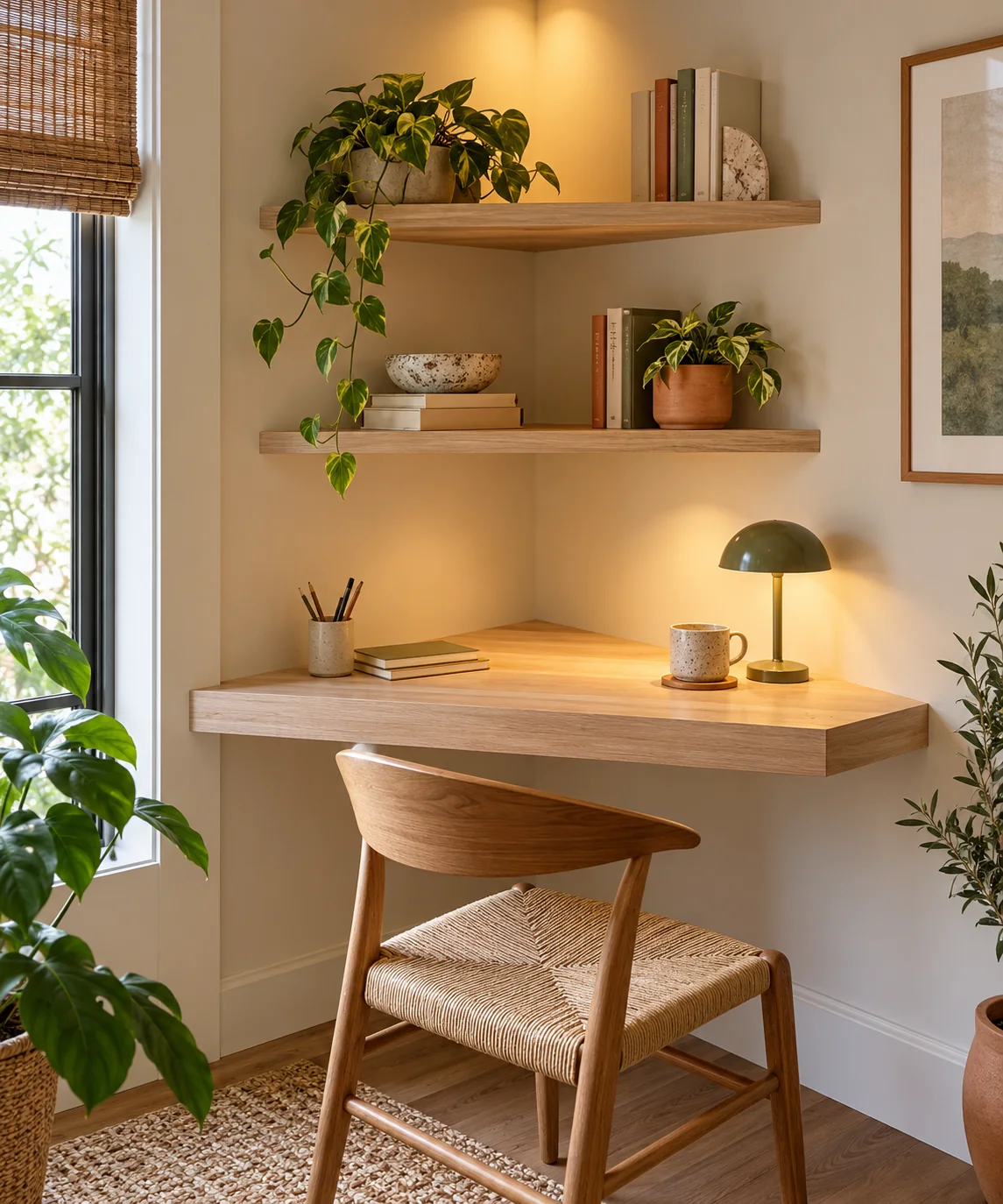
Evaluating Corner Framing and Wall Composition
Before planning a wall-hung corner surface, assess the construction of both intersecting walls. Floating work surfaces experience substantial downward leverage whenever forearms or equipment rest on them, meaning hollow-wall anchors in drywall or plaster are insufficient. Use a reliable stud finder to identify the location of wood or metal framing members relative to the corner point. In many homes, corner framing arrangements vary, and studs may not sit symmetrically where brackets need support. For solid masonry or concrete walls, appropriate masonry anchors matched to the desk bracket manufacturer's load specifications are required. If secure framing anchors cannot be aligned, consider a freestanding corner unit instead.
Determining Surface Depth and Ergonomic Proportions
A triangular desk layout naturally tapers toward the user, which reduces practical surface area compared to rectangular designs. To provide adequate room for a standard laptop or writing pad, measure the usable center line extending from the rear corner apex to the front user edge. While side wall contacts must accommodate your room's available perimeter, ensure the center depth allows wrists to rest without hanging off the front. Beveled or eased front edges reduce contact stress on forearms during prolonged use. Always check that the diagonal span does not constrict access to nearby doorways, heating vents, or electrical receptacles.
Assessing Chair Clearance and Traffic Paths
A compact corner station requires adequate floor clearance so the seat can rotate and slide back without obstructing room circulation. Measure the radius of your chair base, particularly for five-star caster pedestals, to ensure the wheels fit between baseboards when pushed inward. Avoid floor coverings or thick pile rugs that resist caster movement or bunch against the wall angle. Verify that the chair's push-back clearance leaves a clear path for normal room traffic, allowing occupants to pass safely without clipping the seated user or the desk corners.
Planning Vertical Storage and Head Clearance
Because corner surfaces offer limited horizontal space, vertical storage is often considered for books or secondary equipment. If planning wall-mounted corner ledges above the desk, verify stud locations separately for each tier rather than assuming vertical alignment. Position any upper shelving sufficiently high above the primary working surface to prevent accidental head impacts when standing up or leaning forward during task work. Limit overhead items to lightweight supplies, and follow shelf bracket manufacturer weight limits strictly to prevent wall failure.
Managing Peripheral Power and Cable Paths
Electronic devices require careful cord organization in tight angles where wires can easily become pinched or tangled. Plan cable pathways before securing any surfaces or brackets. Surface grommets or a modest rear apex relief notch allow power cables to drop down cleanly toward low-wall outlets without pressing against baseboards. Fasten cords to the wall or desk underside using non-invasive clips or cable raceways, keeping slack secured away from the user's knees and feet. Verify that power adapters have adequate ventilation and do not press against enclosed wall corners.
YOUR STARTING POINT
A little checklist.
Original editorial guidance. Images are AI-generated concepts, not photographs of completed projects. Our sources and approach.
Questions to consider
Can a floating corner desk be mounted purely into drywall using anchors?
No. Drywall anchors are not designed to support the combined static weight of the desk and dynamic downward forces applied by resting arms or leaning. Brackets must be secured directly into structural wall framing or solid masonry using fasteners rated by the bracket manufacturer.
How can I tell if my corner walls are truly ninety degrees?
Use a carpenter's framing square or make a cardboard template along the intersecting walls. Residential corners rarely form a perfect right angle due to drywall compound buildup and structural settling, so custom surfaces often require scribing to match the wall contours.
What is the primary operational limitation of a triangular corner desk?
The main limitation is restricted peripheral workspace. Because the work surface narrows rapidly away from the center point, triangular desks rarely accommodate dual monitors or large desktop peripherals comfortably, making them best suited for compact single-screen tasks.