Laundry Space Organization · THE GUIDE
Build a Removable Folding Surface Over Front Loaders
Placing a continuous folding board across side-by-side front-loading laundry machines offers a convenient sorting surface without permanent wall modifications. In apartments or compact laundry areas where drilling into walls is restricted, a freestanding, resting topper provides a practical workspace. Practical implementation requires consulting appliance manufacturer guidelines for top-surface load allowances, checking dispenser clearances, and isolating mechanical vibration. By selecting manageable materials, safeguarding appliance finishes, and preserving immediate access to water valves and dryer vents, you can create a functional utility station that lifts off easily for maintenance.
Jump to the checklist ↓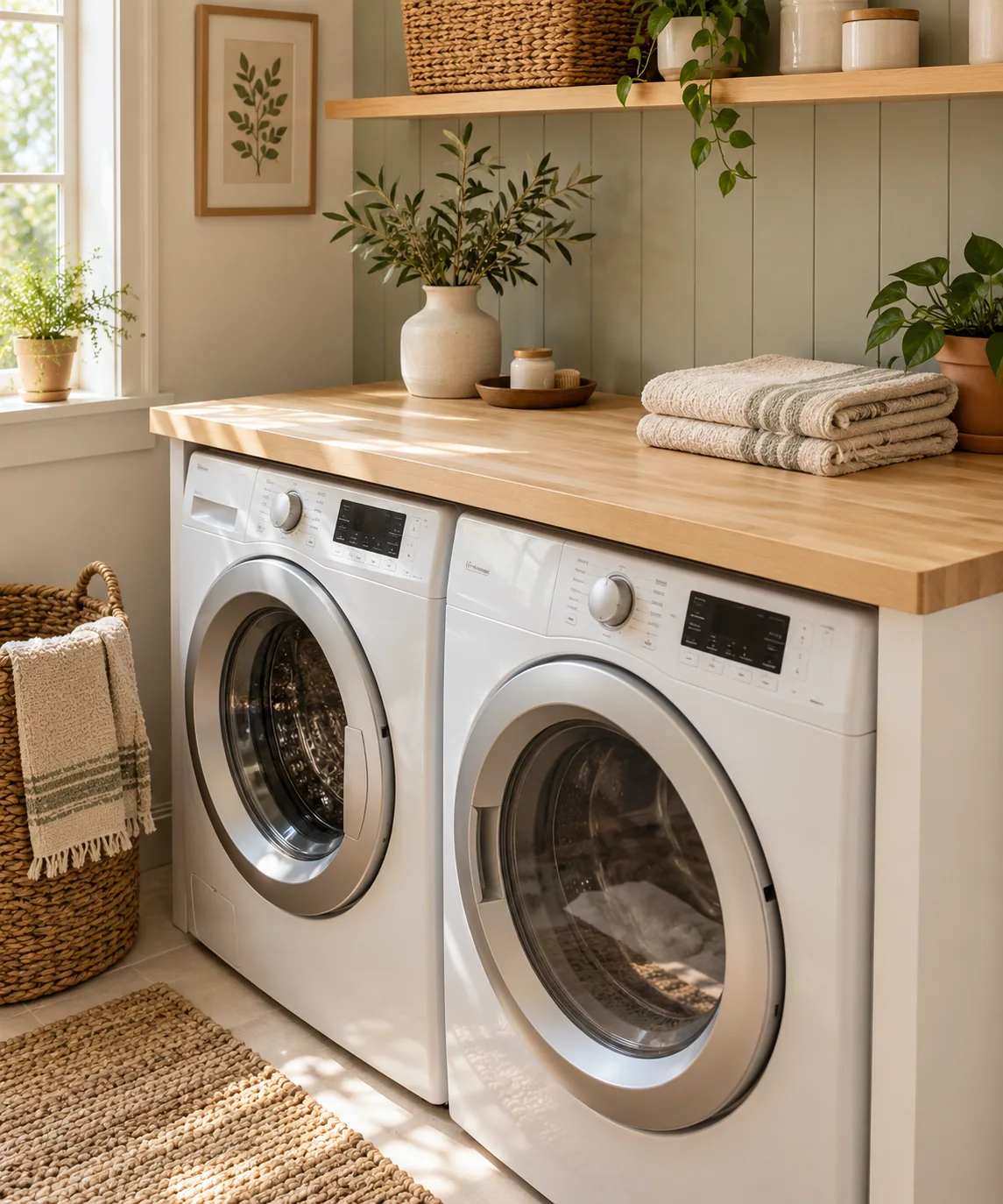
Checking Appliance Manuals and Top-Load Tolerances
Before placing any board across laundry machines, check manufacturer specifications for top-surface load allowances and side-by-side spacing. Not all washing machine and dryer enclosures are engineered to support external weight, and some brands explicitly void warranties if heavy surfaces rest directly on top panels. If permitted, verify both machines are leveled according to the manufacturer's manual using their adjustable feet. Measure dispenser drawer extensions and cycle dials carefully to confirm that an overlying board will not obstruct access or pinch control housings.
Selecting Board Materials and Managing Weight
A removable folding topper should be sturdy yet light enough to lift away easily for servicing. Sealed edge-glued pine or lightweight laminated panels work well, whereas thick, dense hardwood slabs can become unwieldy during emergency shutoff access. Avoid unsealed engineered wood like standard MDF or raw particleboard, which swell when exposed to humid laundry cycles or stray detergent drips. Choose a manageable thickness, generally around three-quarters of an inch, to keep total weight low while resisting deflection under light laundry baskets.
Addressing Vibration and Surface Contact
Front-load washing machines generate significant mechanical oscillation during high-speed extraction cycles. Placing a rigid surface directly onto metal cabinet tops can create persistent rattling and may mar the factory finish. Applying dense rubber pads, high-friction neoprene strips, or closed-cell foam along the underside contact areas helps dampen operational vibration and reduces shifting. However, severe spin-cycle oscillations caused by unbalanced laundry loads can still displace resting items, so periodic observation during operation is necessary.
Preserving Rear Duct and Utility Clearances
Appliances require adequate perimeter clearance for safe ventilation and utility management. Transition ducts for clothes dryers, cold and hot water supply lines, and electrical connections must never be crushed, bent, or trapped under the rear edge of the topper. Consult your dryer manufacturer's installation guide for mandatory rear wall clearances. Maintain an open perimeter that allows immediate visual inspection of water connections and unobstructed airflow around appliance venting pathways.
Finishing and Routine Maintenance
Laundry workspaces encounter liquid detergents, fabric softeners, and damp clothing. Sand all edges and corners to eliminate burrs that could pull threads on delicate garments. Seal raw wood with multiple coats of water-resistant polyurethane or durable wood finish, allowing it to cure completely before placement. Clean detergent drips promptly, as concentrated surfactants can soften certain finishes over time, and lift the topper periodically to inspect the appliance tops and rear connections.
YOUR STARTING POINT
A little checklist.
Original editorial guidance. Images are AI-generated concepts, not photographs of completed projects. Our sources and approach.
Questions to consider
Can a resting topper shift during high-speed spin cycles?
Yes, high-speed spin cycles—especially with unbalanced loads—can generate enough lateral force to shift resting toppers. While dense neoprene or rubber grip pads increase friction and dampen vibration, they cannot guarantee zero movement. Avoid placing fragile items on top, and inspect board alignment regularly.
Can I place heavy laundry baskets on top of the surface?
Only if the appliance manufacturer permits surface loading and the weight remains modest. Most front-load metal cabinets can support an average basket of dry clothes, but they are not structural countertops. Never stand, sit, or place heavy storage totes on the topper.
How do I access shutoff valves or perform maintenance with the topper in place?
Because the surface rests freely on non-slip dampers without mechanical wall ties or fasteners, it can be lifted off by one or two people whenever you need to inspect water supply valves, clear drain filters, or clean dryer exhaust ducts.