Pantry Organization · THE GUIDE
Build a Tiered Riser System for Instant Canned Good Inventory
Deep pantry shelves frequently turn canned goods into forgotten clutter, with single-depth rows obscuring backup supplies of beans, broths, and crushed tomatoes. Installing a three-tier riser system creates bleacher-style organization, lifting back rows above front items so labels stay readable at a glance. Available in clear acrylic, finished bamboo, or sealed hardwoods, step risers eliminate duplicated grocery purchases by keeping current inventory visible. Planning a functional riser layout involves balancing step depth, can diameters, and upper vertical clearances to ensure standard containers lift out cleanly without striking the underside of upper shelves.
Jump to the checklist ↓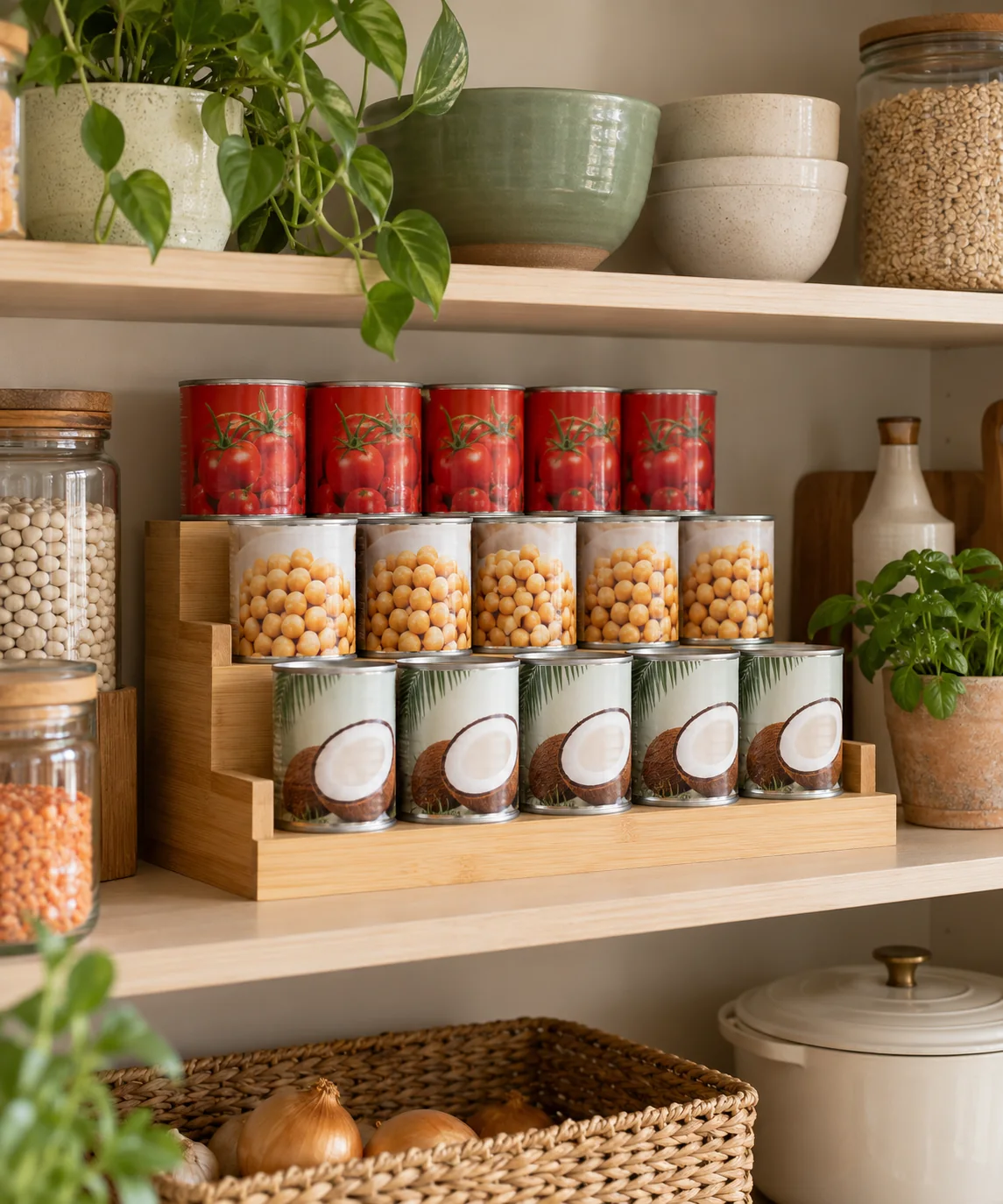
Shelf Depth and Height Clearance Measurements
A three-tiered canned good riser requires adequate shelf depth and vertical clearance to remain functional. Standard shelf depths of ten to twelve inches generally accommodate three shallow tiers. Each riser level introduces one to two inches of step elevation. Calculate required vertical clearance by adding the top riser height to the height of your tallest can, plus several inches of open space. This overhead room ensures you can lift rear cans up and forward without scraping the underside of the shelf above.
Material Selection: Wood versus Clear Acrylic
Selecting between finished wood and acrylic risers depends on pantry illumination and cleaning preferences. Sealed bamboo or solid wood risers offer structural stability and blend with traditional cabinet interiors, though solid opaque risers can cast shadows across deeper shelving. Transparent acrylic designs allow overhead lighting to pass through to lower levels, improving visibility in dimmer pantries. However, smooth plastic can be slippery, making non-skid feet or textured surfaces helpful for keeping units steady.
Staging a Mock-Up with Household Items
Before investing in fixed or expandable risers, test sightlines using small cardboard cartons or stacked books as temporary steps. Set several canned goods along the makeshift levels to observe label readability from normal standing height. If you must bend low or reach uncomfortably to identify rear cans, the shelf may be set too high for a tiered organizer. Testing your natural reaching arc confirms whether tiered storage suits that specific cabinet height.
Weight Distribution Across Pantry Supports
Canned food is dense, and a fully loaded three-tier organizer holding multiple rows of cans represents significant concentrated weight. Place risers so that weight is balanced across the shelf rather than clustered on an unsupported edge. Consult your cabinetry documentation or manufacturer specifications to verify total shelf weight capacity before loading dozens of cans onto a single shelf. If a shelf shows visible deflection under normal loading, distribute heavy goods across lower structural bases instead.
Rotation Habits and Shelf Liner Upkeep
Tiered risers simplify a first-in, first-out inventory rotation habit, helping you use preserved items before their expiration dates pass. When unpacking groceries, place newly purchased cans on the rear tier and advance older stock to the front row. Periodically wipe riser steps with a damp cloth and mild dish soap to remove residue from can rims or minor pantry dust, drying all surfaces thoroughly before restocking.
YOUR STARTING POINT
A little checklist.
Original editorial guidance. Images are AI-generated concepts, not photographs of completed projects. Our sources and approach.
Questions to consider
Can tiered risers accommodate large family-sized cans?
Many tiered organizers have step depths intended for standard twelve-to-fifteen-ounce cans. Measure the base diameter of your larger cans before purchasing to ensure each tier offers sufficient depth for the containers to rest flat without hanging over edges.
How do I prevent cans from sliding on smooth riser steps?
If cans slide when items are removed, add narrow strips of non-adhesive grip liner or thin textured rubber tape along each step. This provides light traction to keep adjacent cans stable during daily use.
What shelf height is best for tiered risers?
Tiered risers are most effective on shelves positioned between waist and chest level. Installing them above eye level can obscure rear labels, as the angle makes elevated tiers difficult to view from below.