Small Balcony Layouts · THE GUIDE
Build a Tiered Succulent Showcase Using Brick and Board Risers
Organizing a collection of small potted succulents along a sunny balcony boundary requires careful attention to stability, drainage, and structural safety. While makeshift risers built from loose bricks and timber boards are sometimes suggested, stacking unbonded masonry on an elevated balcony introduces severe toppling and falling-object hazards. A more dependable, compliant approach involves using purpose-built, stable plant stands or manufacturer-rated low-profile shelving designed specifically for outdoor environments. By prioritizing secure furniture, proper sunlight exposure, and building load regulations, you can showcase your succulents neatly while maintaining a safe, hazard-free outdoor space.
Jump to the checklist ↓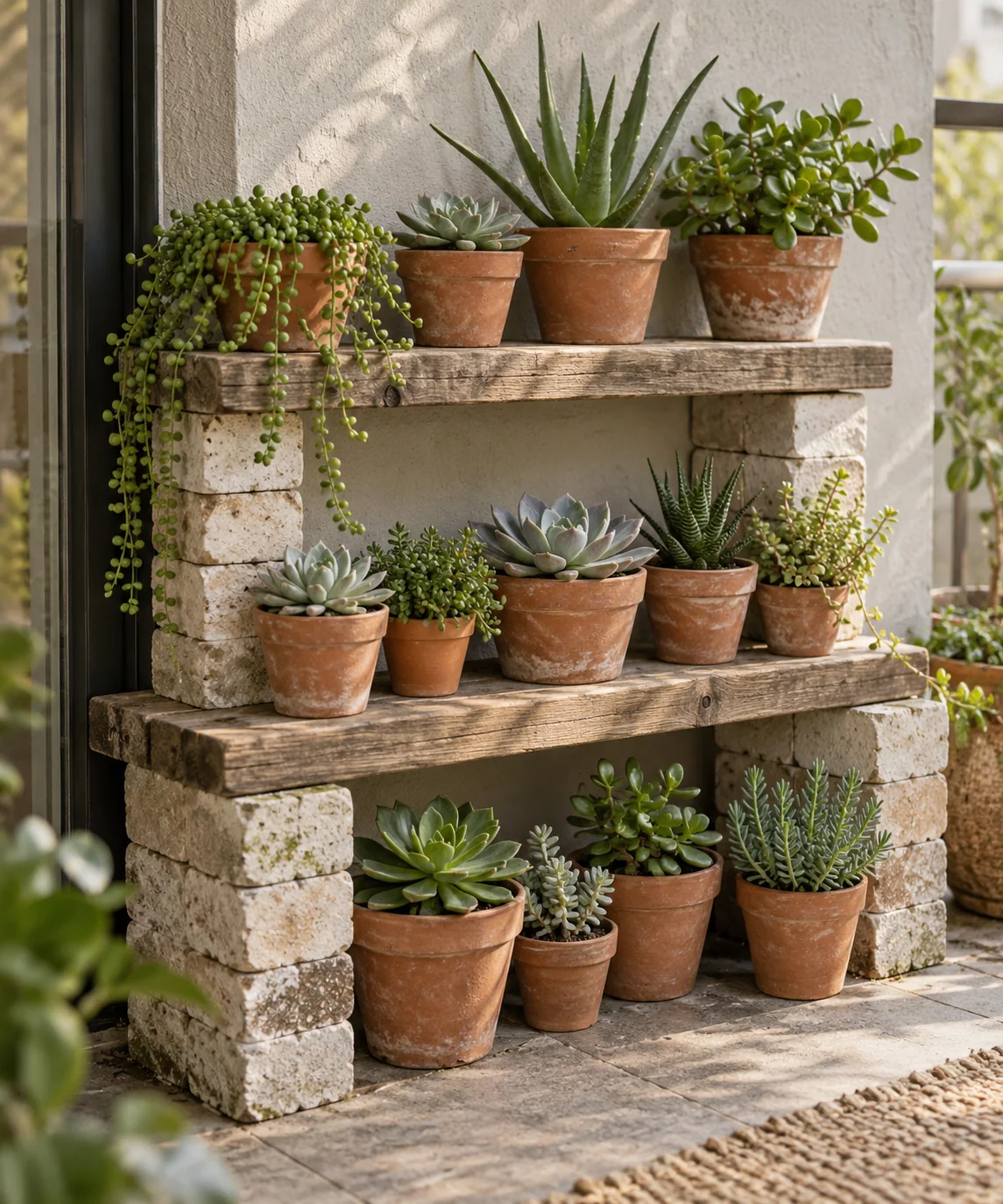
Selecting Stable, Mechanically Fastened Stands
Unbonded concrete or clay bricks and loose planks should never be stacked on elevated balconies. Loose masonry can wobble under uneven pot weights, shift during footstep vibration, or topple if bumped or exposed to strong drafts. Instead, choose commercially manufactured plant shelving made from powder-coated metal, solid treated timber, or composite materials assembled with rigid mechanical fasteners. Look for low-profile units featuring a broad base, non-skid feet, and manufacturer ratings confirming suitability for outdoor container weights.
Consulting Building Rules and Weight Limitations
Soil, ceramic pots, water, and plant shelving accumulate mass quickly. Balconies possess strict structural load limitations that must never be exceeded, and concentrating heavy materials along parapets or partition edges requires caution. Rather than guessing load distributions or attempting your own capacity calculations, consult property management or review architectural records to determine your balcony's certified weight allowance. Ensure any display complies with community bylaws concerning exterior storage and vertical height restrictions.
Arranging Containers for Sunlight and Airflow
Succulents thrive in bright, well-ventilated settings that allow potting media to dry thoroughly between waterings. Position tiered shelving where it receives direct sunlight while keeping balcony circulation paths clear. Place taller specimens on lower rear shelves and compact rosettes on upper steps so all plants receive balanced illumination without shading one another. Maintain open space between containers to allow air to circulate freely around foliage, which helps prevent stagnant moisture pockets.
Protecting Balcony Surfaces and Managing Runoff
Drainage holes are essential to prevent root rot in succulents, but unmanaged irrigation runoff can stain balcony flooring, rot wooden shelving, and drip onto neighboring terraces below. Fit every container with an individual drip tray or use a display stand equipped with a sealed catchment base. Water plants carefully around the soil line using a narrow-spout watering can rather than drenching shelves. Empty catch saucers shortly after watering to prevent root saturation and protect floor finishes.
Planning for Wind Resistance and Winter Care
Balcony microclimates can experience sudden gusts, intense heat, and freezing winter temperatures that threaten container displays. Ensure your plant stand is placed in a sheltered position against a solid wall, well away from outer balustrades where loose pots could fall. In regions subject to freezing weather, transition cold-sensitive succulents indoors to bright windowsills before temperatures drop. Clean and inspect display stands at the end of the growing season, storing portable units indoors during severe winter storms.
YOUR STARTING POINT
A little checklist.
Original editorial guidance. Images are AI-generated concepts, not photographs of completed projects. Our sources and approach.
Questions to consider
Why is stacking loose bricks and boards hazardous on an elevated balcony?
Unbonded bricks have no mechanical connection to the floor or to one another. Structural building vibrations, accidental impacts, or wind gusts can cause the assembly to collapse, creating severe injuries and dangerous falling debris hazards.
How can I verify if my plant display complies with balcony weight limits?
Do not attempt to calculate structural load limits yourself. Balcony capacities depend on building engineering, age, and code specifications. Contact property management or your homeowners' association to obtain official load limits for your unit.
How do I prevent succulent drainage from damaging my balcony decking?
Place deep saucers under each pot to collect excess moisture, water with a precision can at the base of the plant, and empty drainage trays promptly to avoid standing water that can cause staining or rot.