Compact Home Offices · THE GUIDE
Setting Up an Under-Stair Work Nook Without Structural Changes
The triangular recess beneath an open-tread or enclosed staircase is frequently underutilized. With careful planning, this irregular architectural zone can be converted into a practical, low-impact study nook without drilling into staircase stringers or altering partition walls. By working around the sloping ceiling line with adaptable freestanding furniture, directional surface lighting, and modular accessories, you can establish a focused workstation. Success relies on careful measurement of moving clearances, non-invasive installation practices, and an understanding of the acoustic and lighting limitations inherent to stair alcoves.
Jump to the checklist ↓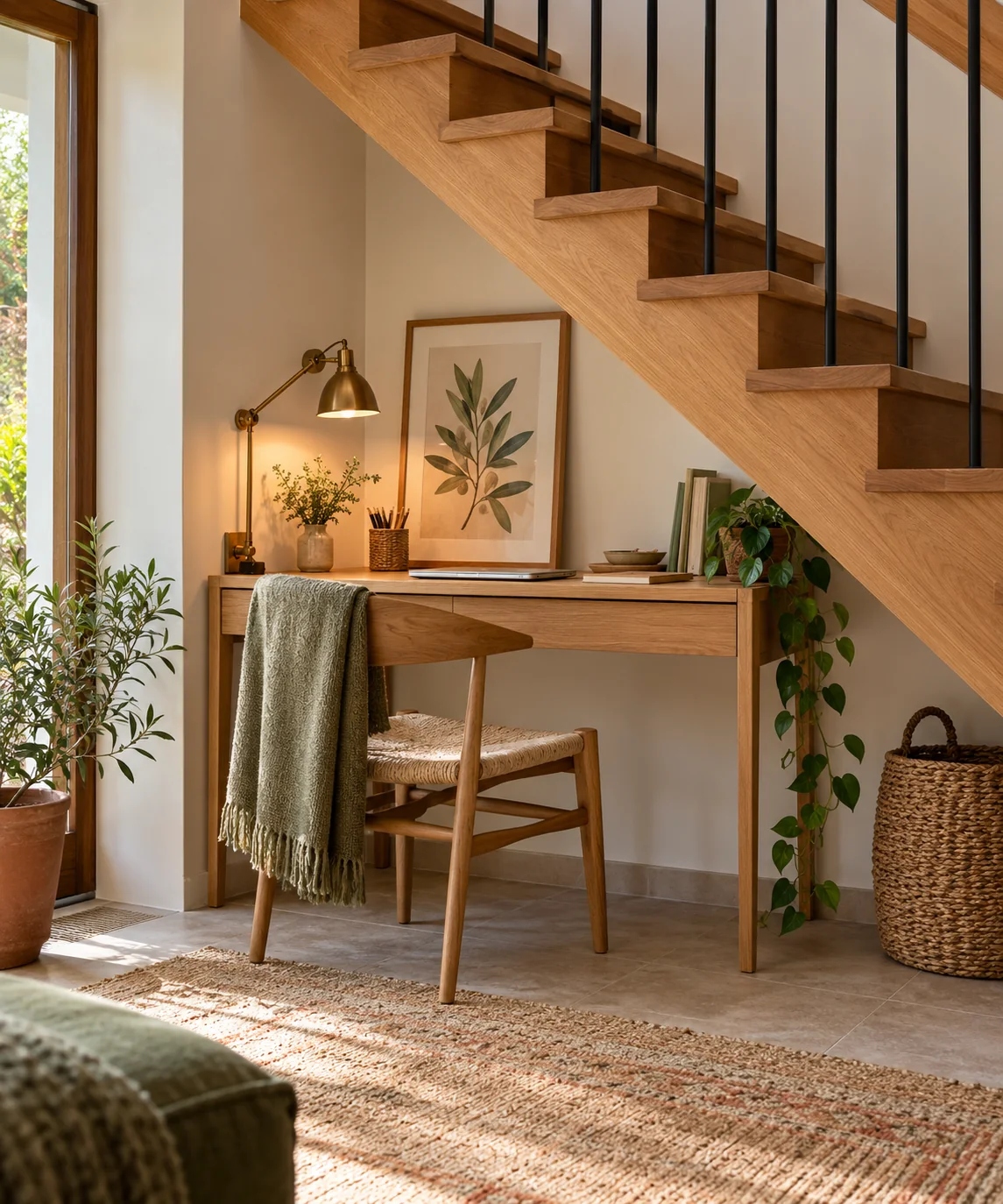
Evaluating Slope Clearances and Natural Posture
Before purchasing or repositioning furniture, map the vertical drop of the stair carriage at multiple points. Because staircase angles vary widely, test the overhead clearance against your own seated height and your habitual path when standing up. Arrange the main task chair beneath the highest available ceiling point within the nook rather than directly under the steepest slope. Ensure your primary movement zone provides enough clear margin so you never brush against stringers or tread edges when leaning back or standing, reserving the lowest corner for shallow, floor-based storage units.
Selecting a Proportional, Freestanding Desk
Standard rectangular desks can sometimes crowd the tight corners of an angled nook. Consider a slim writing table or a stepped configuration where the deeper working area rests under open headroom, allowing the narrower portion to sit within the lower slope. Freestanding furniture that does not rely on wall anchors preserves your home's finishes and structural members. Position the desk far enough forward from the back wall to leave adequate legroom while utilizing the rear low-clearance floor space for wire organizers or equipment that requires infrequent interaction.
Addressing Dust and Overhead Drift Safely
Open-riser staircases allow ambient dust, grit, and pet hair to fall onto surfaces placed directly below. While covering the underside of the stairs might seem practical, suspending fabrics, tapestries, or non-rated overhead panels can violate residential fire safety standards that regulate combustible materials along primary escape routes. Instead, protect equipment with physical covers such as fitted acrylic keyboard bridges, closed laptop sleeves, and easy-to-wipe desk pads when work concludes. For permanent enclosures, consult applicable building codes regarding approved fire-resistant materials.
Targeting Directional Task Illumination
Stair alcoves generally receive limited perimeter daylight, and angled ceilings rule out standard overhead light fixtures without invasive rewiring. A freestanding floor lamp or an adjustable, padded clamp light mounted to the rear lip of the desk offers flexible illumination without permanent modifications. Articulated gooseneck designs enable you to angle the beam downward onto paper and keyboard surfaces, reducing harsh glare on monitors while counteracting the heavy cast shadows created by the staircase overhang.
Managing Foot Traffic and Sound Reflection
Under-stair spaces frequently border busy hallways or family circulation paths, making ambient noise and movement noticeable. Orient your seating so the computer screen does not face directly into the corridor, helping maintain personal concentration. To dampen the hollow sound reflections common to stair alcoves, incorporate soft, non-permanent finishes such as a dense wool desk mat, cork desktop trays, and a non-slip floor runner. These soft surfaces help absorb localized reverberations from nearby footsteps without structural modification.
YOUR STARTING POINT
A little checklist.
Original editorial guidance. Images are AI-generated concepts, not photographs of completed projects. Our sources and approach.
Questions to consider
How do you determine if there is sufficient headroom under a staircase?
Sit in your intended office chair with a measuring tape positioned directly overhead. Compare your seated height, as well as the height required as you lean forward to stand, against the lowest tread or stringer in that spot. Ensure a comfortable buffer remains so you can stand up without hunching or risking impact.
Can shelves be attached directly to stair stringers?
It is generally advisable to avoid drilling or fastening storage hardware directly into staircase stringers, as these components are primary load-bearing elements. Instead, utilize freestanding shelving units, modular ladder desks, or furniture designed to rest independently on the floor.
What is the best way to handle cables in an open-stair office?
Use weighted cable trays, floor-resting cord organizers, or hook-and-loop straps secured to the desk frame itself. Keep cords entirely independent of the staircase treads and risers to prevent snagging hazards and avoid drilling into the stairs.