Small Balcony Layouts · THE GUIDE
Build a Vertical Herb Station on a Freestanding Trellis
Balcony walls often carry strict rental agreements or structural restrictions that forbid drilling anchor brackets into exterior building cladding. A freestanding slatted wooden screen offers a practical, reversible alternative that elevates edible plants without permanent wall interventions. By taking advantage of vertical space, this configuration keeps ground-level balcony tiles completely clear for walking while maximizing exposure to outdoor sunlight. Because most culinary herbs require strong, direct sun to sustain healthy growth, proper orientation and balanced weight distribution are essential. Planning this layout carefully protects building surfaces while establishing an accessible, productive, and organized vertical culinary growing hub.
Jump to the checklist ↓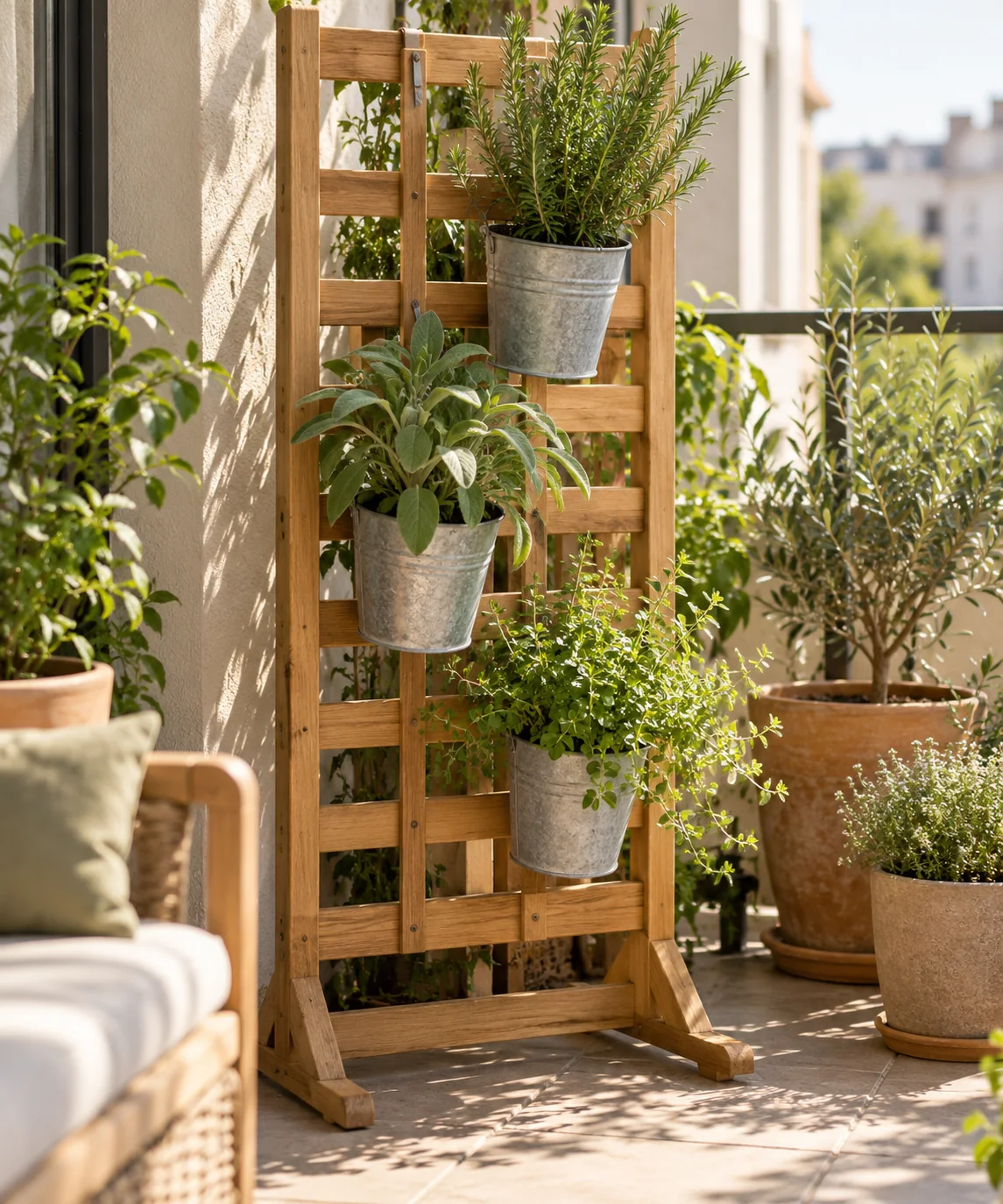
Base Stability and Balcony Guidelines
A freestanding trellis relies on a broad, level base or an integrated bottom planter box for balance, but outdoor wind conditions introduce substantial lateral forces. Before introducing any tall structure to a balcony, review building bylaws and consult property management regarding height limitations, safety enclosures, and overall load allowances. Position the trellis against an interior dividing wall rather than outer railings to reduce exposure to strong drafts. If your unit utilizes a bottom planter, adding potting medium provides ballast to lower the center of gravity, though it cannot guarantee stability during severe weather. Always verify that emergency egress routes remain completely clear.
Hook and Container Selection
Choose containers equipped with wide, sturdy hooks that fit the precise depth of your trellis slats. Resin, molded plastic, or powder-coated metal planters each have differing weights and lifespans, so verify manufacturer ratings for outdoor exposure and weight tolerances before hanging. Containers must sit flush against the framework rather than angling outward, as tilted pots spill water unevenly and place torsion on individual slats. Keeping container sizes modest helps distribute weight evenly and makes them manageable to take down when weather alerts advise clearing outdoor balconies.
Balcony Sunlight Patterns and Herb Selection
Culinary herbs vary in their environmental requirements, though many common species such as rosemary, thyme, and oregano generally thrive with generous direct sunlight. Track the movement of light across your balcony floor and walls over several days to identify actual hours of exposure, noting where overhangs or nearby buildings cast shadows. Position sun-preferring herbs across upper or central rungs where ambient light is strongest, while allocating spots that experience intermittent shade to herbs like chives or mint. Rotate containers periodically if growth leans toward the primary light source.
Soil Management and Drainage Controls
Effective drainage is necessary to maintain root health and prevent structural damage to balcony finishes. Containers require functional drainage outlets, ideally paired with detachable saucers to catch excess irrigation water and prevent dirty runoff from staining balcony surfaces or dripping onto units below. Avoid placing gravel in the bottom of pots, as it reduces available root volume without improving aeration. Use a quality potting soil suited to container cultivation, and empty drainage saucers shortly after watering to prevent prolonged water retention.
Load Management and Seasonal Adjustments
Distribute hanging planters evenly across horizontal slats to prevent localized stress on individual joints. Never assume corner positions or planter designs negate structural weight concerns; wet soil, containers, and mature foliage accumulate substantial mass that must stay within property management limits. Inspect timber joints, fasteners, and slat integrity regularly for signs of weathering or loosening. When high wind advisories or winter storms are forecasted, move hanging pots down to floor level or store them indoors to prevent displacement.
YOUR STARTING POINT
A little checklist.
Original editorial guidance. Images are AI-generated concepts, not photographs of completed projects. Our sources and approach.
Questions to consider
Can culinary herbs grow on a vertical trellis in partial shade?
Herbs like chives, mint, and parsley often adapt to partial shade or filtered light, though Mediterranean herbs like rosemary and thyme produce more vigorous growth in locations receiving several hours of direct sun. Observing your balcony's actual light patterns helps you match appropriate species to available exposure.
How should I stabilize a freestanding trellis on a windy balcony?
Position the structure against a solid interior wall and utilize a broad, weighted base, but recognize that surface ballast cannot guarantee stability in extreme winds. Review property management guidelines for tall outdoor furnishings, and take down upper hanging pots whenever severe weather or high wind warnings are issued.
How do I prevent drainage water from dripping onto lower pots or neighboring balconies?
Use containers with integrated or clip-on drip trays that catch excess water beneath each pot. Empty these trays after watering to protect root zones, and arrange pots in a staggered formation so any accidental overflow does not cascade directly onto foliage beneath.