Bookshelf Styling · THE GUIDE
Build Visual Rhythm on Inexpensive Laminate Bookcases Using Negative Space
Laminate flat-pack bookcases often look crowded when every linear inch is packed with books, which can cause thin composite shelves to bow over time. Designing intentional voids—or negative space—transforms utilitarian storage into an airy architectural installation. By grouping books into distinct horizontal and vertical clusters while deliberately leaving parts of each tier unadorned, you balance the overall visual weight. This approach eases the mechanical load on standard particleboard spans and shifts the focus toward the quality of your reading collection rather than the plain finish of mass-produced furniture.
Jump to the checklist ↓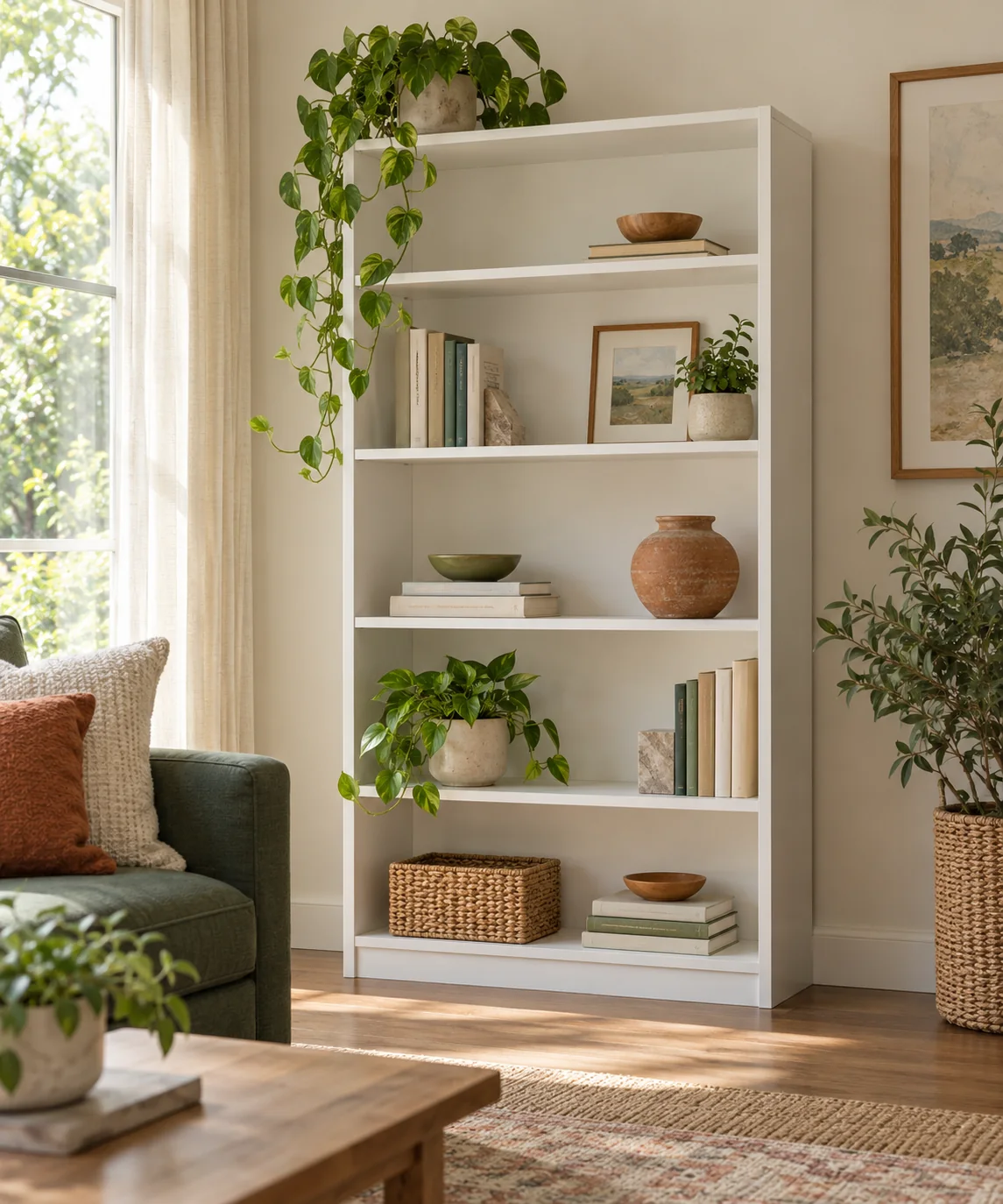
Managing Shelf Weight and Visual Density
Composite and laminate bookshelves vary in their weight capacities, which can make intentional spacing practical as well as decorative. Review manufacturer guidelines for maximum shelf load ratings, as thin particleboard spans can bow under heavy, continuous weight. Concentrating heavier volumes along lower tiers and closer to the side uprights reduces stress along the center of the span. Leaving deliberate open intervals across middle shelves minimizes unnecessary physical load while keeping mass-produced shelving from looking overwhelmed by dense rows of text.
Alternating Vertical Rows and Horizontal Stacks
Create visual variation by pairing a modest vertical grouping of volumes on one side of a tier with a low horizontal stack on the opposite end. Leaving an open gap between these groupings provides a visual resting point and breaks up monotonous runs of book spines. Horizontal stacks naturally stabilize books and serve as resting surfaces for small, lightweight objects, reducing the need for separate bookends. Keep horizontal stacks limited to a few books to maintain stability and keep the backing panel visible as a unifying backdrop.
Aligning Book Spines for Visual Order
Negative space appears intentional when adjacent book clusters maintain consistent alignment. Align the front spines uniformly along the front edge of the shelf or set them back evenly across the row to produce crisp, clean shadow lines. Floating clusters irregularly or letting books push back unevenly against the backboard can make open expanses look disordered rather than planned. Consistent alignment across tiers gives basic flat-pack furniture an intentional, structured look.
Curating Heights and Spine Colors
Varied spine heights and clashing jacket graphics can disrupt open shelf displays. Within each grouping, arrange books by relative height or tone down contrasting commercial covers by removing glossy dust jackets where plain cloth or paper boards look calmer underneath. Grouping similar tones together allows the deliberate pauses between clusters to feel rhythmic and cohesive, directing attention to the books rather than the seams or edge-banding of inexpensive laminate panels.
Routine Cleaning and Arrangement Maintenance
Exposed laminate shelves inevitably collect airborne dust that shows prominently on smooth finishes. Incorporate light dusting into regular cleaning habits using a dry microfiber cloth, gently wiping empty intervals without disturbing established groupings. When removing volumes for daily reading, adjust neighboring books or place a small placeholder to maintain the intended spacing. If your personal library grows, consider adding dedicated storage elsewhere rather than overcrowding display tiers and compromising the visual rhythm.
YOUR STARTING POINT
A little checklist.
Original editorial guidance. Images are AI-generated concepts, not photographs of completed projects. Our sources and approach.
Questions to consider
How much open space should be left on a laminate bookshelf?
There is no rigid percentage, but keeping roughly a quarter to a third of shelf length open creates clear visual rhythm. Consult the manufacturer's load specifications to avoid exceeding weight limits on composite spans, adjusting open areas based on book weight.
How can I prevent books from tipping in open arrangements without large bookends?
Low horizontal stacks of books provide natural lateral support for adjacent vertical rows. You can also place discreet non-skid rubber pads beneath the end volumes or choose heavy, flat-based paperweights to secure upright books neatly.
What should I do when my reading collection begins to outgrow the display?
Avoid packing volumes tightly into intentional gaps, which strains shelf spans and creates clutter. Instead, store overflow reference materials or paperbacks in storage bins, closed cabinets, or secondary utility shelving to preserve display balance.