Indoor Plant Styling · THE GUIDE
Camouflage Media Console Cords with an Upright Snake Plant
Televisions and media consoles frequently leave a cluster of power cords, surge protectors, and wall outlets exposed along baseboards. Instead of relying entirely on plastic wire channels or complex rerouting, you can integrate a tall, upright snake plant in a sleek cylinder pot as a visual buffer. The dense, vertical sword-like foliage provides immediate structural screening without claiming excessive horizontal floor area. By understanding proper placement margins, light considerations, and water management around sensitive electronic equipment, you can neatly conceal utility clutter while adding a sculptural botanical accent to your entertainment zone.
Jump to the checklist ↓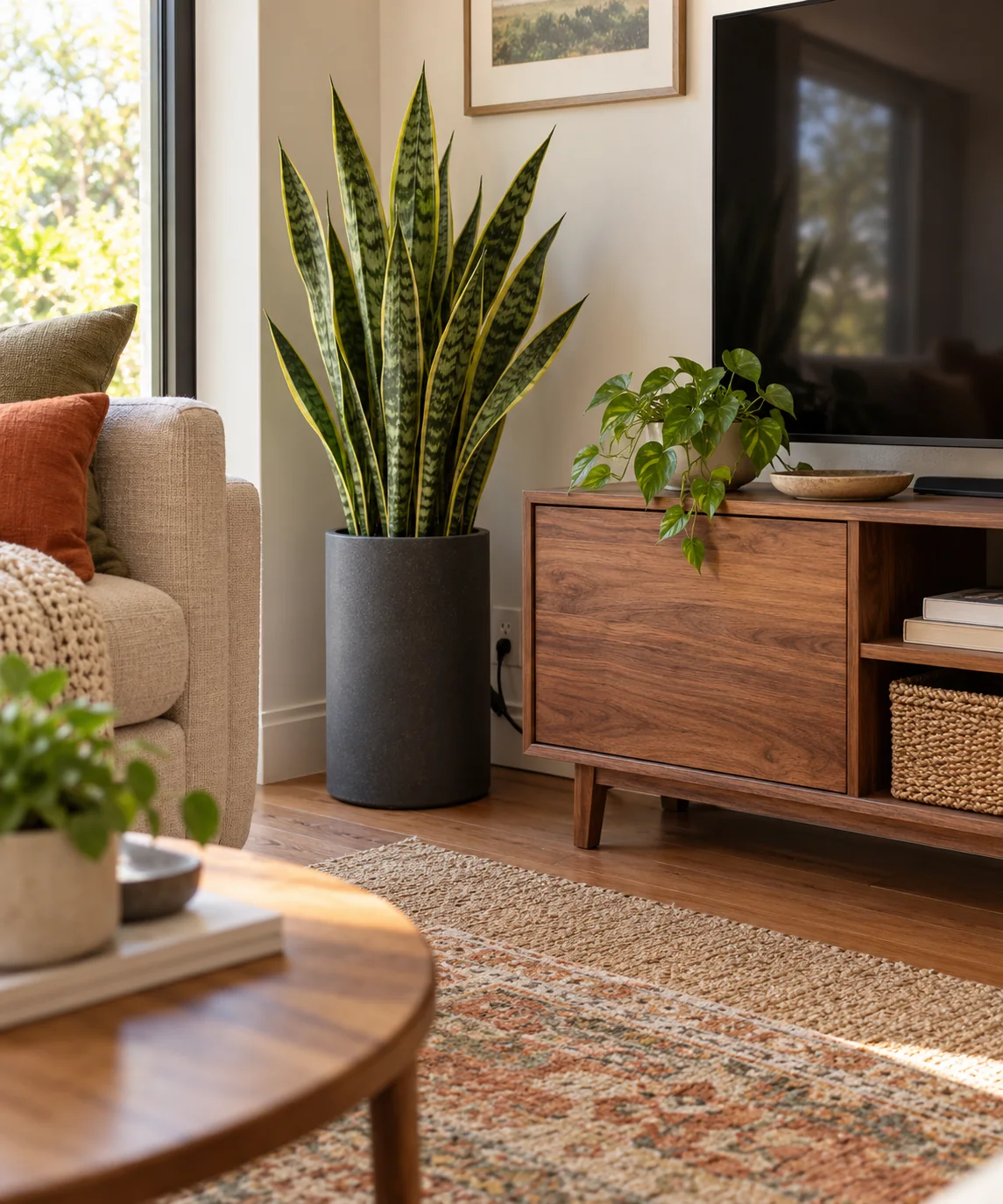
Assessing Clearance and Equipment Ventilation
Media components generate ambient warmth during operation, and electronic enclosures rely on unobstructed ventilation ports to dissipate heat. Position your snake plant container far enough from console exhaust vents and power amplifiers to maintain free airflow as specified in your equipment user manuals. Crowding warm exhaust ports with dense foliage can dry out plant tissue or cause internal component temperatures to rise. Angling the planter slightly forward allows heat to disperse upward and outward into the room without warming the pot wall. Ensure leaves do not press against television screens, optical sensors, or fragile wire connectors, preserving convenient access whenever cables need adjustment.
Choosing Pot Dimensions and Floor Stability
Select a broad-based, substantial ceramic or stoneware cylinder container to prevent accidental tipping in active living areas. A container with sufficient height paired with mature, architectural snake plant foliage screens low wall receptacles and hanging cable bundles effectively without spreading wide across high-traffic floor space. Avoid lightweight plastic pots that shift easily if brushed by a vacuum cleaner or household members. Use a planter with an internal sealed liner or pair the pot with a heavy, waterproof saucer rather than allowing an open drainage hole to rest against baseboard flooring near electrical outlets.
Grouping and Routing Background Cables
Before positioning the planter, gather trailing power leads, HDMI lines, and speaker wires into a tidy vertical bundle using reusable hook-and-loop straps. Route cables straight along the console frame or baseboard trim toward the surge protector rather than letting them sprawl across open flooring. The dense foliage provides a visual foreground screen rather than a physical cord clamp. Never rest heavy electrical cords directly across damp soil surfaces, and do not wrap live wiring around the exterior of the container, where movement could strain cable heads or pull equipment.
Managing Moisture Safely Near Electronics
Handling water around power strips and entertainment components demands consistent caution to reduce moisture hazards. Always lift the inner nursery pot out of the decorative cylinder and carry it completely away from the media console to water it at a sink. Allow excess water to drain out fully through bottom weep holes before carrying the nursery pot back to its decorative sleeve. Snake plants require infrequent watering and dry out between cycles, making them well-suited for spaces near electrical gear since handling water nearby is minimized. Never pour water directly into the planter while it stands adjacent to electrical connections or wall sockets.
Adjusting for Ambient Light Levels
Assess the light levels surrounding your media console to support long-term leaf structure. Although snake plants tolerate relatively dim indoor conditions, prolonged low light can cause sword-shaped leaves to stretch, soften, or lean outward toward distant windows, reducing their upright screening habit. Rotate the container a quarter turn every few weeks so foliage develops evenly on all sides. If your entertainment center sits far from natural daylight, positioning the container slightly forward into the room helps leaves maintain their firm, upright habit and dense screening profile.
YOUR STARTING POINT
A little checklist.
Original editorial guidance. Images are AI-generated concepts, not photographs of completed projects. Our sources and approach.
Questions to consider
Will the heat from the television harm the snake plant?
Televisions emit mild ambient warmth that typically does not harm hardy snake plants if proper air circulation is maintained. Keep foliage away from active heat exhaust vents and high-wattage amplifiers to prevent dry brown spots along leaf margins.
Can I put the surge protector directly behind the pot?
A surge protector can sit behind the container if housed in a dedicated cable management box or elevated off the floor. Keeping electrical connections isolated from damp surfaces and watering routines reduces the risk of accidental water contact.
What foliage height works best beside a standard television credenza?
A combined plant and container height that reaches roughly level with the credenza top or lower screen border offers effective cord screening without blocking viewing angles or remote-control sensor pathways.