Household Reset Routines · THE GUIDE
Capsule Wardrobe Hanger Spacing and Empty Hanger Tally
A functional capsule wardrobe relies as much on closet organization as it does on careful garment selection. When hangers jam together tightly along a rail, fabrics crease, buttons snag, and selecting an outfit becomes frustrating. Performing a regular hanger reset corrects rod crowding and restores order. By spacing active garments comfortably, standardizing hanger orientation, and gathering empty hangers into a designated area, you protect seams, improve visibility, and keep track of your active wardrobe pieces.
Jump to the checklist ↓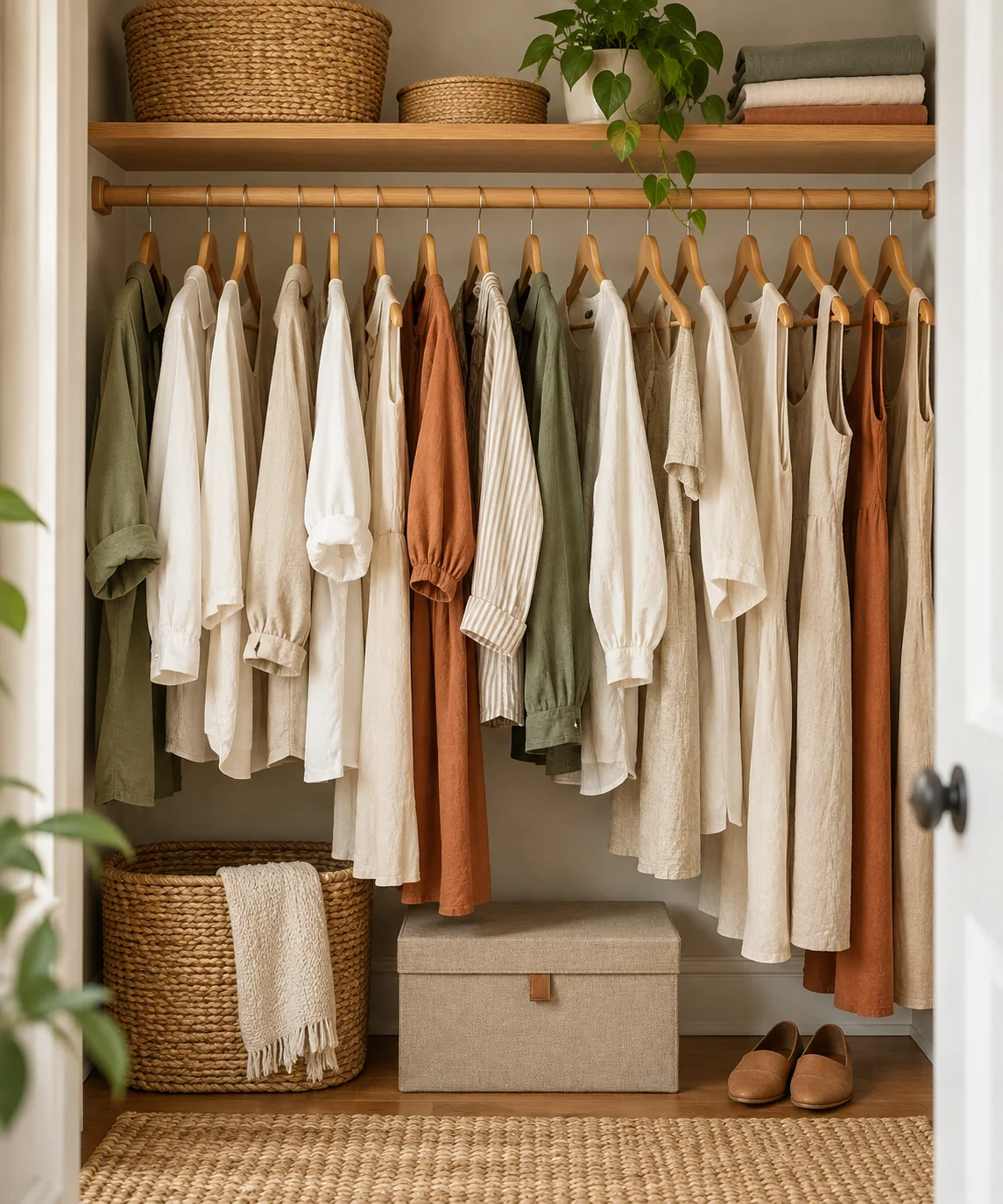
Spacing Garments to Prevent Crowding and Compression
Begin at one side of the closet rail and adjust each hanger so that garments hang without severe compression between them. When clothing presses tightly together, fabrics wrinkle more readily and delicate trims can catch on adjacent pieces. Leaving visible space between garments allows fabrics to drape naturally and makes individual items easier to identify. Adjust the spacing according to your available rod length and closet depth, focusing on comfortable access rather than an arbitrary measured gap.
Auditing and Consolidating Empty Hangers
As garments are worn throughout the week, empty hangers naturally scatter between remaining clothes. Slide bare hangers toward one end of the rod, away from active capsule pieces. Group identical empty hangers together by material and hook direction. Counting empty units offers a straightforward view of how many wardrobe pieces are currently in the laundry or out for dry cleaning. Consolidating empty units frees rod space and prevents bare frames from tangling with occupied hangers.
Matching Hanger Profiles to Garment Construction
Check that each hanging piece rests on an appropriate frame. Tailored jackets, blazers, and heavier coats benefit from contoured wooden or wide molded hangers that support shoulder seams and collar structure. Lightweight cotton shirts and silk blouses hang well on slim profiles with smooth finishes or textured surfaces that prevent slippage. Heavy knits and sweaters are best folded on shelves or in drawers to avoid stretching shoulder seams, while wire dry-cleaning frames should be recycled to prevent creasing.
Zoning Garments by Category and Sleeve Length
Organize active garments along the rail in a practical sequence that suits your daily dressing habits. Many people find it helpful to group clothing by category—such as button-up shirts, trousers, dresses, and light layers—and further arrange each section from sleeveless to long-sleeved. Orienting all hanger hooks in the same direction, facing inward toward the closet back wall, creates visual consistency and prevents hooks from catching on neighboring bars when you remove an item.
Managing Surplus Hardware and Rod Capacity
A functional wardrobe setup benefits from physical boundaries. If the count of empty hangers exceeds what you need for your active seasonal wardrobe, remove the extra hardware from the main rod. Store surplus hangers in a basket, hanging organizer, or utility shelf. Capping the number of accessible hangers on the rail keeps the rod manageable, making it easier to return clean clothes to their places without overcrowding the rail.
YOUR STARTING POINT
A little checklist.
Original editorial guidance. Images are AI-generated concepts, not photographs of completed projects. Our sources and approach.
Questions to consider
Why should I remove empty hangers from between hanging clothes?
Leaving bare hangers mixed among garments creates visual clutter, catches on lightweight fabrics, and takes up usable space. Consolidating empty hangers in one spot keeps garments visible and simplifies returning clean clothes to the closet.
How much distance should exist between garments in a wardrobe?
There is no strict universal measurement. Aim for enough space so garments hang freely without pressing flat against neighboring pieces, allowing easy removal without catching buttons or seams.
What is the best way to store surplus hangers I am not using?
Store surplus hangers in a dedicated basket, canvas tote, or storage bin on a high shelf. Grouping them by style and keeping hooks aligned prevents tangling and frees up closet rod space.