Reading Corners · THE GUIDE
Carve a Reader's Refuge in a Slanted Under-Eaves Attic Gap
The shallow crawl space under slanted attic rafters often ends up as dead square footage or unorganized box storage. Because typical upright furniture cannot fit beneath low roof pitches, this architectural niche is ideally proportioned for a horizontal daybed arrangement. By setting an elongated mattress onto a low-profile timber slatted base along the knee wall, you convert an awkward triangular volume into an intimate personal retreat. This strategy preserves valuable loft center space while ensuring full body relaxation directly beneath the architectural angles of the ceiling.
Jump to the checklist ↓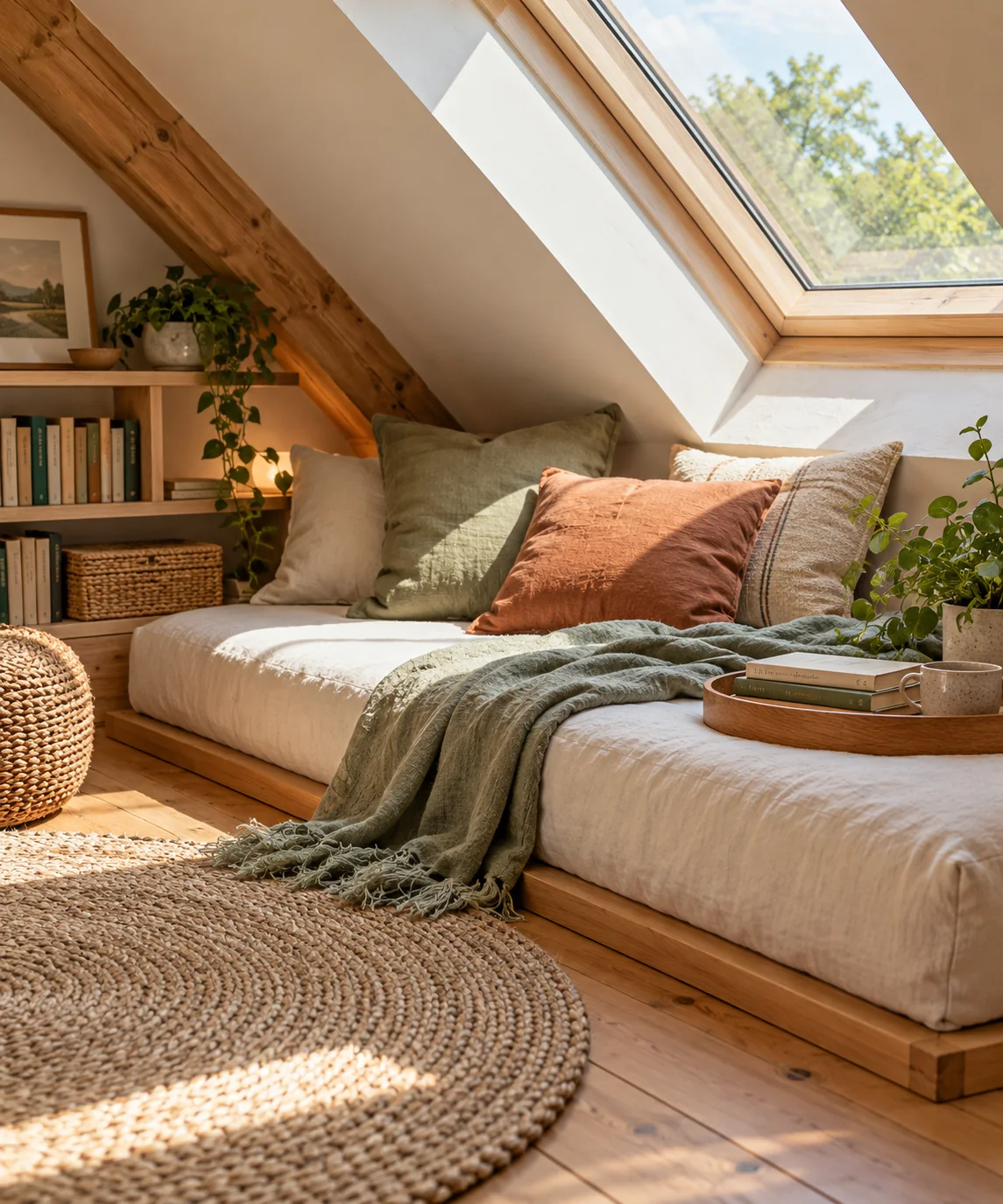
Assessing Seated Headroom and Slope Angles
Before positioning furniture beneath attic eaves, test the ceiling pitch against your own seated height. Sit on the intended cushion or mattress directly on the floor to verify that your head and shoulders clear the descending rafter line when leaning back. Because roof pitches and individual torso lengths vary widely, establishing this boundary by direct trial prevents uncomfortable collisions. Check that the position allows a natural, unhurried transition when rising, moving your body toward the higher central ceiling rather than standing straight up into the rafters.
Promoting Under-Mattress Airflow
Placing a mattress directly on uninsulated or cold attic flooring can trap moisture and encourage condensation, particularly in roof spaces that experience significant temperature swings. A low slatted timber base or breathable platform elevates the mattress slightly to maintain passive air circulation beneath the fabric. Prior to placing the base, inspect the adjacent knee-wall area and subfloor for signs of trapped moisture, persistent drafts, or dust buildup, making sure not to block any under-eave ventilation paths or service access panels.
Selecting Low-Profile Daybed Bedding
Bulky bedding and oversized duvets easily bunch against sloping drywall, collecting dust along perimeter gaps. Fitted, breathable natural fiber sheets and a lightweight coverlet keep the profile compact and simple to manage within a confined footprint. A firm bolster or wedge pillow can cushion the angle between the mattress and the low knee wall, providing structured back support without placing direct pressure on attic drywall or plaster surfaces.
Arranging Low-Profile Floor Storage
Vertical shelving is rarely practical beneath deep roof angles, making horizontal, floor-level storage the most functional approach. A sturdy wooden tray, shallow storage crate, or low runner box positioned along the floor keeps reading material, spectacles, and accessories neatly organized within reach. Keeping all storage components lower than the daybed plane preserves sightlines, keeps perimeter access open, and avoids making the low-ceilinged alcove feel overly confined.
Managing Attic Climate and Lighting
Attic temperatures tend to fluctuate across seasons, capturing warmth under the roof deck in summer and cooling quickly during cold spells. Layering breathable textiles allows you to adapt to changing ambient conditions without adding permanent bulk. Because attic perimeters often lack convenient electrical outlets, prioritize stable, battery-powered or rechargeable task lights placed securely on low floor trays. Avoid running loose extension cords across narrow walkways or under floor cushions.
YOUR STARTING POINT
A little checklist.
Original editorial guidance. Images are AI-generated concepts, not photographs of completed projects. Our sources and approach.
Questions to consider
Can a mattress be placed directly on an attic floor?
Placing a mattress directly on a cold attic subfloor restricts air circulation, increasing the likelihood of condensation and moisture buildup beneath the fabric. Elevating it on a slatted timber base supports consistent airflow and helps keep bedding dry.
How should headroom clearance be determined beneath a slanted roof?
Rather than relying on a generic measurement, sit upright on the mattress at the planned location and test your natural range of movement. Make sure there is adequate space to sit up, lean back, and shift forward into the higher center area of the room before standing.
What lighting options work best in eaves without nearby outlets?
Rechargeable, weighted LED table lamps or battery-operated reading lights provide focused illumination without requiring extension cords to run across low-clearance walkways where they could become tripping hazards.