Compact Home Offices · THE GUIDE
Carve Out a Kitchen Corner Planning Desk Using Wall Pegboards
Awkward gaps in kitchen layouts—such as a narrow two-foot alcove between cabinetry runs and an exterior wall—frequently become dead zones. Transforming this small footprint into a dedicated household command center offers practical utility for meal planning, managing family schedules, and sorting correspondence. By mounting a sturdy birch plywood pegboard on the alcove wall above a compact counter, you create a customizable vertical storage system that keeps papers and electronic devices safely elevated above wet food-preparation zones while optimizing a previously overlooked nook.
Jump to the checklist ↓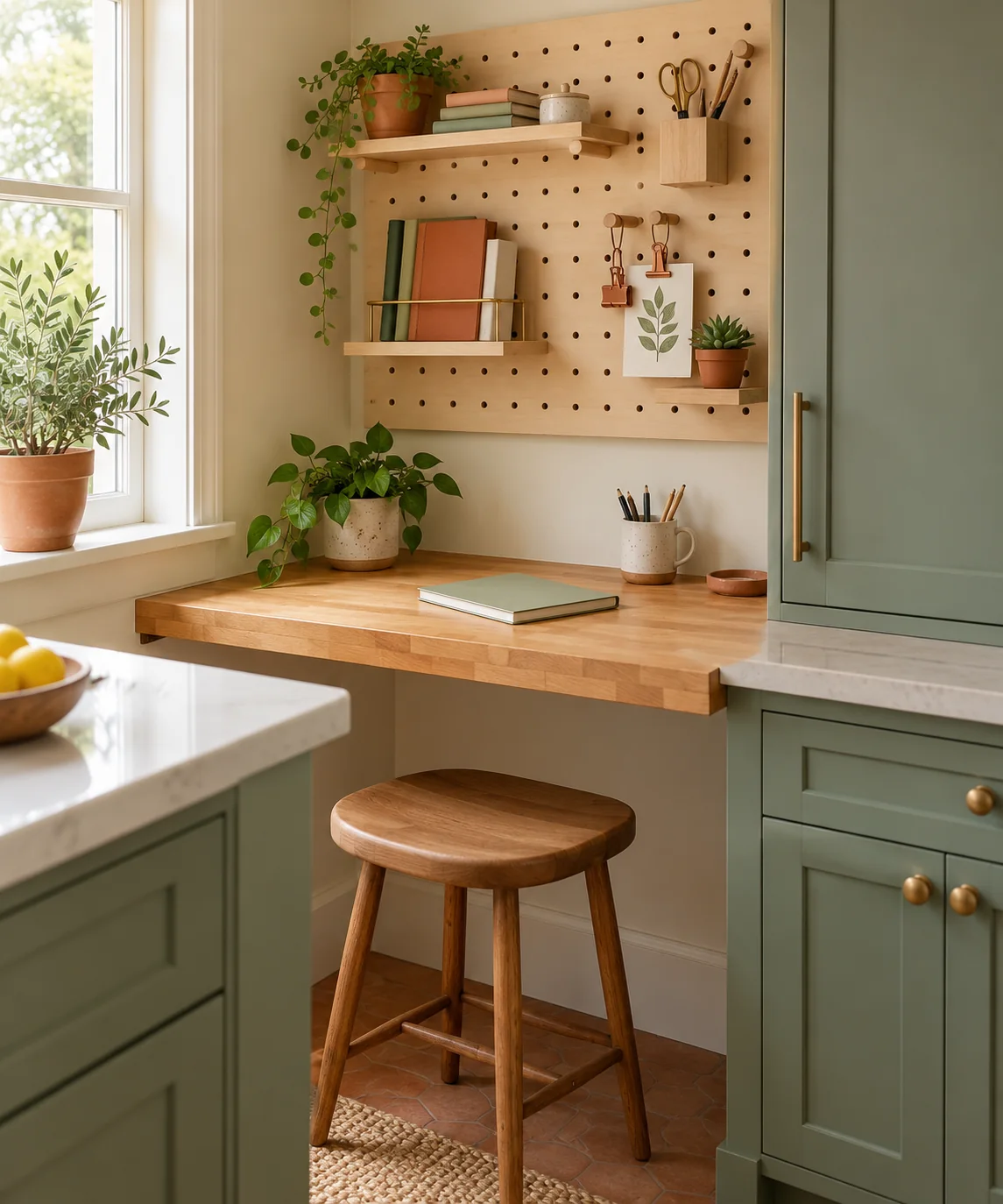
Evaluating Alcove Dimensions and Zones
A two-foot alcove provides a compact but functional workspace when properly planned. Ensure the station sits comfortably away from moisture, grease, and direct cooking heat produced by stovetops or sinks. A width of 24 inches accommodates basic writing or typing on a compact keyboard, though lateral elbow room remains confined by adjacent surfaces. Select a position where pulling up a stool will not block refrigerator access, pantry walkways, or primary food preparation traffic.
Worksurface Support and Leg Clearance
When planning a worksurface or butcher-block ledge, aim for a depth of 18 to 20 inches. Trimming depth relative to standard 24-inch kitchen counters preserves elbow room and makes navigating the tight corner easier. Any wall-mounted surface requires heavy-duty support brackets anchored securely into wall framing studs in accordance with manufacturer weight limits, rather than relying on hollow drywall anchors. Alternatively, a freestanding narrow console desk avoids wall attachments entirely while leaving floor space clear for seating.
Pegboard Layout and Vertical Storage
A birch plywood pegboard maximizes alcove walls by utilizing vertical space for lightweight organization. Mount modular wooden dowels and shallow shelves to hold recipe cards, notebooks, and small supplies. Use lightweight hanging bins for sorting incoming mail, and place wooden pegs to organize scissors and non-electrical supplies. Keeping these everyday items on the wall preserves the shallow desktop surface for paperwork, reading, or tablet use.
Protection from Kitchen Splatter and Grease
Airborne cooking oils and moisture can affect paperwork and unfinished wood surfaces over time. Seal natural birch pegboard panels with a wipeable, low-VOC clear finish or water-resistant hardwax oil before mounting so surfaces can be cleaned easily. Keep important paper schedules or mail inside folders or protective clipboards. Clean the pegboard and desktop periodically with a lightly damp cloth to prevent dust and kitchen residue from accumulating on components.
Managing Daily Clutter and Workflow
A two-foot station fills up quickly if used as a drop zone for miscellaneous kitchen items. Reserve this surface strictly for administrative tasks such as meal planning, reviewing bills, and sorting daily mail. Establish a routine of recycling packaging immediately and filing paperwork into designated wall slots. Keep power strips and device chargers resting on the worksurface in plain view rather than concealed behind furnishings, which prevents cord pinching and maintains easy access to plugs.
YOUR STARTING POINT
A little checklist.
Original editorial guidance. Images are AI-generated concepts, not photographs of completed projects. Our sources and approach.
Questions to consider
How do I manage charging cords safely in a small kitchen alcove?
Keep power cords visible and accessible along the desktop surface rather than running them behind wall panels or through drilled openings where insulation can pinch or overheat. Connect devices to a surge-protected power strip plugged into an accessible GFCI outlet, using surface-mounted clips to gather slack.
Can I use standard metal pegboard hardware on birch plywood boards?
Plywood pegboards typically feature thicker panels and wider hole spacing than standard perforated hardboard or metal sheets. Use hardware specifically matched to the hole diameter and panel thickness, such as compatible wooden dowels or manufacturer-specified hanging brackets.
What stool height works best for this kitchen planning station?
Match the stool height to your worksurface installation. If the counter aligns with standard 36-inch kitchen counters, choose a 24-inch counter-height stool. If the surface is mounted at standard 30-inch desk height, select an 18-inch seat that can tuck fully beneath the ledge.