Reading Corners · THE GUIDE
Carve Out an Under-Stair Reading Retreat with Low-Profile Seating
The triangular recess beneath an open staircase often collects miscellaneous household clutter or sits unused due to awkward diagonal headroom. Transforming this niche into a low-profile reading nook takes advantage of the descending ceiling line while maintaining an open feel. Sitting close to the floor keeps your head well below the downward angle of the stringers, while low, modular shelving can step down to match the narrowing space. By pairing floor-level cushions with freestanding task lighting and realistic awareness of overhead foot traffic, you can turn an underutilized architectural alcove into a functional, comfortable reading retreat.
Jump to the checklist ↓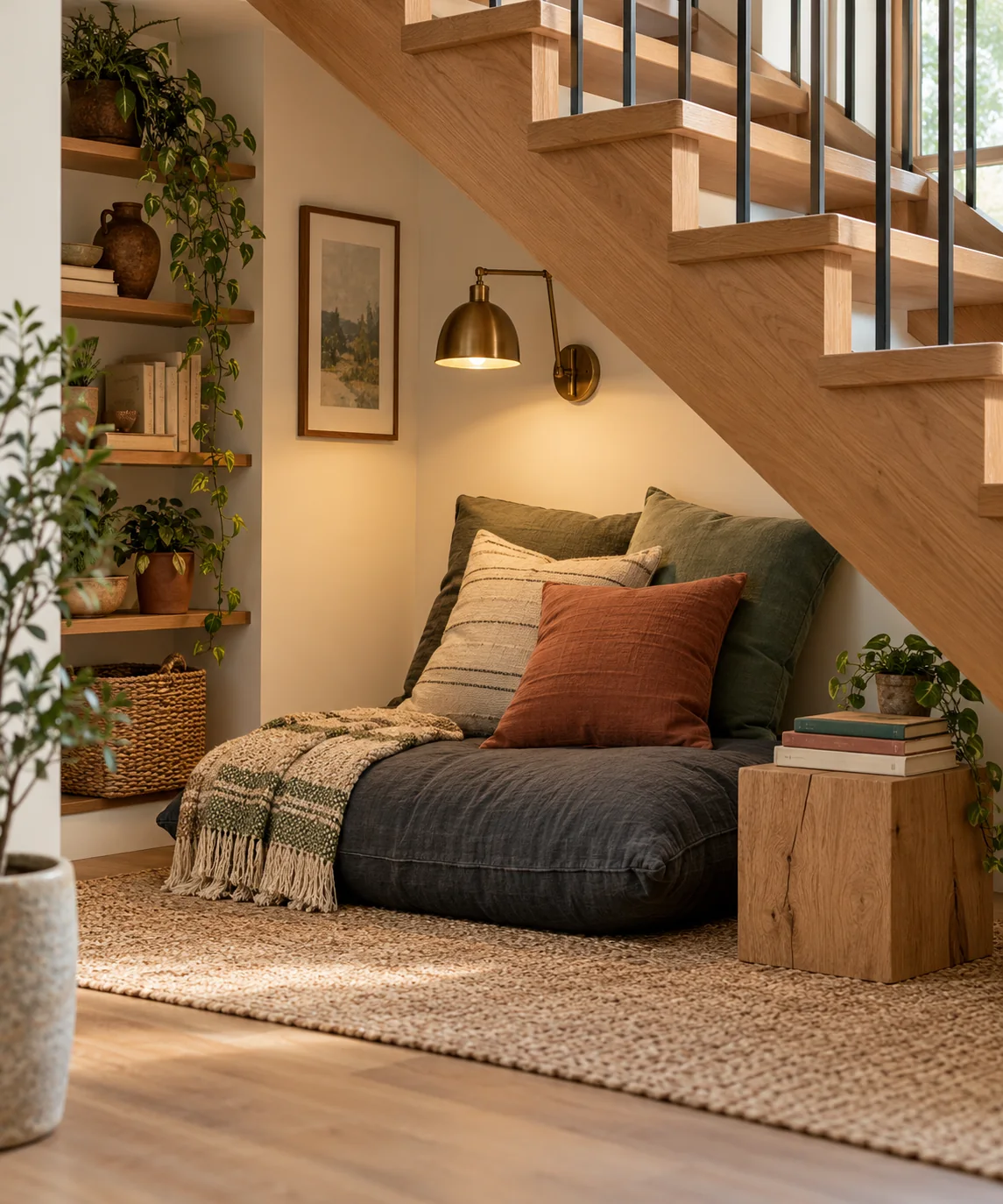
Mapping Headroom and Seated Clearance
Before arranging furniture, check the usable vertical space at various points beneath the stair slope. Sit upright directly on the floor where you plan to place cushions to confirm that your head and shoulders clear the underside of the stairs with room to spare. Account for the movement of sitting down and standing up, ensuring you do not risk striking overhead stringers or treads during transitions. Reserve the tallest opening for entry, exit, and seating, while dedicating the shallowest, most restricted corner to low book storage or small baskets.
Selecting Low-Profile Floor Seating
Standard armchairs lift your torso too high for steeply angled stairs, sharply limiting usable floor area. Low-profile floor cushions, firm futon pads, or foldable foam loungers keep seating height near ground level, leaving comfortable overhead breathing room. Look for dense, resilient foam cores that offer adequate spinal support without compressing completely against hard flooring. Arrange the seating footprint so it sits entirely clear of general room walkways, leaving an unobstructed path for household traffic passing alongside the staircase.
Organizing Low Storage Below the Slope
Modular wooden crates or stepped cube shelving work well to follow the declining angle of the staircase. Arrange units in a descending sequence, placing taller configurations where headroom permits and tapering down to a single horizontal box in the lowest corner. Keep heavier hardcovers and reference books on the lowest level to create a stable base that resists accidental tipping. Check that any storage units sit flat against the floor and are not placed where vibrations from people using the stairs could dislodge loose items.
Planning Freestanding Task Lighting
Because under-stair recesses receive minimal direct daylight, focused reading illumination is essential. Rather than drilling into staircase timbers or attempting permanent electrical installations, use a compact, adjustable floor lamp or a small tabletop reading light set on a stable storage surface. Position the light so the beam shines downward onto your reading material without casting harsh shadows from the overhead treads. Keep power cords routed flat along baseboards and outside of any walking path to eliminate trip hazards.
Managing Overhead Dust and Traffic Considerations
Open-tread staircases present distinct practical challenges, particularly the transfer of dust, footwear grit, and minor debris between open risers. If the treads overhead are completely unsealed or open, consider placing the seating slightly forward of the open gaps or using washable slipcovers that can be shaken out regularly. Be mindful that footstep sounds from the stairs will remain audible in this position; adding a dense area rug beneath your seating provides thermal separation from cold floors, though it will not eliminate the impact noise of active stair traffic overhead.
YOUR STARTING POINT
A little checklist.
Original editorial guidance. Images are AI-generated concepts, not photographs of completed projects. Our sources and approach.
Questions to consider
Is sitting beneath an open-tread staircase practical?
It can be functional, but you should evaluate overhead conditions carefully. Open risers allow dust, pet hair, and grit from shoes to fall through when the stairs are used. If the staircase receives heavy daily traffic, consider placing the seating zone forward toward the stair edge or using closed-tread sections of the recess instead.
How can floor seating remain comfortable during long reading sessions?
Floor-level reading requires firm, layered support. Pair a dense base cushion with a supportive lumbar roll and an angled wedge pillow rested against an adjoining wall to maintain proper spinal posture. A thick area rug beneath the arrangement also helps insulate against cold floors.
Should storage units be attached directly to the staircase framing?
No. Staircases experience minor flex and vibration as people walk on them, which can loosen fasteners or transfer movement into shelving. Keep all storage freestanding on the floor, resting against adjacent structural walls, and maintain stacks at low, stable heights.