Entryway Organization · THE GUIDE
Carve Out Stroller Parking Without Obstructing Hallway Exits
Navigating compact apartment foyers with young children requires thoughtful floor planning, particularly when accommodating bulky equipment like everyday strollers. Leaving an unfolded stroller in a narrow corridor creates bottlenecks, risks scuffing baseboards, and can crowd essential pathways. Carving out a dedicated, practical stroller parking zone involves collapsing the frame upon entering and establishing a compact footprint along a non-egress wall. By planning boundaries with low-profile protective floor mats and accounting for full door swings, households can maintain smooth foot traffic and protect flooring without sacrificing quick access for daily neighborhood outings.
Jump to the checklist ↓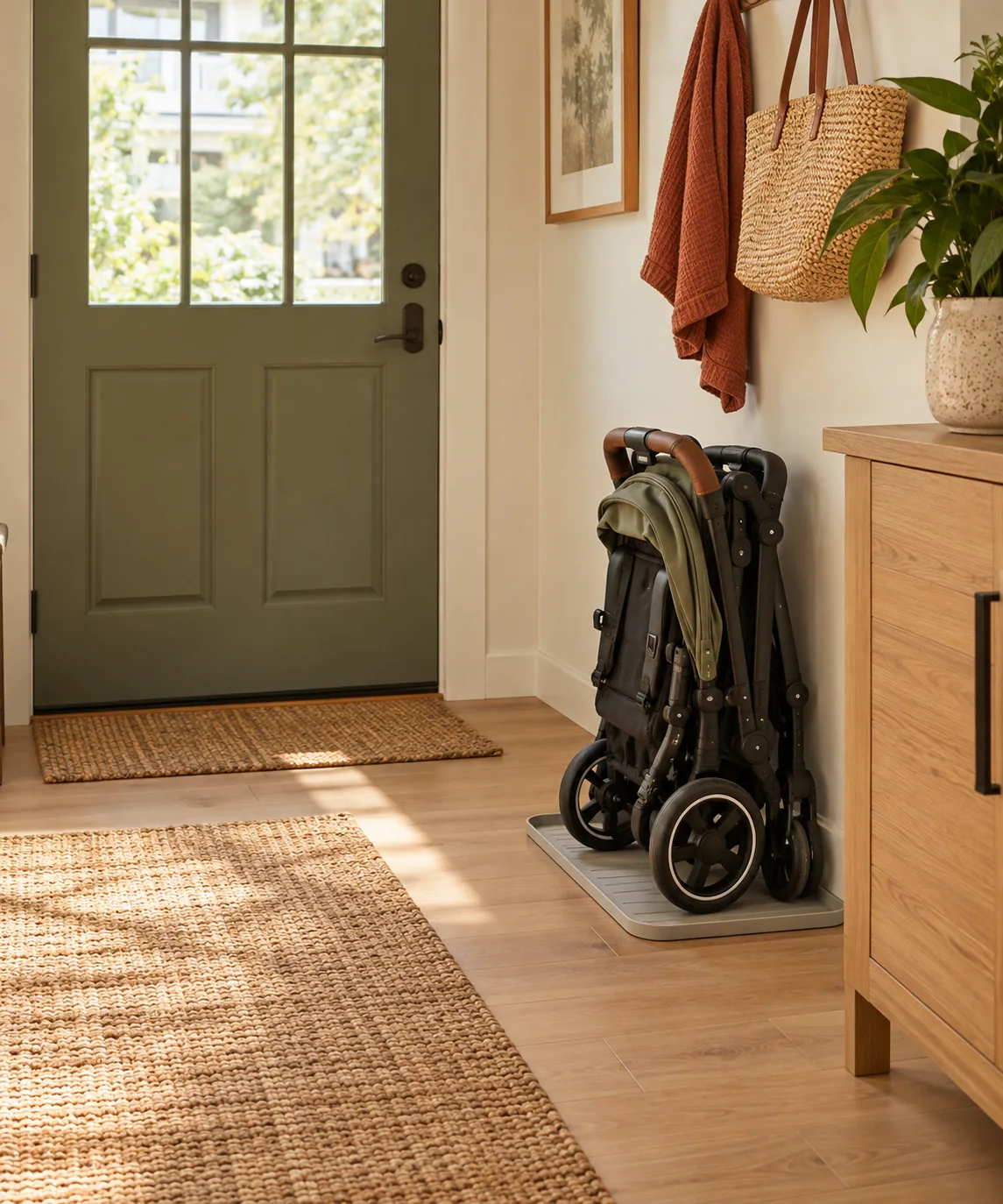
Mapping Corridor Clearances and Door Swings
Identify a designated parking area that keeps primary entry doors and adjoining interior passages clear of physical interference. Measure the folded dimensions of your stroller, taking into account protruding wheels, canopy folds, and extended handlebar grips. Strive to maintain a wide, unobstructed walkway alongside the stowed frame to allow comfortable passage for household members and guests. If your main entrance corridor is exceptionally narrow, consider locating the parking spot around an adjacent corner or near a wide alcove rather than placing it directly in the primary circulation path.
Evaluating the Footprint with Removable Tape
Before establishing a permanent parking location, outline the folded stroller's footprint on the floor using low-tack painter tape. Observe how household members move around the marked perimeter during everyday routines, such as carrying groceries, taking off outer layers, or assisting children with footwear. Notice whether anyone brushes against the boundary or if the profile impedes standard movement through the foyer. This visual trial highlights potential traffic friction and helps you adjust the parking placement before introducing permanent drip trays or storage accessories.
Protecting Floors from Wheel Runoff and Moisture
Stroller wheels regularly pick up street grit, rainwater, and sidewalk dust that can mark indoor flooring. Position a low-profile silicone mat or a washable runner with shallow raised edges within your designated parking footprint. Choose a mat with a slim perimeter lip so the wheels rest securely without creating an elevated trip hazard. A moisture-resistant barrier helps shield hardwood or laminate surfaces from dampness, and flexible silicone materials are easy to shake out, wipe down, or rinse clean when seasonal weather worsens.
Stabilizing the Folded Frame Securely
Many folding strollers stand upright independently, but uneven weight distribution from items left in storage compartments can cause unexpected tipping. Always remove heavy diaper bags, insulated bottles, and personal items from lower baskets before collapsing the stroller frame. Ensure the manufacturer's integrated folding lock clicks fully into its engaged setting so the chassis cannot spring open unexpectedly. If a stroller model lacks a self-standing feature, park it horizontally along the baseboard or floor to prevent it from sliding into the walking corridor.
Adapting Routines for Seasonal Weather Changes
Stroller parking areas require slight maintenance adjustments as outdoor weather shifts throughout the year. During wet or winter months, keep a dedicated microfiber towel near the entry station to wipe excess water and road slush from the tires immediately after arriving home. During dry seasons, vacuum or wipe down the protective floor mat periodically to remove abrasive dirt and tiny stones before they migrate across finished floors. Establishing this straightforward arrival sequence keeps outdoor debris confined and preserves your entryway surfaces.
YOUR STARTING POINT
A little checklist.
Original editorial guidance. Images are AI-generated concepts, not photographs of completed projects. Our sources and approach.
Questions to consider
Is it safe to hang a folded stroller on decorative wall hooks?
Standard decorative wall hooks and common coat racks are rarely rated for the concentrated weight and awkward leverage of a folded stroller. Fastening heavy gear to unreinforced drywall or lightweight hooks risks pulling fasteners free and damaging wall finishes. Consult the stroller manufacturer's storage instructions or use floor-based parking unless professional wall-mounting hardware specifically designed for heavy equipment is properly installed.
What should I do if my entryway is too narrow for stroller parking?
If your entry corridor cannot comfortably accommodate a folded stroller while leaving an unobstructed walkway, park the stroller in an adjacent closet, secondary hallway, or utility room. Maintaining clear, unhindered pathways through the primary entryway is vital for everyday comfort and rapid movement.
How can I prevent stroller wheels from scuffing baseboards and walls?
Position your protective floor mat an inch or two away from the baseboard so the folded stroller rests entirely on the mat without pressing directly against painted surfaces. You can also place a discrete, removable self-adhesive wall bumper at the specific point where the handlebar or frame might occasionally contact the wall.