Small Bedroom Layouts · THE GUIDE
Carving Out a Shoe Storage Nook Under a Raised Bed Foot
Small bedrooms frequently lack closet depth, leaving everyday footwear scattered near entry doors or underfoot. Utilizing the recessed opening beneath the foot of an elevated bed establishes a designated storage zone without encroaching on walkway space. Rather than filling the entire underbed void, concentrating shallow wooden crates strictly at the footboard perimeter keeps shoes accessible while preventing dust-heavy clutter from drifting beneath the middle frame. This approach relies on modular dimensions, breathable materials, and felt glides, turning dead vertical clearance into a disciplined staging station that stays completely out of the primary visual field.
Jump to the checklist ↓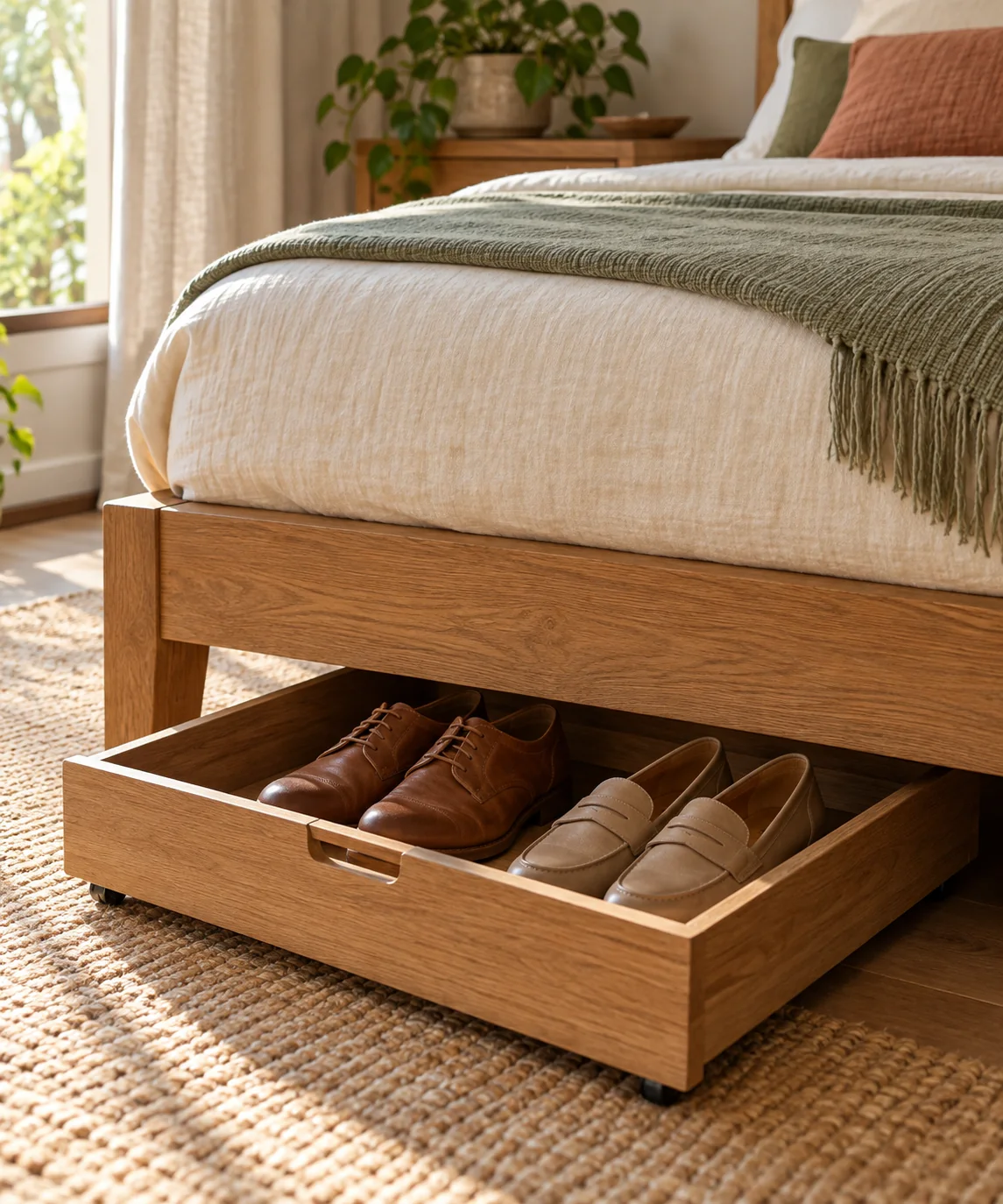
Measuring Footboard Clearances and Box Heights
Accurate measurements prevent purchasing crates that scrape against bed side rails or footboards. Measure the vertical gap from the finished floor to the lowest edge of the bed frame at the foot. Subtract one full inch from this measurement to establish your maximum crate height, ensuring smooth daily sliding without catching bedding edges. Measure the lateral width between the corner legs to determine how many matching bins can sit side by side without overlapping or binding during extraction.
Selecting Unfinished Breathable Wood Crates
Opt for low-slung, slatted wooden containers over airtight plastic totes. Footwear generates residual moisture from daily wear, requiring consistent air movement to prevent odors and material deterioration. Slatted pine, cedar, or birch boxes allow ambient bedroom air to circulate across leather and fabric uppers. Look for boxes with integrated handle cutouts on the front face, allowing you to hook a finger under the rim and pull the crate outward smoothly from a standing or kneeling position.
Applying Felt Sliders to Protect Flooring
Repeatedly pulling wooden boxes across hardwood, laminate, or vinyl planks can cause surface abrasions over time. Attach thick, self-adhesive felt strips along the entire bottom perimeter edges of each crate. For low-pile carpeted floors, swap felt for rigid plastic furniture glides to lower sliding friction. This simple floor-protection barrier dampens scraping noises during early morning departures and keeps the storage boxes tracking straight along the edge of the bed frame without veering sideways.
Limiting Capacity to Daily Footwear
Underbed shoe nooks work best when restricted to frequently worn shoes rather than full seasonal collections. Allocate space for four to six primary pairs across one or two shallow crates. Overcrowding shoes on top of one another scuffs leather finishes and deforms heel counters. Establish a habit of placing outdoor shoes sole-down on a light interior liner, such as a washable ribbed fabric mat cut to match the internal crate dimensions, keeping crate wood clean.
Preventing Dust Migration and Drift
Storing items exclusively at the foot of the bed leaves the deep center zone open for routine cleaning. Vacuum under the bed frame every fortnight to control dust roll-up, which gathers rapidly near open storage containers. To keep the crates from drifting too far beneath the bed where they become hard to reach, place a non-slip rubber block or small wooden stop directly behind the crates on the floor, locking them at the footboard perimeter.
YOUR STARTING POINT
A little checklist.
Original editorial guidance. Images are AI-generated concepts, not photographs of completed projects. Our sources and approach.
Questions to consider
How do I keep shoes from smelling under the bed?
Use slatted wooden crates made of unfinished cedar or pine to encourage natural air movement. Let worn footwear air out in the room for thirty minutes before sliding the crate into place, and avoid enclosed plastic bins.
Will sliding crates scratch delicate wood floors?
They will not scratch floors if you affix thick adhesive felt strips across the bottom contact points. Inspect these pads monthly to brush away trapped grit that could cause abrasive friction on sensitive wood surfaces.
How many crates should I place at the foot?
Limit the setup to one or two shallow crates centered between the footboard legs. Leaving empty space on either side makes retrieval easy and maintains room for sweeping and vacuum attachments during weekly cleaning routines.