Small Bedroom Layouts · THE GUIDE
Carving Out an End-of-Bed Storage Bench Pathway
Placing a storage trunk at the foot of the bed adds valuable utility for extra linens, but in a compact bedroom it can easily compromise traffic flow. Achieving a functional layout requires balancing furniture depth against the minimum clearance needed to navigate around the mattress perimeter. When selected thoughtfully, a slender trunk secures bulky duvets and seasonal quilts while keeping floor space orderly. By evaluating room dimensions, testing physical walk zones before buying, and choosing proportionate low-profile storage, you can protect essential egress paths without sacrificing tucked-away organization in tight quarters.
Jump to the checklist ↓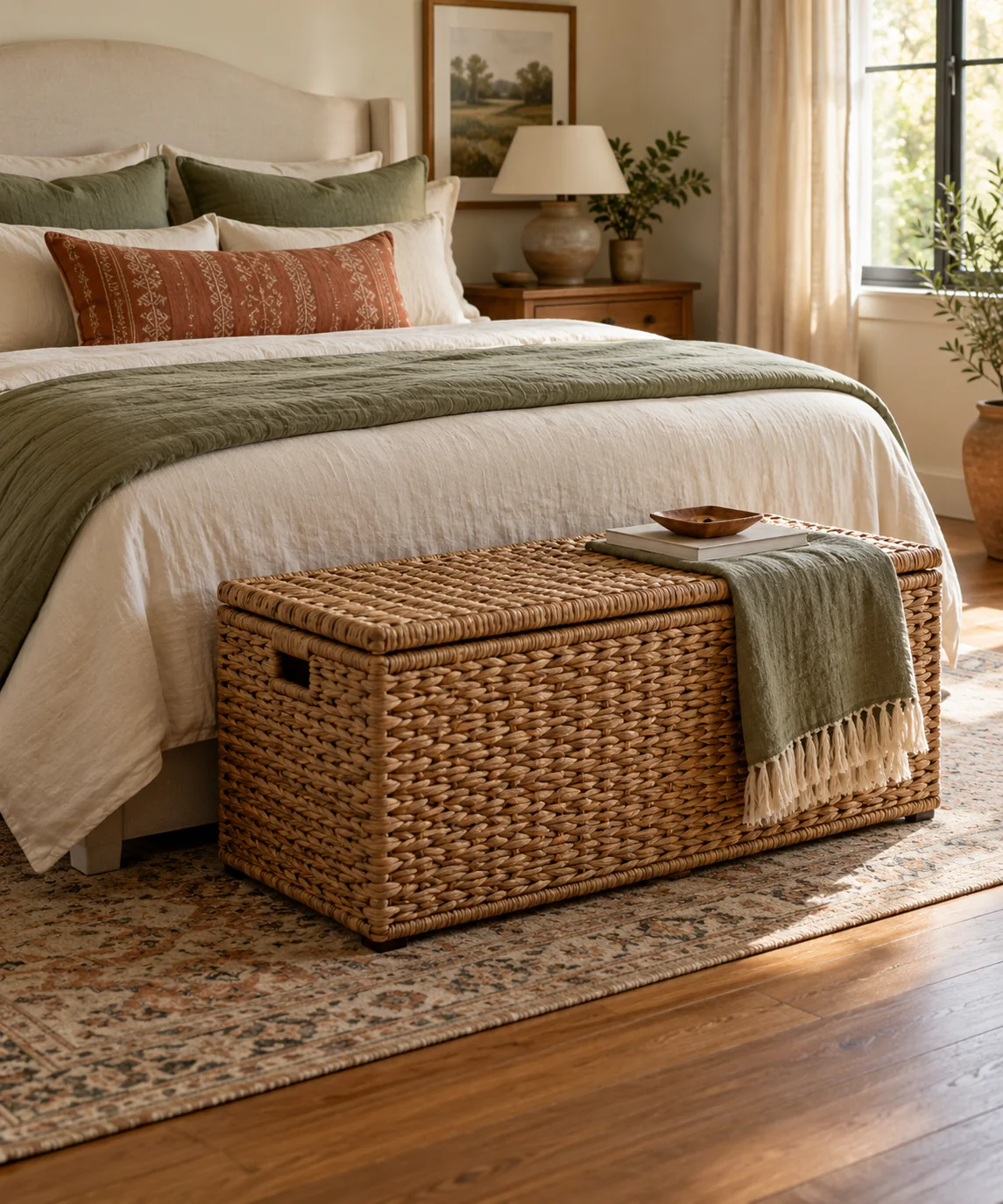
Establishing Minimum Walkway Clearances
Before selecting a bench, map the distance between the bed frame edge and the nearest opposite boundary, such as a closet door, dresser, or drywall. An open pathway typically demands at least twenty-four to thirty inches of clear walking space to remain comfortable. If your bedroom layout leaves less than three feet beyond the mattress base, any added trunk must feature an exceptionally slim depth profile. Measuring this zone with closed and open interior doors prevents collisions and guarantees effortless passage throughout daily routines.
Selecting Proportionate Bench Dimensions
A practical end-of-bed trunk should align with the width and height of your mattress setup. Choose a piece whose overall width spans roughly two-thirds to three-quarters of the bed width rather than overhanging the edges. Furthermore, the bench height should ideally sit level with or two to three inches below the mattress top. A low-profile unit maintains sightlines toward windows, keeping a small bedroom feeling visually open while reducing visual bulk against the central focal point.
Simulating Footprint with Everyday Items
Test your planned arrangement before introducing furniture into the room. Lay painters tape across the floorboards or arrange flat cardboard boxes matching the bench's exterior length and depth directly against the bed base. Walk the perimeter repeatedly over several days, especially in dim morning or evening light. This practical dry run reveals whether you brush against corners while turning into the doorway, confirming whether the trunk's physical presence will cause daily friction or fit seamlessly.
Organizing Stored Linens Efficiently
A slender trunk has finite interior volume, so internal packing methods determine its ultimate utility. Bulky spare blankets, flannel sheets, and duvet inserts fit best when rolled or compressed into breathable fabric sorting bags before placement. Avoid packing the unit to the absolute brim, as overstuffing can stress hinges and make quick retrieval frustrating. Designate this bench exclusively for bedding rotations to keep seasonal textiles dust-free without turning the compartment into an unmanageable catchall.
Managing Long-Term Maintenance and Wear
An end-of-bed bench experiences frequent handling and foot traffic, making surface care an ongoing consideration. Affix soft felt pads under all contact points or legs to prevent scuffs against finished hardwood or indentations in low-pile carpets. If you choose an upholstered top, routinely brush or vacuum fabric seams where dust accumulates. Inspect internal hinge hardware every few months to tighten any loose screws, ensuring the lid lifts smoothly and remains fully safe during regular bed-making sessions.
YOUR STARTING POINT
A little checklist.
Original editorial guidance. Images are AI-generated concepts, not photographs of completed projects. Our sources and approach.
Questions to consider
What is the ideal depth for an end-of-bed storage bench?
Aim for a shallow depth between fourteen and eighteen inches. This compact profile stores folded bedding neatly while preserving necessary walkway margins in standard secondary or master bedrooms.
Can the bench sit directly flush against the bed frame?
Yes, but leave a one-inch gap so bedspreads and sheets hang naturally. A slight offset also prevents the trunk lid from catching on hanging quilts when opened.
What lid mechanism works best in tight walkways?
A lift-off lid or safety-stay hinged top works best. Hinges that hold open independently prevent accidental drops, making linen retrieval safer within narrow pathways where mobility is restricted.