Patio Seating Ideas · THE GUIDE
Caster-Mounted Pallet Box Loveseat for Flexible Patio Zones
Open concrete slab patios experience shifting environmental conditions throughout the day, alternating between glaring afternoon sun and cool late-day shade. Standard outdoor sofas are frequently too heavy for one person to reposition, trapping lounge zones in uncomfortable microclimates. Building or modifying a compact, caster-mounted pallet box loveseat solves this limitation through effortless mobility. By selecting suitable hardware, balancing total frame weight, and securing deep lounge cushions, you can easily guide your seating along the patio shade line. This planning overview outlines wheel specifications, structural balance, surface transitions, and seasonal care.
Jump to the checklist ↓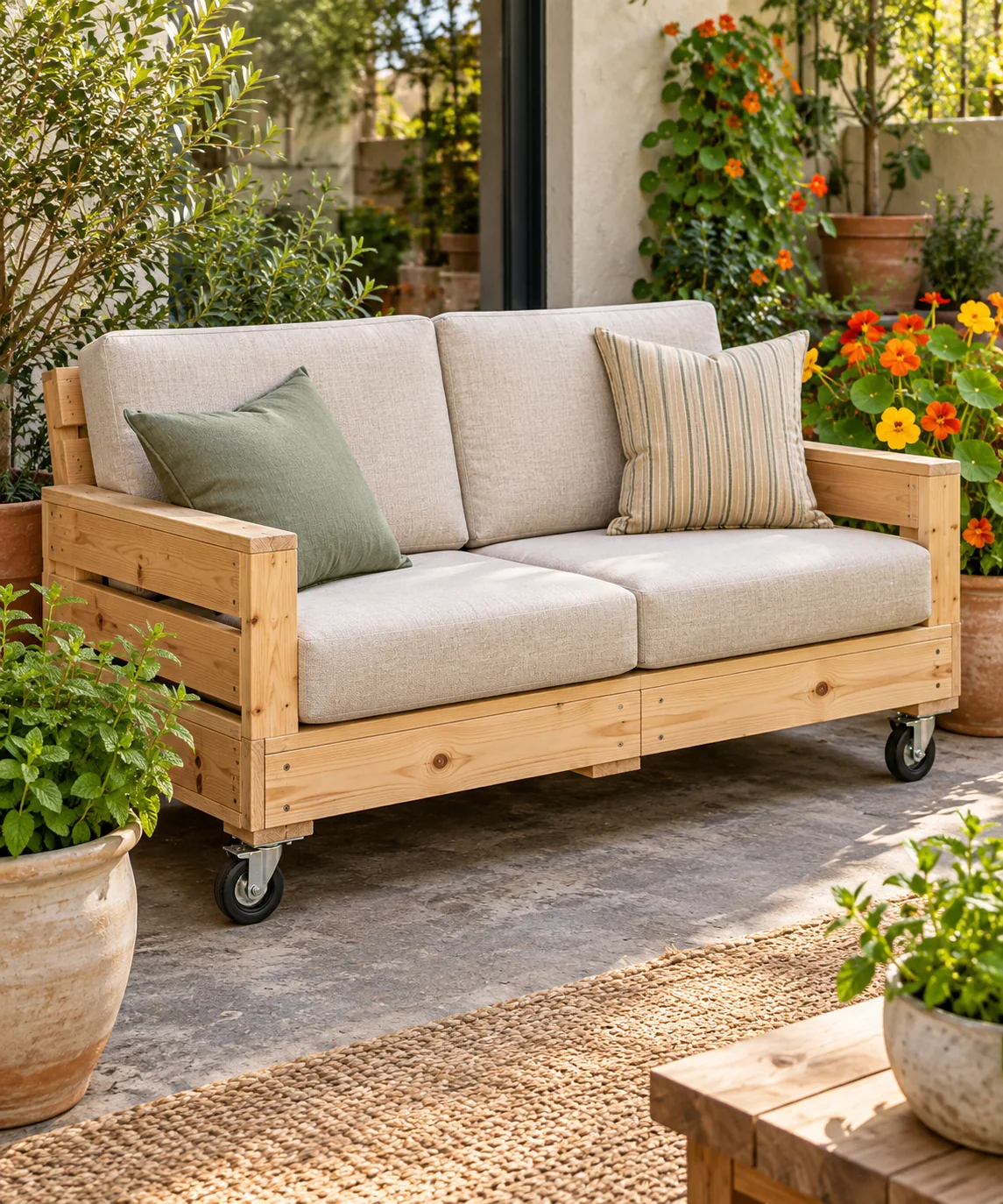
Selecting Caster Diameter and Tread Material
Smooth mobility across a patio slab requires choosing casters suited to outdoor conditions. Small, hard wheels frequently catch on slab control joints, textured paving, or small surface debris. Medium-to-large swivel casters with resilient rubber or polyurethane treads roll more quietly and navigate surface irregularities more smoothly than brittle plastic. Ensure that the casters feature independent locking mechanisms designed to limit both wheel rotation and swivel tracking when the seat is parked.
Proportioning Frame Dimensions for Manageable Handling
A mobile outdoor seat must balance comfortable seating dimensions with safe, manageable handling. Overly wide or excessively heavy frames become cumbersome to maneuver, increasing the risk of strain or accidental collisions with walls. Keeping the loveseat to a compact two-person format makes repositioning simpler for an individual. Check that the frame structure is rigid and square so rolling force does not twist joints or loosen fasteners over time.
Securing Cushioning During Movement
Rolling a loveseat across a textured patio can jostle loose cushions out of alignment. Using fitted non-skid mesh beneath seat pads reduces shifting while in transit. For back cushions, simple fabric ties or secure strap loops that wrap around rear supports keep upholstery stable against wind and motion. Selecting moisture-shedding outdoor fabrics ensures the setup remains practical through seasonal sun and rain exposure.
Navigating Surface Joints and Grade Transitions
Concrete patio slabs typically feature sloped drainage profiles and tooled expansion joints. Pushing a wheeled frame directly across wide joints can jar casters or tip taller pieces. Maneuver wheels across surface seams gradually rather than hitting them at high speed, and confirm that the bottom edge of the frame maintains adequate clearance above the pavement to avoid scraping on high spots or drainage crowns.
Maintaining Hardware and Assessing Slope Safety
Outdoor casters collect dirt, grit, and moisture that can cause metal bearings to stiffen or rust. Periodically inspect wheels, clean away grit, and check that brake levers engage firmly. Remember that caster locks provide holding friction but are not absolute stops on pronounced grades; never park wheeled seating on significant slopes or near unguarded drop-offs, and store the unit in a sheltered location during severe weather.
YOUR STARTING POINT
A little checklist.
Original editorial guidance. Images are AI-generated concepts, not photographs of completed projects. Our sources and approach.
Questions to consider
Can caster-mounted seating roll smoothly on gravel or grass?
Standard caster wheels sink into loose gravel, soil, and lawn surfaces, making movement difficult or impossible. Mobile seating requires firm, continuous paving such as smooth concrete, tight pavers, or well-supported decking.
How much weight can upcycled pallet seating support?
Load capacity depends entirely on the specific timber quality, fastener choices, and structural soundness of the frame. Inspect pallets carefully for cracked stringers, rot, or weak points, and avoid relying on untested assemblies for heavy loads.
Are caster brakes sufficient to keep a loveseat from moving when seated?
Brakes reduce movement on flat or gently sloped slabs, but shifting body weight can still cause slippage on slick surfaces or steeper runoff grades. Always test brake hold manually on your specific surface before sitting down.