Kitchen Herb Gardens · THE GUIDE
Ceramic Herb Keeper Trio on a Shallow Floating Ledge
Keeping fresh herb sprigs close at hand for daily cooking does not always require bulky potted plants on prep surfaces. When an existing shallow ledge or rail is positioned safely away from cooktop heat and steam, it can hold a trio of small ceramic vessels with fresh water. Storing freshly cut stems of culinary herbs like rosemary, mint, or parsley in water functions similarly to a small bouquet, keeping them hydrated and accessible near food preparation areas. This reversible countertop-saving arrangement offers a practical holding station for immediate kitchen clipping while keeping delicate leaves away from hot appliances and heavy cutting boards.
Jump to the checklist ↓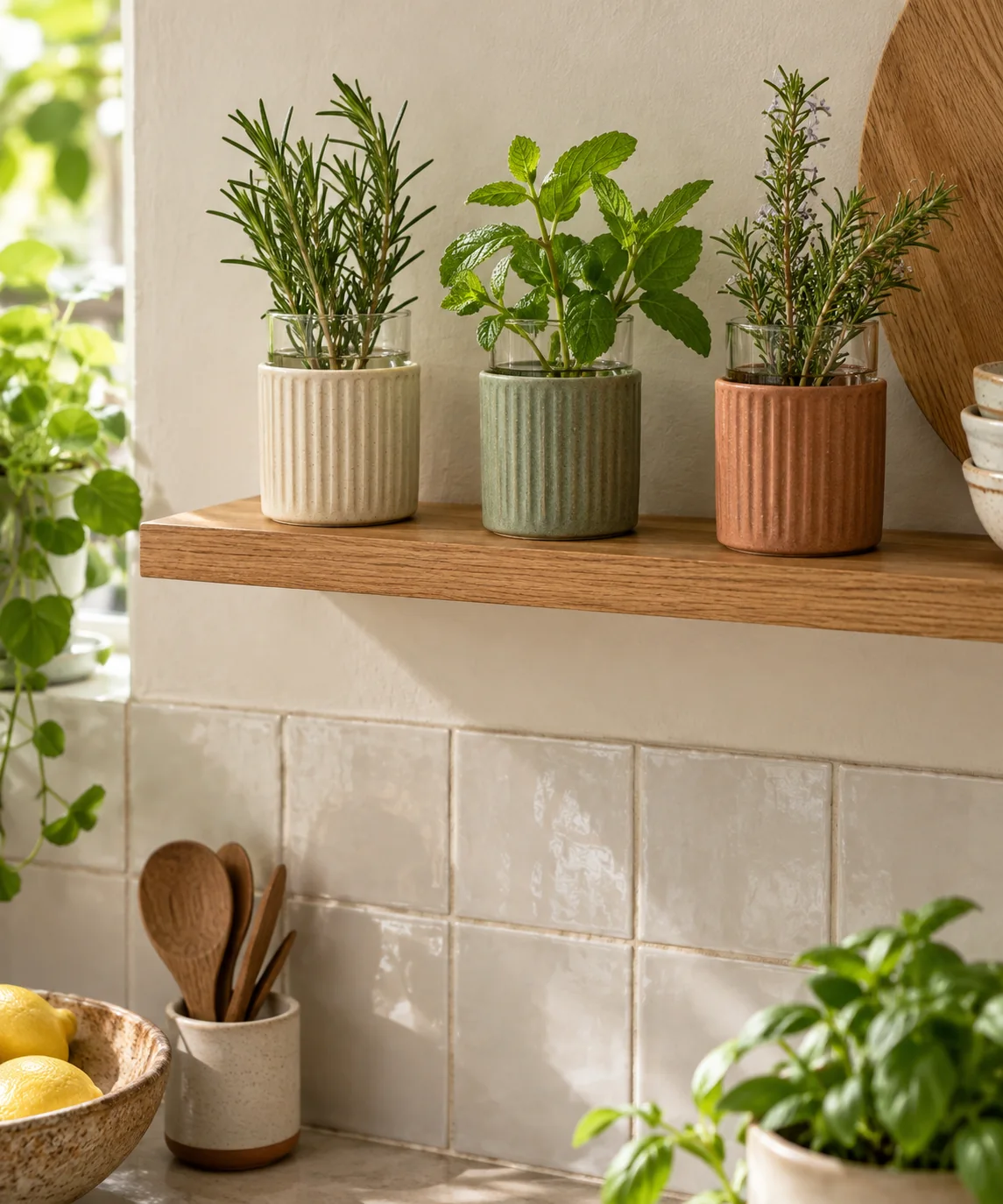
Ledge Placement and Surface Evaluation
When selecting a wall ledge or countertop rail for herb vessels, prioritize existing architectural ledges or shelves installed according to manufacturer weight ratings and wall substrate specifications. Position the display well clear of active cooking zones, avoiding the direct heat, rising steam, and airborne oils of stovetops. A suitable ledge should provide sufficient flat depth to support small cups fully without overhang. Checking that the resting surface sits level and includes a raised front lip or non-skid pad helps reduce the chance of cups shifting if prep areas experience vibration or accidental bumps during meal preparation.
Selecting Ceramic Vessels
Small stoneware or glazed ceramic tumblers offer distinct functional advantages over clear glassware for short-term herb storage. Ambient daylight entering clear glass warms standing water and encourages rapid algal growth, whereas opaque ceramic walls shade the water column and help maintain cooler temperatures around cut stems. Look for weighted, broad-based cups that resist tipping when taller stems are placed inside. Vessels with flared rims or perforated ceramic frog inserts support stems upright, maintaining separation between sprigs so air can circulate freely around the foliage.
Preparing Stems for Water Storage
Use clean, sharp kitchen snips to harvest healthy herb stems from outdoor plants or market bunches. Cut cleanly across the lower stem to create a fresh intake surface without crushing plant tissues. Remove all lower foliage that would sit beneath the water line, as submerged leaves quickly break down, fouling the water and accelerating stem decay. Sturdy herbs such as rosemary and thyme, along with tender stems like mint and cilantro, adapt well to clean water holding. Arrange a manageable number of stems per cup to prevent overcrowding in the neck of the vessel.
Routine Water Hygiene
Standing water requires frequent renewal to keep cut culinary herbs usable and palatable. Empty and rinse the vessels every one to two days, replacing the liquid with clean, cool tap water. If the water appears cloudy or develops an odor at any point, discard it immediately, wash the cup with mild dish soap, and rinse thoroughly before refilling. Trimming a tiny sliver off the base of the stems during water changes exposes fresh stem tissue and helps extend hydration. Keep the water level modest so only the base of the stems remains submerged.
Usage Expectations and Practical Limitations
Water reservoirs are temporary kitchen holding setups rather than permanent growing environments. Although vigorous herbs like mint may eventually develop adventitious roots, cut sprigs in water are intended for use within several days to two weeks depending on the species and ambient room conditions. Over time, volatile essential oils dissipate and leaves naturally lose crispness. Inspect stems before cooking, discarding any that show soft spots, browning, or wilting. Refresh the keepers periodically with new garden clippings to sustain a dependable supply of fresh aromatics.
YOUR STARTING POINT
A little checklist.
Original editorial guidance. Images are AI-generated concepts, not photographs of completed projects. Our sources and approach.
Questions to consider
Which culinary herbs perform best when stored in water cups?
Soft-stemmed herbs like mint, basil, and cilantro, as well as sturdy sprigs of rosemary, hold up well in clean water. Keep basil at moderate room temperatures away from cold drafts, as cool conditions cause its foliage to darken rapidly.
Should herb keepers be kept at room temperature or refrigerated?
Keep the ceramic vessels at comfortable room temperature in indirect light. Placing tender herbs like basil or water-filled ceramic cups in the refrigerator often chills leaf tissues, promotes moisture condensation, and compromises culinary flavor.
How deep should the water be in the ceramic vessels?
Add only a shallow depth of water, enough to cover the bottom inch or two of the bare stems. Keeping the water level low ensures that upper stems and foliage remain dry, reducing the risk of rot while supplying adequate moisture.