Warm Neutral Living Rooms · THE GUIDE
Choose an Armless Loveseat to Suit an Angled Attic Living Room
Furnishing an attic living space with dormers, low knee-walls, or steeply pitched rafters requires careful attention to furniture geometry. Conventional bulky sofas with wide armrests often collide with low slopes, pushing seating uncomfortably far into central floor space. An armless loveseat offers a streamlined alternative by allowing the seat base to tuck deeper under angled ceilings without sacrificing seated width. Upholstered in textured warm neutrals, an armless profile preserves essential clearance, provides comfortable seating, and maintains an open feel across compact attic layouts.
Jump to the checklist ↓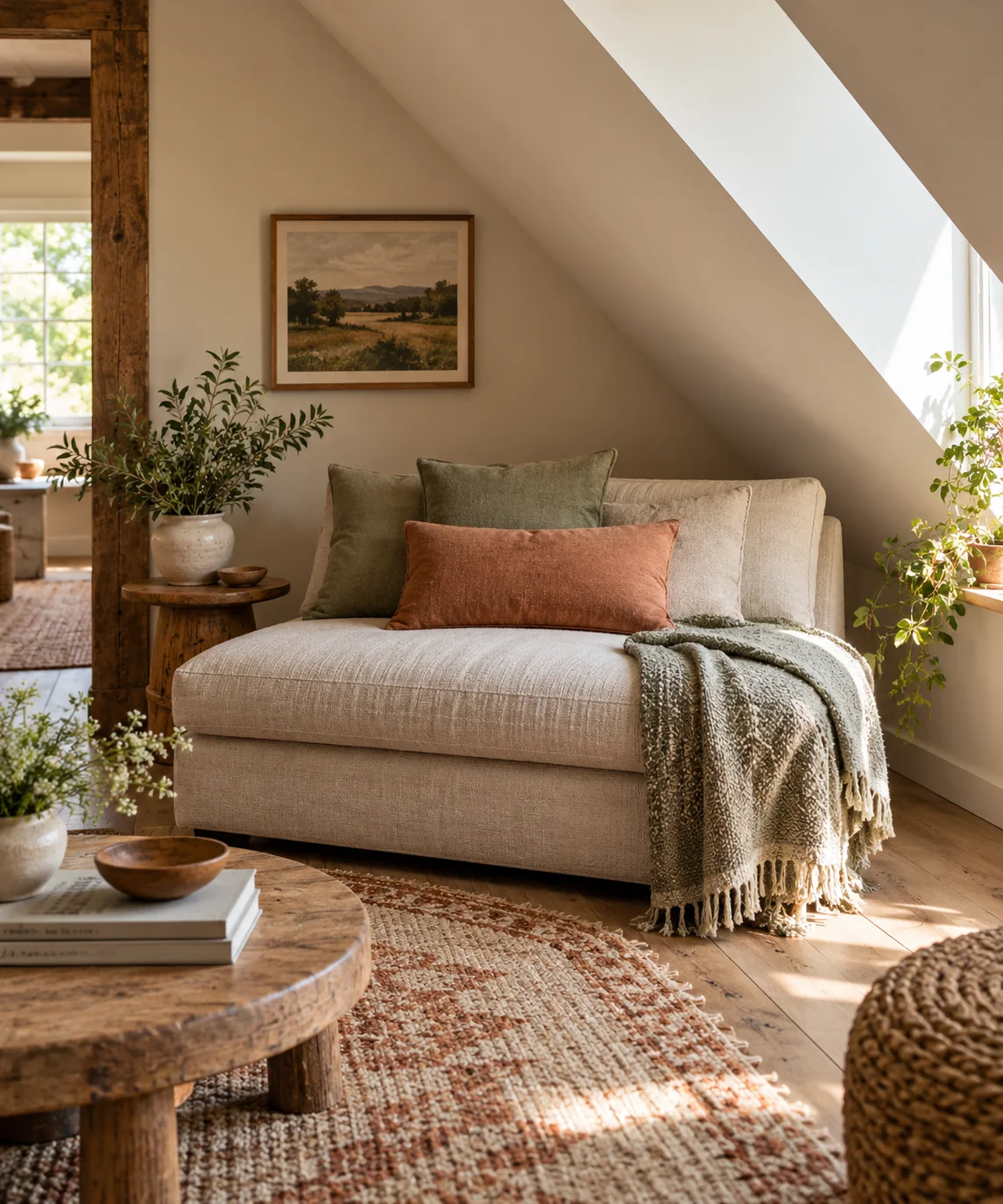
Assessing Rafter Angles and Usable Height
Before selecting seating for an attic room, map the room’s specific pitch and vertical knee-wall dimensions. Measure both the knee-wall height and the angle at which the rafters rise toward the ridge beam. When evaluating an armless loveseat, check that the total backrest height fits beneath the roof junction while leaving sufficient vertical clearance for seated occupants. Sitting down and rising requires comfortable headspace that varies by user, so testing real clearances with a tape measure ensures no one feels cramped beneath the slope.
Maximizing Seating Area in Tight Floor Plans
Armrests on traditional furniture consume substantial horizontal space without providing usable sitting area. By eliminating wide arms, an armless loveseat provides complete cushion width for seating or lounging within a compact overall footprint. In an attic setting, this streamlined shape allows the piece to fit neatly against structural jogs, chimney chases, or narrow alcoves where conventional furniture would not fit. Freeing up peripheral space also broadens open walkways, making low-ceiling rooms feel more navigable and airy.
Selecting Textured Warm Neutral Fabrics
Attic rooms often receive varied natural lighting depending on window size, dormer orientation, and skylight placement. Textured fabrics such as heavy unbleached linen, textured cotton weaves, or warm oat bouclé help scatter light evenly across the room without harsh glare. Warm neutral tones complement exposed structural rafters, neutral wall paint, and natural wood flooring. Selecting durable, stain-resistant fabrics or removable slipcovers simplifies maintenance in tucked spaces where dust may settle.
Adding Modular Cushioning for Adaptable Support
An armless design provides great layout versatility, and comfort can be tailored with flexible accessories. Incorporating firm bolster pillows or structured lumbar cushions provides lateral arm and back support when reading or sitting upright. Unlike fixed upholstery arms, modular cushions can be easily repositioned, stacked, or shifted aside to convert the loveseat into a daybed for lounging. Selecting pillow covers in tonal neutral textures adds tactile interest while keeping the palette calm and cohesive.
Verifying Ingress and Room Flow
Once the loveseat is positioned, evaluate circulation around the seating area to ensure safe movement throughout the attic. Walk through the primary access paths leading to doorways, stairwells, and storage closets, checking that passing by does not force anyone into an awkward posture beneath low eaves. Sit and stand from the loveseat several times from different cushion positions to confirm head clearance is comfortable. Adjusting the piece forward or sideways by small increments can optimize both seating comfort and walkway space.
YOUR STARTING POINT
A little checklist.
Original editorial guidance. Images are AI-generated concepts, not photographs of completed projects. Our sources and approach.
Questions to consider
How do I keep an armless loveseat stable on smooth attic flooring?
Place non-skid rubber pads beneath each furniture leg or position the front legs over a well-anchored area rug equipped with a non-slip pad. These grips prevent the frame from shifting backward into the sloped drywall when people sit down.
What should I consider regarding backrest height under a sloping ceiling?
Compare the loveseat's total backrest height against the point where your knee-wall meets the rafter. Choosing a lower backrest profile allows the piece to sit deeper against the wall while ensuring the seat cushion remains far enough forward for seated head clearance.
Why should furniture maintain a small gap from exterior attic walls?
Leaving a small air gap between upholstery and perimeter walls allows room air to circulate freely around exterior surfaces, helps prevent fabric abrasion against textured drywall, and makes routine vacuuming and cleaning behind the furniture easier.