Dining Nooks · THE GUIDE
Choose Armless Dining Chairs to Maximize Elbow Room Around Bench Seating
Pairing dining chairs with a built-in wall bench requires careful consideration of spatial boundaries and physical ergonomics. While a bench fixes diners against the wall, the chairs opposite define the main service pathway and set user comfort levels. Bulky armchairs often create restrictive pinch points, colliding with table aprons and impeding access when sliding into place. Selecting armless dining chairs preserves crucial side-to-side clearance, creates an uncluttered sightline across the room, and allows diners to sit down and rise without navigating rigid armrests in tight eating spaces.
Jump to the checklist ↓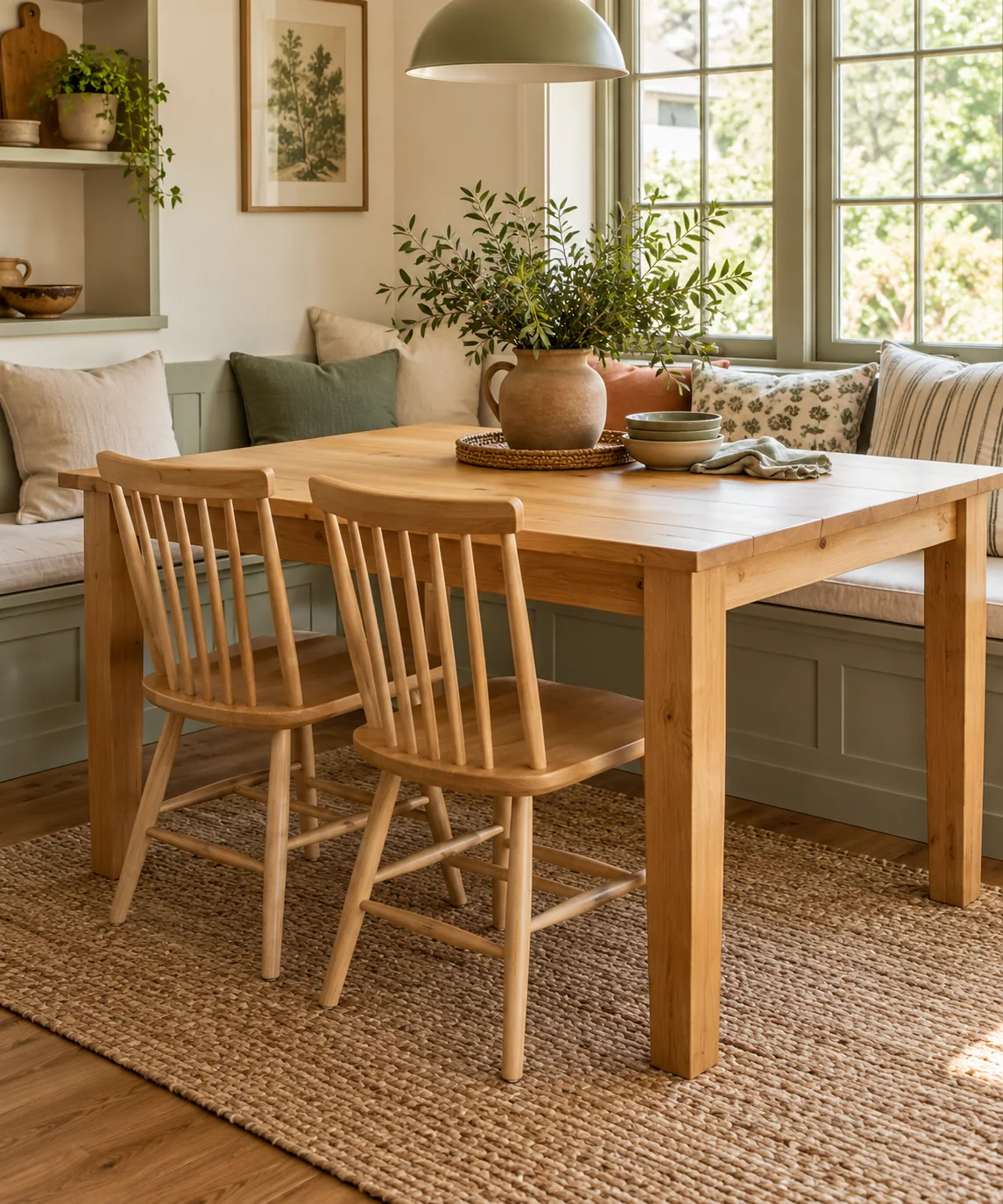
Evaluating Side-to-Side Clearance
A comfortable dining setting allocates roughly twenty-four inches of table perimeter per person. Armchairs introduce rigid boundaries that consume two to four extra inches per side, forcing diners into awkward, angled postures. Armless chairs eliminate these physical barriers, allowing elbows to move naturally during meals without striking wood or upholstery. This flexibility proves essential when seating three diners along a table designed for two, accommodating fluctuating guest counts without feeling physically constrained.
Maximizing Tuck-In Depth
In tight dining nooks, circulation space behind the chairs often doubles as a primary walkway. Armless dining chairs typically feature backrests that taper directly into the seat frame, allowing the chair to slide completely beneath the table surface when not in use. Armchairs frequently stop short where the arms meet the table apron, leaving the rear legs protruding eight to twelve inches into the room and constricting the adjacent hallway or kitchen clearance.
Balancing Visual Weight Against Fixed Millwork
Built-in banquettes and settles already carry substantial visual mass because their solid bases anchor directly to the room architecture. Adding substantial armchairs opposite a heavy bench creates a visually dense corridor that can make a dining corner feel cave-like. Armless spindle-back, cane, or minimalist wood chairs introduce negative space into the grouping, allowing natural light to pass through the setting and highlighting the craftsmanship of both table and bench.
Conducting Mock-Up Tests with Existing Seats
Before investing in new furniture, test the functional difference using items already on hand. Place existing armchairs across from your bench, set place settings, and note how easily diners can slide their knees past the table legs. Swap the armchairs for basic folding chairs or desk chairs without arms to observe the immediate change in elbow clearance and tuck-in depth. Measure the floor path left clear behind both options.
Managing Posture and Seating Limitations
While armless chairs maximize lateral space, they offer slightly less upper-body support for long periods of lingering after meals. To counter potential fatigue, choose armless chairs with an ergonomically contoured lumbar rest or an upholstered seat pad. Check seat widths carefully; chairs under eighteen inches wide may feel overly compact for larger adults, while seats exceeding twenty inches wide start to erode the lateral space advantage you set out to achieve.
YOUR STARTING POINT
A little checklist.
Original editorial guidance. Images are AI-generated concepts, not photographs of completed projects. Our sources and approach.
Questions to consider
Can I keep one armchair at the head of a bench setup?
Yes, placing a single armchair at the open short end of the table works well if that end faces away from high-traffic walkways and has adequate push-back clearance of at least thirty-six inches.
What seat style works best for easy cleanup around nooks?
Solid wood, molded plywood, or smooth leather seats clean up faster than textured fabric weaves, making them practical choices across from benches where accidental spills and crumb accumulation frequently occur.
How much distance should sit between adjacent armless chairs?
Maintain at least six inches of open space between chair seat edges when tucked in. This spacing prevents diner elbows from bumping and allows individual chairs to pull out cleanly.