Container Vegetable Gardens · THE GUIDE
Clay Saucer Water Catchment Setup for Apartment Decks
Balcony container gardening requires careful management of drainage runoff to avoid staining deck surfaces or dripping onto lower levels. Standard individual saucers can overflow quickly during watering or trap container bases in stagnant water, increasing the risk of root health issues. A centralized catchment tray filled with smooth pebbles creates a stable, raised drainage area for small potted herbs. The stones elevate container drainage holes above collecting runoff, allowing excess water to drain freely while catching overflow before it reaches deck edges. When planned with attention to deck load limits and building regulations, this arrangement provides an organized, reversible solution for outdoor herb containers.
Jump to the checklist ↓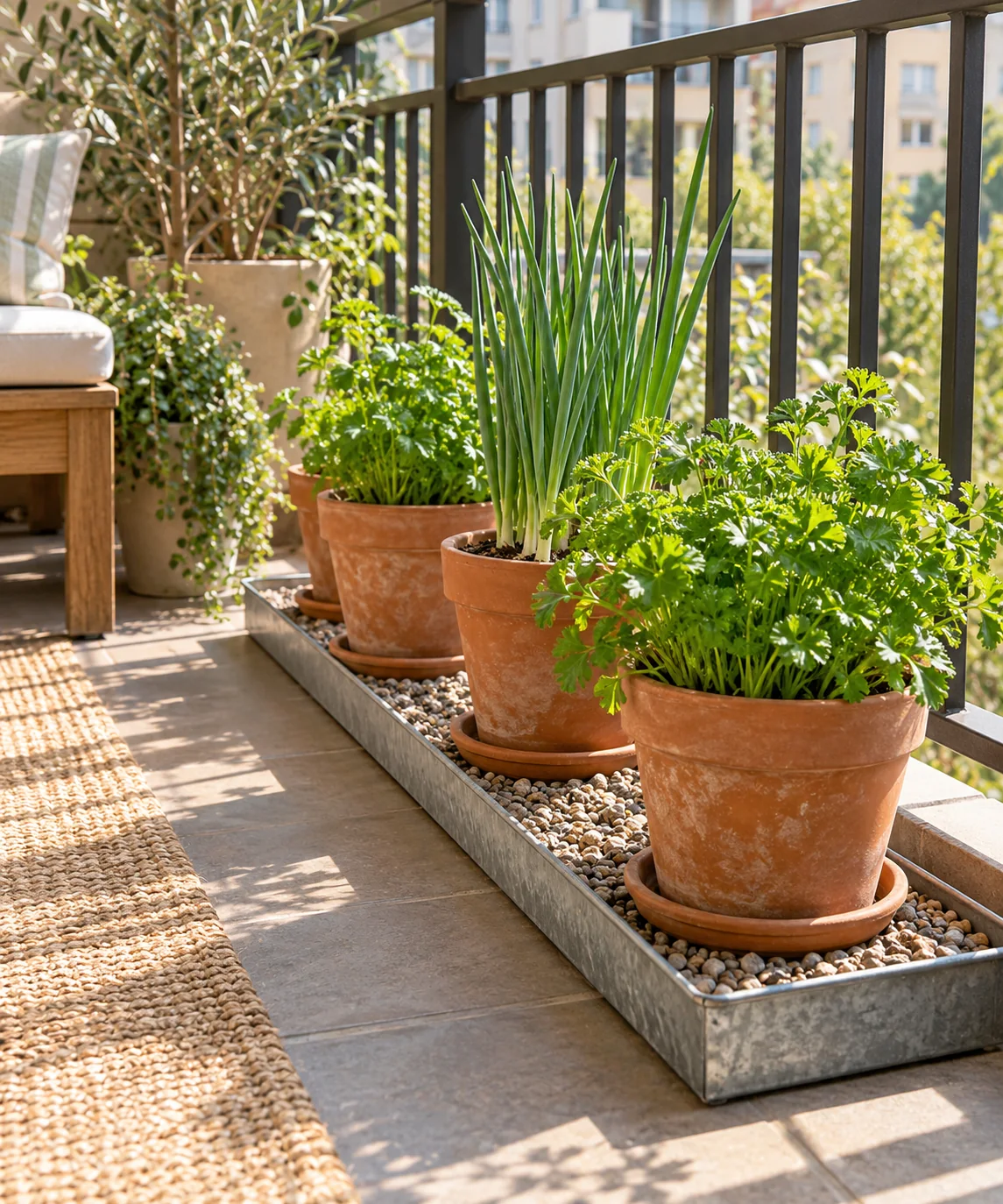
Reviewing Balcony Rules and Weight Limits
Before introducing drainage trays, stones, and containers to an apartment balcony, review building bylaws and lease agreements regarding outdoor floor items and drainage runoff. Saturated potting soil, terracotta containers, and stone-filled trays can add considerable weight. Consult property management or review building documentation to verify permissible balcony load limits and avoid exceeding structural capacities. Never place heavy catchment setups where they block emergency egress, door swings, or maintenance access points along balcony decking.
Selecting Tray Footprints and Durable Materials
Choose a durable exterior tray made of heavy-gauge polypropylene or corrosion-resistant coated metal featuring a raised lip of one to two inches. Measure available floor space along sheltered interior perimeter areas rather than near balcony railings where high winds could pose hazards. The tray should be sized proportionally to the container collection, offering several inches of margin around pot bases to capture directional drainage. Avoid oversized single trays that become unwieldy to shift, clean, or inspect during seasonal resets.
Constructing the Elevated Pebble Bed
Add a level layer of rinsed decorative pea gravel or smooth river pebbles roughly one inch deep across the bottom of the tray. This stone layer keeps container drainage holes elevated above collected wastewater, allowing air to reach root zones and preventing potting soil from re-absorbing stagnant drainage. Ensure stones are spread evenly across the tray floor so containers rest on a stable, level surface. Uneven pebble placement can cause tall or narrow pots to wobble in breezy conditions.
Arranging Containers for Stability and Airflow
Place small terracotta herb pots onto the pebble base with open space between adjacent pots. Porous clay containers benefit from ambient air movement, which assists natural drying of exterior walls and reduces surface fungal growth. Position broader, heavier pots toward the back edge of the tray near building walls and place lighter containers forward for easy access. Keep the overall arrangement low in profile to reduce wind resistance on exposed balconies.
Monitoring Drainage Depth and Sanitation
Regularly inspect the catchment tray after watering and rainfall to monitor water depth. Standing water should not reach container drainage holes or remain stagnant for more than twenty-four to forty-eight hours, as outdoor puddles can foster algae or create breeding sites for insects. Use a manual suction bulb or small siphon to remove accumulated runoff after heavy rainstorms. Periodically rinse the pebbles and tray with mild soapy water to remove organic debris, dust, and sediment, ensuring the drainage system stays clean and hygienic.
YOUR STARTING POINT
A little checklist.
Original editorial guidance. Images are AI-generated concepts, not photographs of completed projects. Our sources and approach.
Questions to consider
Why is elevating pots on stones better than using standard flat saucers?
Standard flat saucers keep container drainage holes submerged in standing runoff, which can saturate the lower soil layer and impair root oxygenation. A pebble layer elevates the pot base, allowing water to drain away freely while remaining contained within the tray.
How do I prevent standing water in the catchment tray from attracting pests?
Inspect the tray consistently after watering sessions and rainy weather. Remove excess accumulated water within twenty-four to forty-eight hours using a manual siphon or baster, and periodically rinse the stone bed to prevent organic sediment from collecting.
What should I place beneath the tray to protect balcony flooring?
Placing non-abrasive exterior rubber risers or composite deck pads beneath the tray corners elevates the unit slightly above the deck surface. This air gap prevents condensation from becoming trapped against decking boards, reducing the risk of moisture staining.