Entryway Organization · THE GUIDE
Clear a Tight Corridor With an Ultra-Slim Shoe Cabinet
Standard shoe racks often project ten to fifteen inches from a wall, transforming a narrow apartment hallway into an uncomfortable obstacle course. When floor area is at a premium, an ultra-slim cabinet measuring under eight inches deep provides a streamlined alternative. These compact units utilize angled flip-down compartments, storing shoes vertically rather than horizontally flat. By aligning the storage profile tightly against the baseboard, you retain critical corridor width for walking, carrying groceries, and moving safely through the home. Careful planning ensures daily footwear fits without jamming mechanisms.
Jump to the checklist ↓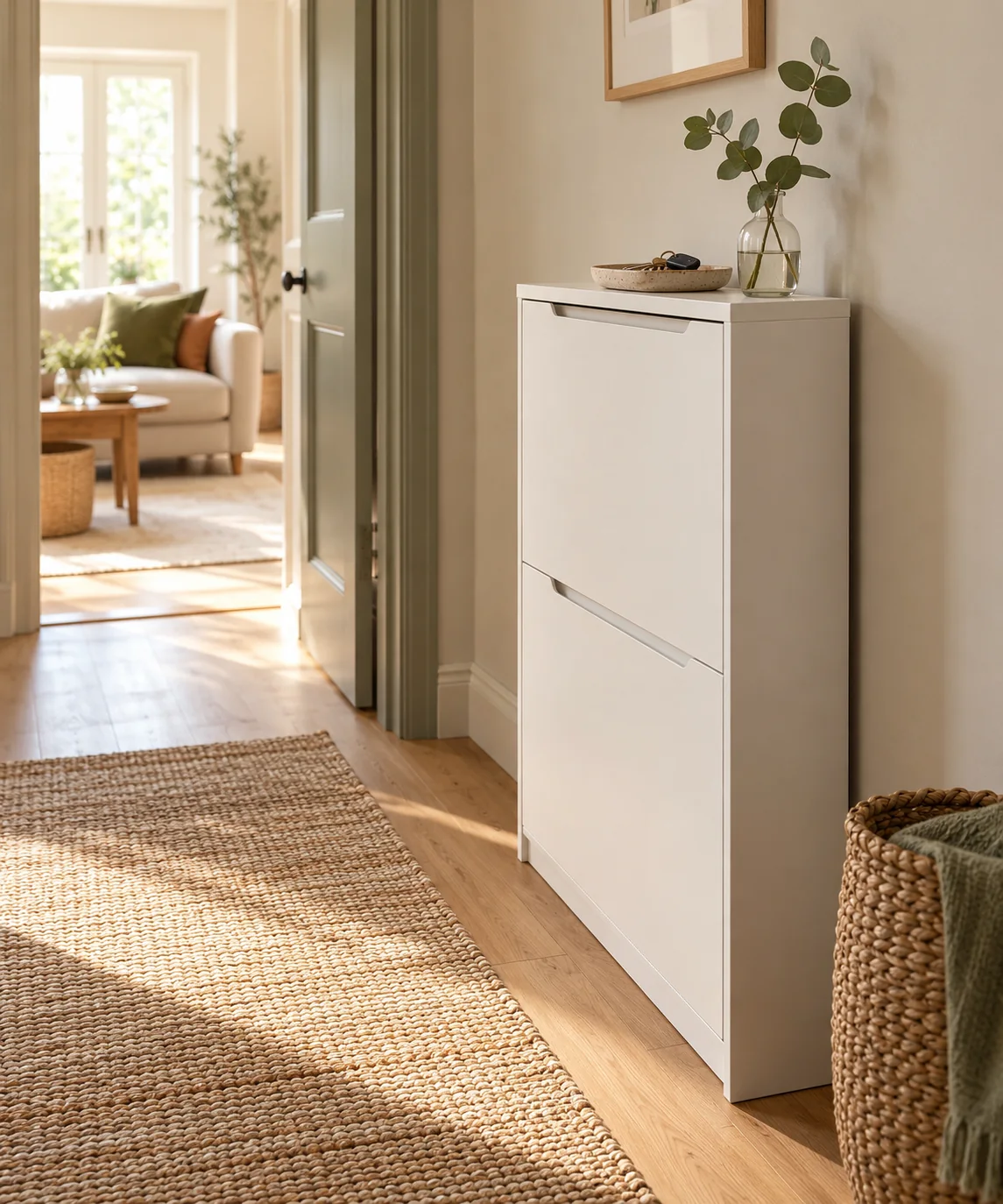
Measuring Hallway Clearances and Baseboard Depth
Before introducing any cabinetry, measure the total width of your corridor from baseboard to baseboard. Corridors must maintain adequate clearance for daily foot traffic, moving household items, and meeting applicable local egress codes or lease regulations. Measure the thickness and height of your baseboard moulding, as protruding trim can push the upper back of a cabinet away from the wall unless the furniture includes a recessed bottom cutout or elevated legs. Laying down painter's tape to represent the unit's depth helps household members verify that the walkway remains comfortable and unobstructed before setting up furniture.
Testing Flip-Down Door Swings Before Setup
A cabinet's static footprint tells only half the story; the dynamic swing of flip-down doors requires adequate clearance. When an angled compartment drops open, it temporarily extends several inches into the walking path. Verify that opening the bin does not collide with opposing walls, adjacent interior room doors, or heating registers. If your hallway is exceptionally narrow, stagger your daily routines so doors remain closed when foot traffic peaks. Confirm that interior hinges operate smoothly without binding against the side panels when fully loaded with everyday walking shoes.
Assessing Footwear Dimensions and Capacity Limits
Ultra-slim flip-down compartments rely on vertical insertion, which naturally limits the shoe types they can accommodate. Low-profile sneakers, dress flats, sandals, and standard loafers fit best within the narrow slots. Bulkier items, such as heavy hiking boots, high-top basketball sneakers, or stiff winter footwear, often prevent the bin from latching shut properly. Measure the heel-to-toe length of your largest household pairs against the compartment's internal depth. Plan to house oversized boots elsewhere, dedicating this specialized corridor piece strictly to streamlined, frequently rotated daily shoes.
Managing the Top Surface and Flow of Movement
The narrow top ledge of an eight-inch cabinet offers convenient utility, but clutter accumulates quickly in entryways. Treat this surface as an intentional staging area rather than a general drop zone. Rest a compact ceramic dish for pocket essentials and perhaps a single slim decorative bud vase against the wall. Avoid placing heavy ceramic bowls, loose change, or wide packages that overhang the edge and risk getting bumped off by passing shoulders. Maintaining a clear, disciplined top preserves the cabinet's visual lightness and prevents corridor congestion.
Maintenance and Long-Term Practicality
Enclosed shoe compartments gather dry dirt, dust, and street grit dropped from shoe outsoles over time. Because flip-down bins tilt downward, loose debris naturally migrates into the bottom crevices of each pivot pocket. Set a monthly schedule to remove all shoes, wipe the interior plastic or laminate surfaces with a damp cloth, and let the compartments air-dry completely before closing them. Check the pivot pins and side stops periodically for signs of stress, ensuring you never overload individual drawers beyond their intended pair capacity.
YOUR STARTING POINT
A little checklist.
Original editorial guidance. Images are AI-generated concepts, not photographs of completed projects. Our sources and approach.
Questions to consider
Can high heels fit inside an ultra-slim shoe cabinet?
Low-to-mid heels usually fit if placed sideways or inverted, depending on the compartment height. Stiletto heels or platforms over three inches may jam the flip mechanism, so check individual pocket clearance against shoe dimensions before storing them.
How many pairs of shoes can these slim cabinets hold?
Most two-compartment slim models hold between four and eight pairs total, depending on shoe width. Children's and women's flats consume less space, while men's athletic shoes often require an entire divider slot per pair.
What prevents the cabinet from tipping forward when opened?
Slim cabinets have a high center of gravity and narrow base, making them unstable if freestanding. Many models are designed to sit flush on baseboards and include manufacturer-specified stability brackets for safe, controlled upright positioning.