Rental-Friendly Decor · THE GUIDE
Clear Cluttered Countertops with a Counter-Resting Rail and S-Hooks
Rented kitchens frequently lack wall-mounting privileges, leaving tiled backsplashes untouchable and horizontal counters crowded with tool crocks and prep boards. A counter-resting rail system introduces vertical utensil suspension without drilling into masonry or grout lines. Using a self-supporting metal frame that rests on wide feet or clamps to an open perimeter edge, you can suspend everyday spatulas, tasting spoons, and strainers directly over underutilized counter depth. This reversible arrangement preserves rental surfaces while keeping essential implements accessible. Planning proper clearances around active heat zones ensures a functional and neat cooktop station.
Jump to the checklist ↓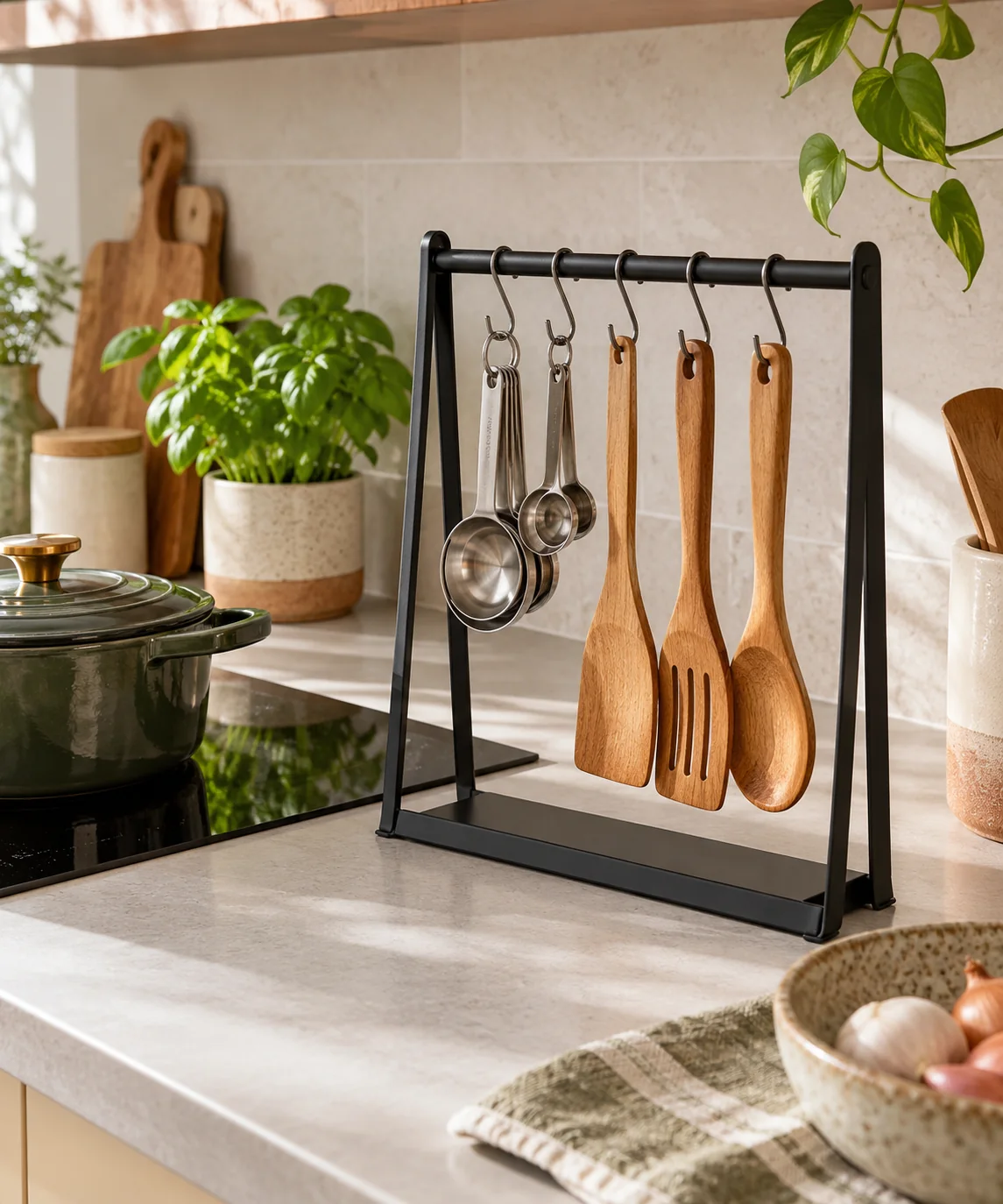
Base Dimensions and Clearance Planning
Measure the vertical gap between your worktop and the underside of upper cabinets before selecting a freestanding frame, taking into account the total height of both the rail and any hanging items. Look for a model with a broad, supportive footprint so it resists tipping when utensils are lifted or bumped. Ensure the entire frame, including any suspended tools, sits comfortably clear of burners and active cooking vessels according to your cooktop manufacturer's recommended clearances, preventing accidental handle contact or radiant heat damage.
S-Hook Selection and Utensil Spacing
Standard open S-hooks can swing or unseat during brisk meal prep, occasionally tapping backsplashes or falling off the bar. Flat-profile, pinched, or snap-on hooks designed for the specific rail diameter offer greater stability. Arrange hung tools so that wider utensils do not crowd narrower ones, leaving enough room between pieces for quick grasping. Grouping items of similar handle lengths also helps maintain a tidy visual line and ensures hanging ends clear the counter surface beneath.
Weight Distribution and Frame Stability
Countertop-standing frames rely on their own weight, base geometry, and surface contact friction for equilibrium. To keep the center of gravity stable, hang heavier metal tools like ladles or heavy turners closer to the outer upright supports rather than clustered in the center of the span, where long-term bar deflection could occur. Placing clean, non-abrasive silicone or rubber grip pads under the base contact points helps keep the metal frame from shifting on smooth laminate or polished stone.
Managing Splatter and Cleaning Access
Positioning hanging storage near cooking zones inevitably exposes tools and framing to airborne vapor, steam, and cooking oils. Porous materials like unfinished wood or natural bamboo can absorb grease film and prove difficult to wash repeatedly, making stainless steel, coated metal, or heat-safe silicone utensils more practical candidates for open rail storage. Regularly wipe the frame and hooks with a soft microfiber cloth and mild dish soap solution, avoiding harsh abrasives that could wear away protective powder coatings.
Assessing Countertop Trade-offs
Although an upright rail lifts prep tools off the flat counter, the base feet still occupy dedicated surface area. In compact kitchens, that footprint can compete with cutting boards, mixing bowls, or small appliances. Before purchasing a frame, test your intended layout by setting a small tray or wire cooling rack against the wall to confirm that your remaining prep depth feels comfortable for everyday cutting, chopping, and staging tasks.
YOUR STARTING POINT
A little checklist.
Original editorial guidance. Images are AI-generated concepts, not photographs of completed projects. Our sources and approach.
Questions to consider
Can I hang cast iron pans from a counter-resting rail?
Freestanding counter rails are engineered for lightweight prep utensils like spatulas, whisks, and measuring spoons. Hanging heavy cookware can easily exceed the unit's balance threshold, causing the frame to topple forward onto the worktop.
How do I stop S-hooks from falling off when lifting utensils?
Choose hooks featuring closed loops, snap-fit collars, or narrow top curves matched to your rail diameter. Small rubber O-rings fitted next to open hooks can also help limit side-to-side travel and keep hooks securely seated.
Will the frame base scratch rented laminate or composite counters?
Unprotected metal edges can leave fine marks if pushed across gritty or polished surfaces. Check that factory protective caps or silicone footpads remain intact and clean, and lift the frame completely rather than dragging it during routine counter wipe-downs.