Small Kitchen Organization · THE GUIDE
Clear Modular Bins for a Narrow Reach-In Pantry
Deep, narrow reach-in pantries often turn into storage black holes where small packaged goods, canned beans, and dry spices vanish toward the dark rear walls. Using clear modular bins converts static, unreachable depth into smooth-sliding storage zones that function like pull-out drawers. By categorizing dry goods into transparent containers according to meal types, you keep every staple visible, prevent duplicate purchases, and simplify weekly dinner preparation. Planning a successful bin layout requires analyzing shelf dimensions, establishing logical workflow categories, and following a consistent routine of food inventory rotation.
Jump to the checklist ↓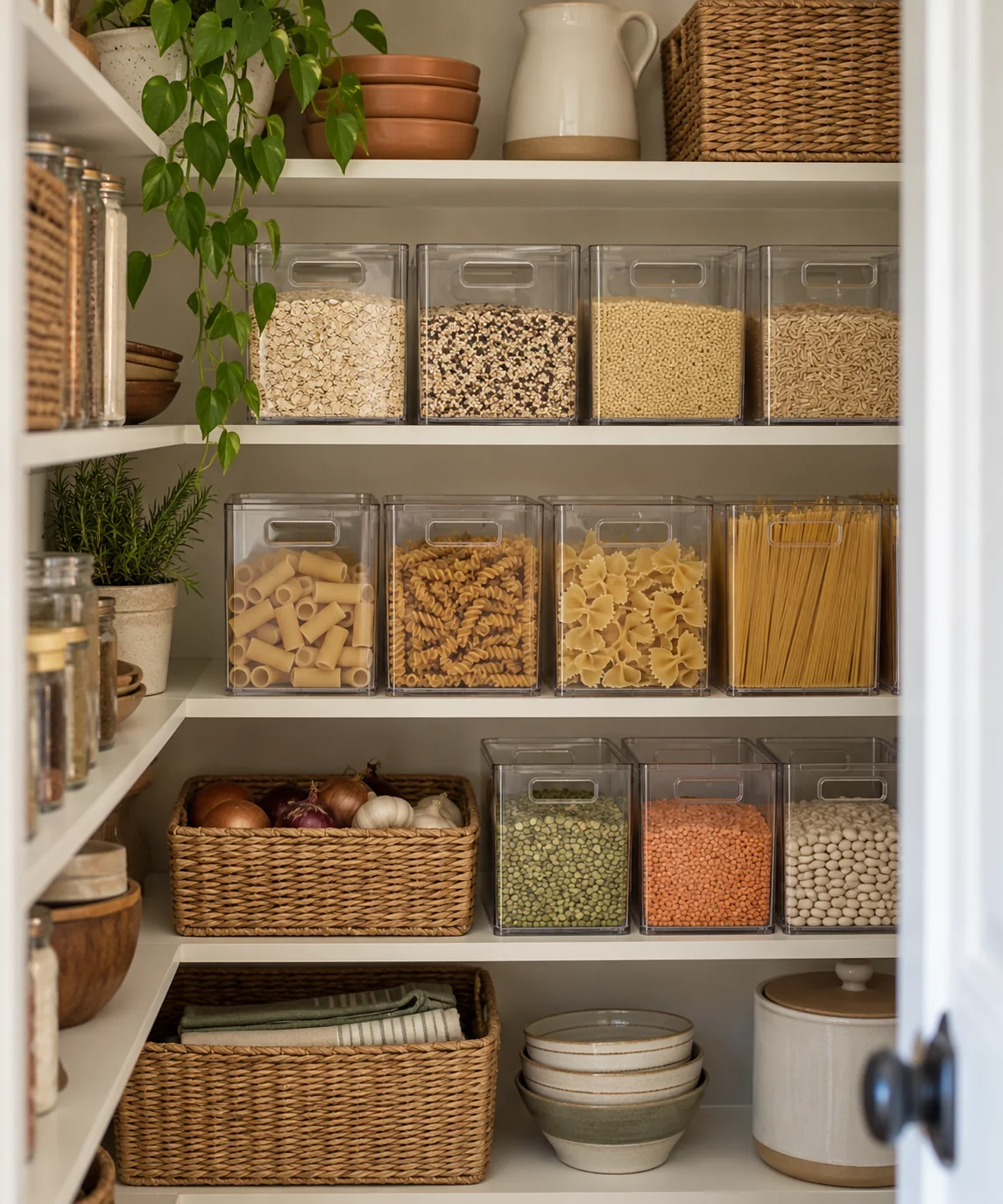
Assessing Shelf Depth and Vertical Gaps
Begin by measuring the usable width, depth, and vertical clearance of each pantry shelf, as internal dimensions vary widely between homes. Select storage bins whose exterior depth closely matches the shelf footprint to capture back-of-shelf space without protruding past the closed door. Check that the vertical space above the top of the bin provides enough room for your hand to comfortably grip the handle and retrieve items without catching against the shelf above.
Categorizing Staples by Meal Prep Workflow
Organizing by specific meal components makes pantry retrieval far more efficient than sorting items strictly by packaging shape. Dedicate individual modular bins to specific cooking routines, such as morning grains, quick lunches, baking essentials, or pasta night supplies. When dinner prep begins, pull the entire category bin onto the countertop to access your ingredients together, then return the container to the shelf in a single motion once the cooking step is complete.
Choosing Straight-Sided Modular Profiles
Select acrylic or rigid plastic bins designed with straight, vertical sides rather than pronounced outward tapers. Flared bin walls create dead gaps between adjacent containers, wasting inches across a narrow shelf. Straight-sided designs slide alongside one another smoothly, creating a uniform footprint that holds packaged pouches, jars, and small boxes neatly upright without allowing loose food items to topple into hidden dead corners.
Staging the Layout Using Empty Containers
Before filling clear bins with heavy goods, place the empty containers directly onto your shelves to test spatial harmony. Confirm that you can pull each bin forward without colliding with the pantry door trim, hinges, or adjacent shelving supports. Experiment with side-by-side pairings to ensure fingers have enough knuckle clearance to grasp bin handles securely. This dry run avoids the frustration of loading containers only to find the layout binds during everyday access.
Maintenance and First-In First-Out Rotation
Transparent bins maintain clear inventory lines, but they require consistent stock rotation to keep food fresh. Practice a first-in, first-out system by placing newly purchased packages at the back of their designated category bin, bringing older staples forward. Every two to three months, slide out the bins, vacuum loose crumbs from the shelf boards, and wipe the container interiors using warm water and a soft towel before restocking.
YOUR STARTING POINT
A little checklist.
Original editorial guidance. Images are AI-generated concepts, not photographs of completed projects. Our sources and approach.
Questions to consider
Should I unpack grains and pasta into clear bins directly?
Keep bulk dry items inside their original sealed boxes or dedicated airtight canisters inside the bin. Open-top modular bins are intended to corral smaller packages and pouches rather than serve as primary pest-proof food dispensers.
How do I prevent deep bins from tipping when pulled forward?
Place heavier canned items toward the back of the bin and lighter pouches near the front handle. This weight distribution keeps the center of gravity stable as you slide the container outward.
Can I stack clear bins on narrow shelves?
Stacking works well only if upper bins hold infrequently used items. In daily pantry routines, stacking creates extra steps because you must unstack the upper layer to retrieve items from the lower bin.