Small Bathroom Storage · THE GUIDE
Clear the Pedestal Sink Rim with a Slim Rolling Cart
Pedestal sinks provide timeless elegance and conserve valuable floor space, but their sloping porcelain edges offer almost no functional resting area for daily grooming essentials. Balancing toothbrushes, soap dispensers, and hair products on narrow rims frequently results in dropped bottles and cluttered basins. Introducing a slender rolling cart into the unused gap beside the pedestal restores order without altering walls or fixtures. By taking advantage of vertical tiers on smooth casters, you gain flexible, accessible surface area that rolls wherever needed and tucks cleanly out of traffic paths.
Jump to the checklist ↓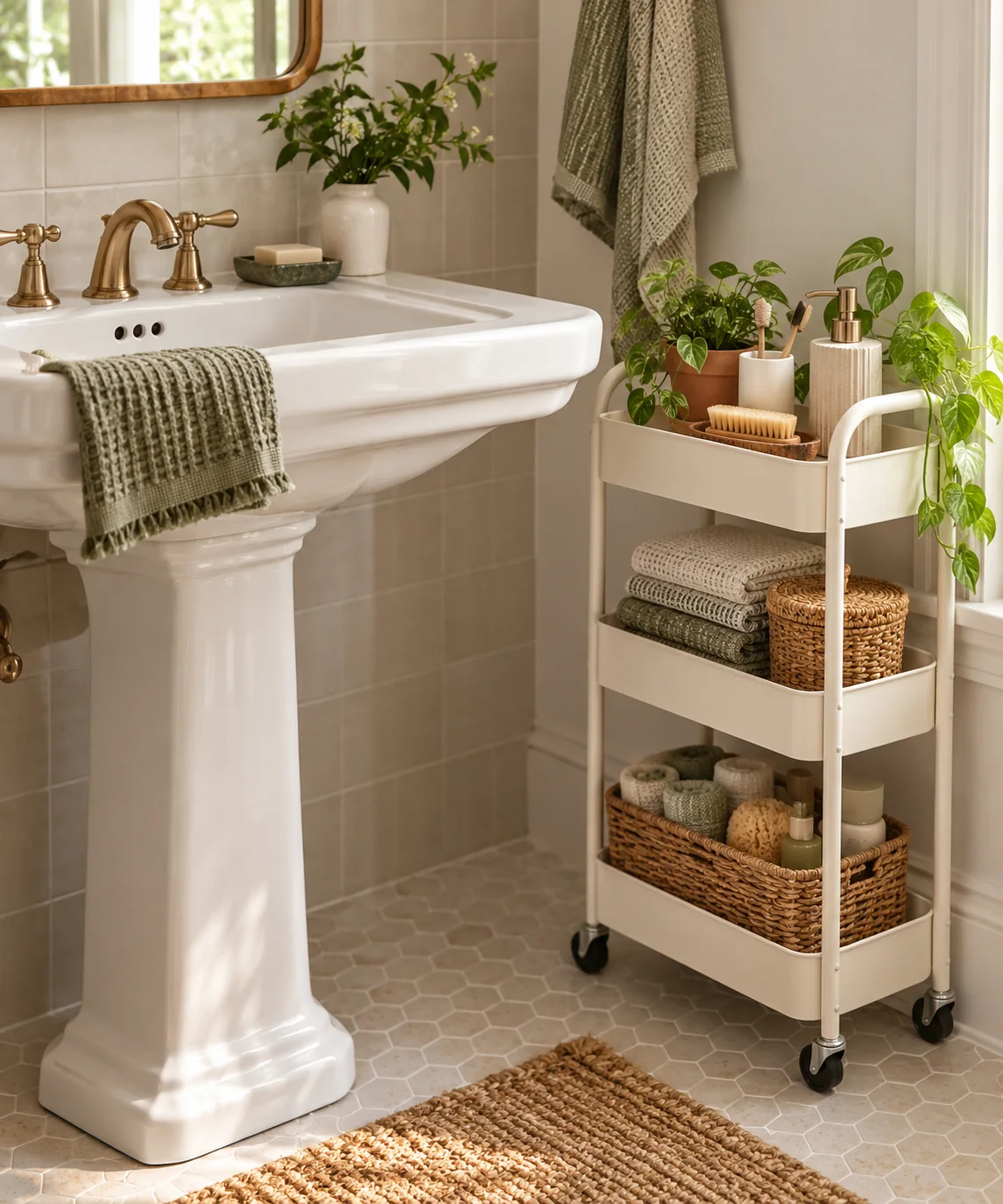
Measuring Narrow Floor Clearances
Before choosing a cart, measure the available clearance between your pedestal sink and adjacent walls, tubs, or fixtures. Account for the widest points of the cart, including wheel flares, handle grips, and protruding hardware, as well as floor-level obstructions like baseboard trim, heat registers, and door swings. The cart requires sufficient room to glide forward without scraping porcelain fixtures, scratching wall paint, or catching on floor mouldings. Many compact utility carts are designed specifically for narrow gaps, transforming awkward architectural dead space into functional storage, provided the pathway remains completely clear of normal foot traffic.
Organizing Tiers by Frequency of Use
Distribute grooming products across shelves based on daily habits to keep routines efficient. Reserve the topmost tier for items you reach for constantly at the sink, such as hand wash, contact solution, and a toothbrush caddy. Allocate the middle basket to hairbrushes, daily skincare bottles, and deodorant. Use the deep bottom tray for bulky or heavier items like spare washcloths or replacement shampoo bottles. This tiered distribution prevents top-heaviness and keeps visual clutter below eye level.
Ensuring Stability on Wet Tile Floors
Bathroom floors often feature uneven tiles or slick porcelain finishes prone to stray water droplets. Select a cart equipped with locking casters on at least two wheels to keep the unit firmly stationary during daily use. When wheeling the cart out for floor cleaning, check that the casters roll smoothly without catching on grout lines. If the unit wobbles slightly on uneven tiles, attach adhesive felt or rubber leveling pads beneath the castor mounts to balance the frame.
Trialing Spacing with Cardboard Mockups
Test bathroom navigation before investing in furniture by mocking up the cart's overall dimensions using a narrow cardboard box or painter's tape on the floor. Place the temporary mockup beside the pedestal sink during daily morning and evening routines. Confirm that you have comfortable legroom when standing at the basin and that reaching the shower, towel rods, or light switches remains unhindered. This physical trial reveals whether a particular cart height or handle position interferes with leaning over the sink, opening vanity cabinets, or passing through narrow entryways.
Ventilation and Material Limitations
Bathroom environments experience elevated humidity, which can degrade unsuitable cart materials over time. Choose powder-coated steel or resilient plastic with slotted or mesh tier bottoms that allow water vapor to circulate and drain freely. Avoid unfinished metal or porous composite wood that warps or rusts near splashed sink water. Wipe down the tiers weekly with a mild, damp cloth to remove soap scum, hair, and dust that collect in narrow under-sink storage zones.
YOUR STARTING POINT
A little checklist.
Original editorial guidance. Images are AI-generated concepts, not photographs of completed projects. Our sources and approach.
Questions to consider
Will a rolling cart fit between a sink and a standard toilet?
It depends on fixture spacing and local plumbing accessibility standards. Plumbing codes establish minimum clearances from the centerline of a toilet to any adjacent fixture or wall to ensure safe, sanitary use. Even where a physical gap exists, introducing a cart must never restrict comfortable seating, block emergency access to water shutoff valves, or obstruct reaching the toilet paper dispenser. Measure your layout carefully and verify that the cart can be rolled out freely without crowding the user.
How can I stop small items from falling through wire mesh shelves?
Line the wire tiers with clear plastic shelf liners or silicone sheets cut to size. These non-porous inserts catch drips and provide a flat, stable surface for slender cosmetic bottles without blocking light.
Can I safely roll the cart over deep tile grout lines?
Choose carts with rubberized wheels rather than rigid hollow plastic. Rubber casters glide over uneven grout joints quietly and smoothly without jostling contents or tipping slender glass bottles on the upper shelves.