Household Reset Routines · THE GUIDE
Coat Hook Rebalancing for Bulky Seasonal Outerwear
A four-peg wall rack in an entry hall frequently collects excess layers as temperatures drop. Heavy wool coats, down parkas, and lined utility jackets stacked on adjacent hooks create visual clutter and exert unbalanced leverage across the mounting rail. When garments crowd together, items snag, slip to the floor, and project into narrow walkways. A weekly rebalancing routine redistributes physical load, limits each peg to an intentional profile, and restores smooth movement through the entry hall. Thoughtful spacing ensures daily outerwear remains accessible while off-duty pieces stay properly stored in secondary closets.
Jump to the checklist ↓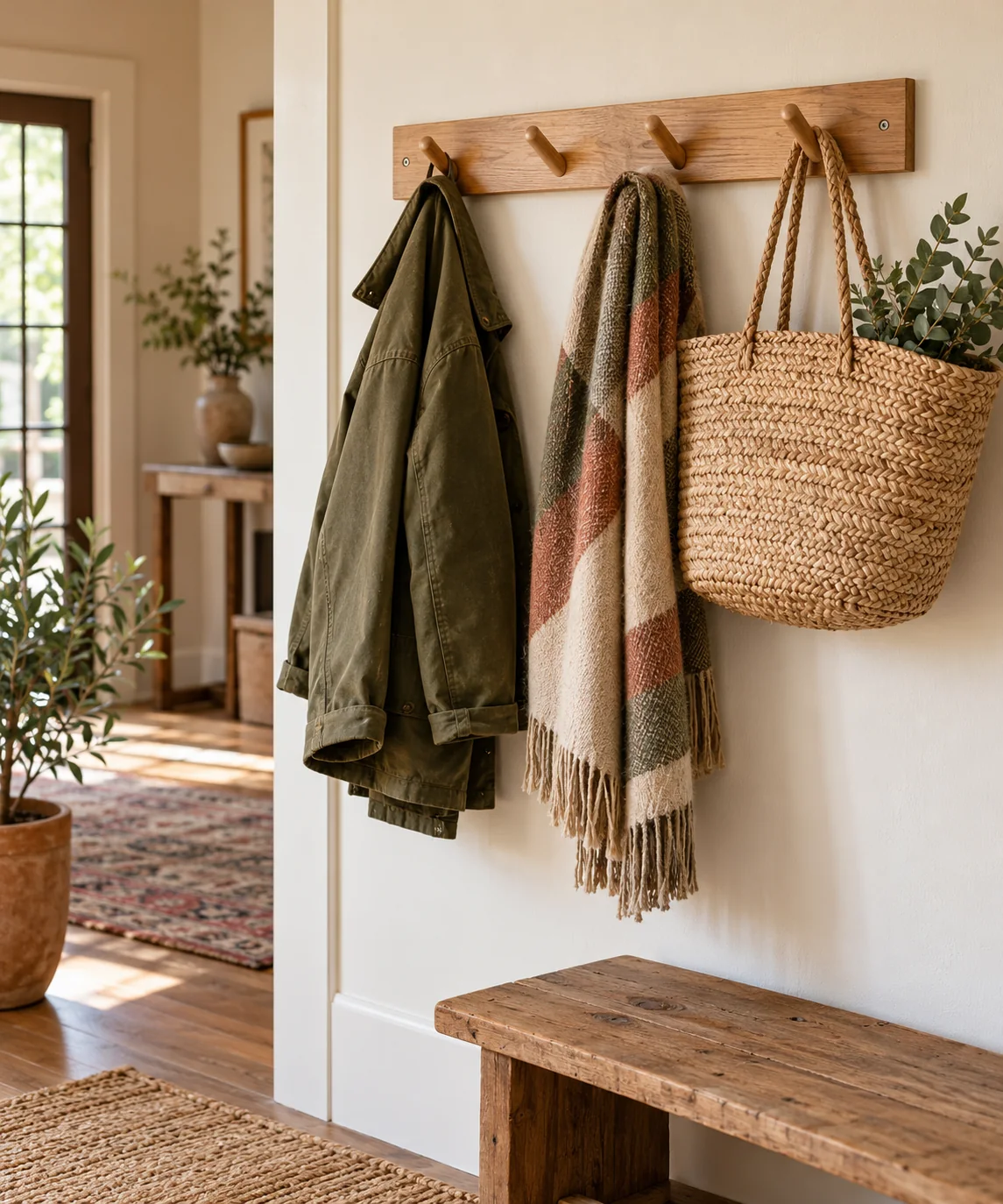
Auditing Everyday Outerwear Against Closet Storage
Begin the rebalancing routine by taking every garment and accessory off the wall rack. Sort outerwear into daily staples and occasional layers. Heavy down parkas and severe-weather coats add substantial bulk and weight; these belong on broad, structured hangers inside a primary coat closet rather than crowded onto a decorative entry rack. Keeping only one active jacket per peg reduces textile crowding and avoids obscuring adjacent hooks. In shared households, assign one peg per person for an everyday coat, reserving secondary closet space for overflow jackets.
Distributing Garment Bulk Across Fastener Points
Avoid clustering thick, heavy outerwear on neighboring pegs, which creates localized bulk and tangles adjacent sleeves. Instead, alternate heavy winter coats with lower-profile layers or empty hanging space to prevent fabric from bunching outward into walking paths. Rather than assuming outer pegs support more weight, review the rack’s installation: stability depends entirely on anchor types, stud engagement, and manufacturer load ratings. Distribute garments evenly across the length of the rail to reduce concentrated leverage on any single mounting screw or drywall anchor.
Corraling Small Winter Accessories in Hanging Totes
Winter accessories such as knitted beanies, fleece gloves, and chunky scarves easily slip off pegs when hung beneath heavy coat collars. Suspend a lightweight canvas tote or breathable woven basket from one hook to contain these smaller textiles in a single accessible container. Storing loose items inside a hung bag prevents dropped accessories, preserves clear peg space for proper coat hanging, and keeps soft goods from expanding outward into the hallway corridor.
Checking Clearance Along Door Swings and Hallways
Wall hooks positioned behind entry doors or along narrow passageways require close attention to garment projection depth. Thick insulated coats can protrude seven inches or more from the wall, obstructing the door swing or snagging on door handles and latches. Place low-profile jackets or flat woven bags on the peg nearest the door strike to ensure the door leaf swings fully without striking textiles. Periodically open and close the door after resetting the rack to confirm smooth movement and prevent hardware damage.
Establishing a Weekly Outerwear Reset Routine
Outerwear naturally piles up over the course of the week as outdoor temperatures fluctuate. Set aside a brief moment on Friday or Sunday evening to clear secondary layers off the rack and return them to bedroom or entryway closets. Inspect garment hanging loops for signs of stretching or fraying, gently brush off accumulated street grit from wool fabrics, and verify that the mounting rail sits firm against the wall without movement. Routine clearing prevents gradual overloading and keeps high-traffic entry corridors clear and functional.
YOUR STARTING POINT
A little checklist.
Original editorial guidance. Images are AI-generated concepts, not photographs of completed projects. Our sources and approach.
Questions to consider
Can multiple heavy coats be hung safely from a single wall peg?
Stacking several heavy garments on one peg increases forward leverage, stretches interior hanging loops, and risks exceeding the manufacturer's per-hook weight limits. Limit each peg to a single coat or lightweight accessory tote to protect both garments and wall anchors.
How can I prevent coat hanging loops from tearing on wide pegs?
Heavy wool coats and structured outerwear benefit from being hung on a contoured wooden hanger placed over the peg, or hung directly by the interior collar fold. Relying solely on narrow decorative fabric locker loops under heavy seasonal loads can tear linings and seams over time.
What items should not be placed on an entryway coat rack?
Thoroughly saturated raincoats, wet snow gear, and excessively heavy loaded backpacks should not remain on a standard decorative wall rack. Saturated clothing needs open air to dry thoroughly without trapping moisture against wall surfaces, while overloaded bags can exceed fastener capacities.