Entryway Organization · THE GUIDE
Combine High Shelves and Under-Rail Storage for Zero Floor Footprint
Historic properties and compact urban hallways frequently feature tall, decorative baseboards alongside tight spatial dimensions that make freestanding consoles or shoe cabinets impractical. When floor space is nonexistent, shifting the storage footprint entirely overhead unlocks crucial square footage. Pairing a high-mounted perimeter shelf with an integrated under-rail coat system organizes seasonal gear and outerwear while keeping baseboards completely clear. This vertical configuration utilizes neglected overhead zones, allowing daily traffic to move unimpeded through narrow doorways. Planning accurate drop clearances and basket proportions ensures this high-elevation system remains effortlessly practical rather than awkward to access.
Jump to the checklist ↓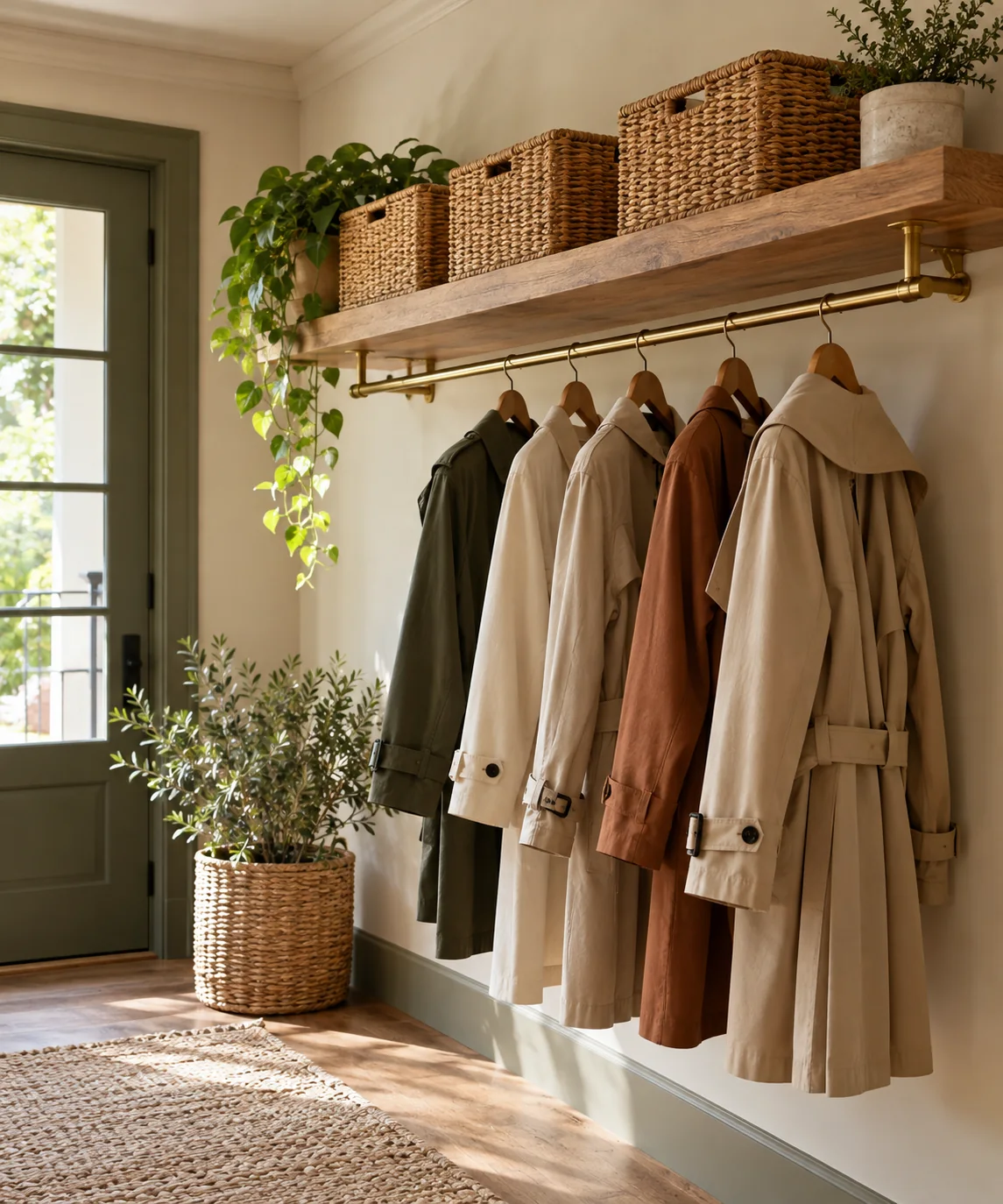
Planning Overhead Elevation and Vertical Clearance
Evaluating the vertical placement of high shelving requires assessing the physical reach of household members alongside the drop of your longest garments. Rather than adopting an arbitrary mounting elevation, measure typical outerwear on hangers to determine how much vertical clearance is required above baseboards or flooring. An overhead shelf mounted too high makes daily retrieval hazardous, while one set too low can cause long coats to drag or obstruct doorway sightlines. Always assess wall construction—such as locating solid framing studs or consulting qualified guidance for older plaster walls—before finalizing positions.
Testing Reachability and Basket Proportions
Before purchasing permanent storage containers, simulate reach and placement using lightweight cardboard mockups on accessible surfaces. Test whether you can comfortably grip, pull forward, and lower bins without overextending your arms or risking dropped contents. Select bins that sit comfortably on the shelf depth without overhanging the front edge, which can destabilize containers or create head-height obstructions. Prioritize lightweight storage bins equipped with sturdy, accessible handles to make retrieving seasonal scarves, hats, or outdoor gear predictable and controlled.
Allocating Outerwear and Under-Rail Spacing
An under-shelf hanging rail provides convenient hanging space for everyday jackets, but overcrowding quickly causes clutter and slows drying times. Using matching, durable hangers suited to garment weight helps maintain uniform spacing and prevents bulky coats from protruding excessively into narrow walkways. Provide sufficient breathing room between items so damp coats can air dry thoroughly after rain or snow. Light accessories such as commuter umbrellas or reusable bags can hang from dedicated hooks, provided they do not crowd doorway clearances.
Weight Considerations and Load Distribution
High-elevation storage systems rely entirely on proper anchoring into sound structural framing or masonry, in strict accordance with bracket manufacturer load specifications. High shelves are best reserved for bulky, low-density belongings such as seasonal knitwear, caps, and lightweight linens. Storing heavy toolboxes, books, or dense footwear overhead introduces serious falling hazards and exerts excessive leverage on wall fixings. Distribute hanging garments evenly along the rail rather than concentrating heavy winter parkas on one end to avoid uneven stress across brackets.
Maintaining Overhead Surfaces and Hardware
Overhead shelves and clothing rails naturally collect ambient household dust and fabric fibers over time. Establish a regular routine to lower bins, inspect contents, and wipe the shelf surface with a damp microfiber cloth to prevent buildup. Use an extendable duster to maintain the upper ledge and wipe down the clothes rod periodically to keep hanger contact smooth. Routine maintenance also provides a convenient opportunity to inspect mounting brackets, fasteners, and rail connections for any signs of loosening or movement.
YOUR STARTING POINT
A little checklist.
Original editorial guidance. Images are AI-generated concepts, not photographs of completed projects. Our sources and approach.
Questions to consider
Can heavy winter boots be stored in overhead shelf baskets?
Overhead shelf baskets should not be used for heavy footwear. Lifting weighted, bulky boots down from above head height introduces significant drop hazards and awkward handling. Footwear is far safer and more practically managed near the floor on a dedicated low boot tray or shallow floor rack.
How can residents of different heights access high storage bins safely?
Designate the highest bins strictly for items accessed infrequently, such as seasonal switch-outs. Everyday essentials should remain at comfortable arm reach. When upper bins must be accessed, use a stable, slip-resistant step stool rather than stretching or standing on unstable household furniture.
What hanger style works best on an integrated under-shelf rail?
Slender, contoured wooden or sturdy composite hangers work best. They provide adequate structural support for heavy coats without sagging, maintain uniform spacing along the rail, and minimize the overall profile of garments extending into the entryway corridor.