Dining Nooks · THE GUIDE
Combine Open Slatted Benches with Clip-On Padded Cushions
Enclosed storage benches are a familiar dining nook fixture, but in compact kitchens, solid box bases offer limited under-seat ventilation and can accumulate dust and moisture over time. Combining an open slatted timber bench with individual clip-on padded cushions offers an adaptable alternative. The spaced wood slats allow air circulation around the seat base, while removable padded toppers supply necessary seating comfort. This modular configuration simplifies routine cleaning, makes it easy to air or wash individual covers, and presents a visually lighter profile in compact eat-in dining zones.
Jump to the checklist ↓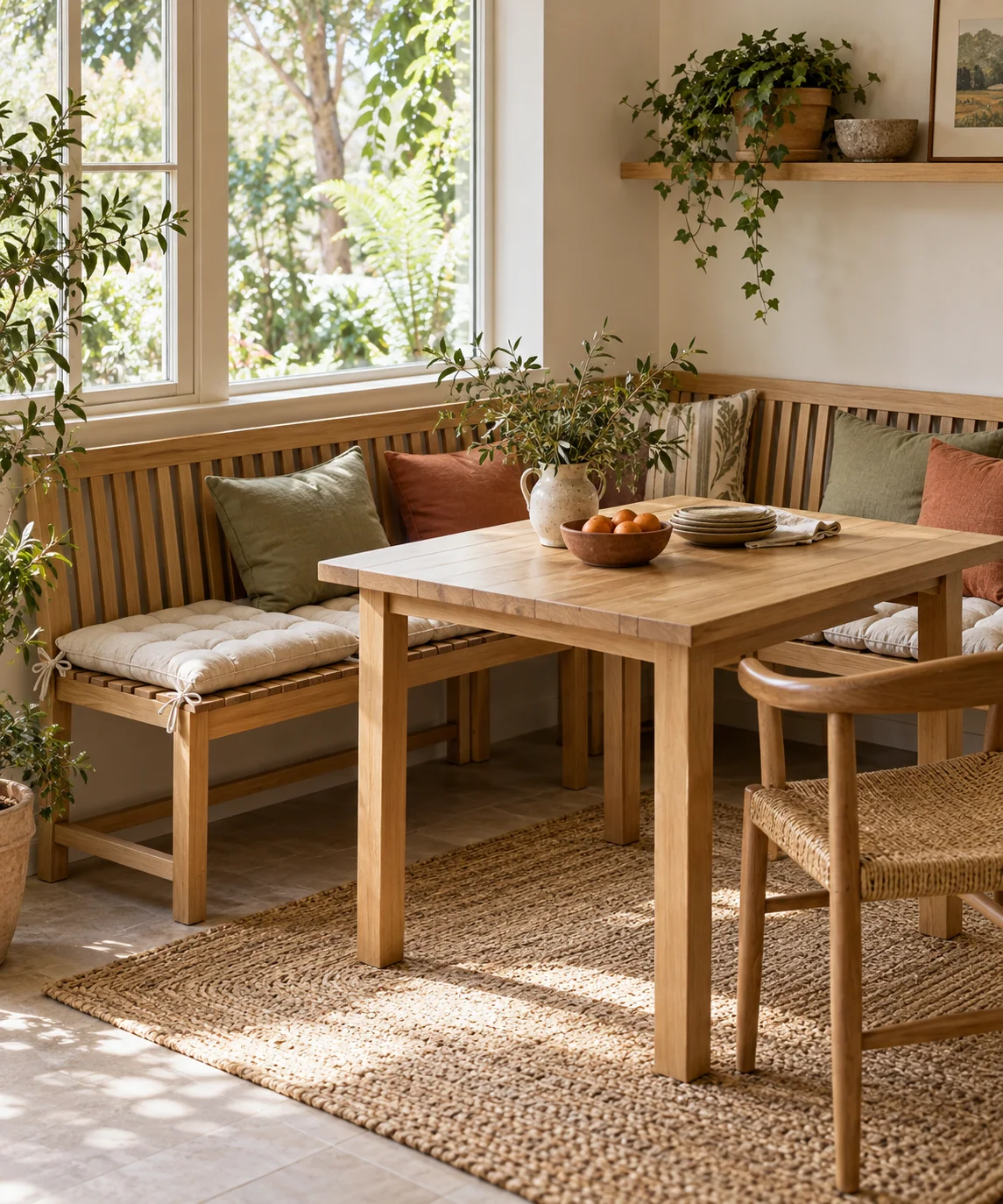
Under-Seat Air Circulation in Kitchen Spaces
Kitchen dining areas experience fluctuating humidity from cooking and dishwashing. Solid enclosed banquette bases can trap stale air near floor level and make perimeter baseboards harder to inspect and clean. Open slatted timber construction allows ambient air to move beneath the seating plane, helping fabric covers air out more consistently after routine wiping. While primary room humidity must still be managed with adequate kitchen ventilation, slatted framing avoids the completely enclosed dead-air cavity of traditional boxed banquettes.
Balancing Slat Dimensions and Support
The comfort and durability of a slatted bench depend on balanced wood dimensions and appropriate slat spacing. Slats roughly two to three inches wide, spaced approximately one-half to three-quarters of an inch apart, generally offer supportive seating while keeping the base open. Spacing much wider than an inch may cause softer cushions to press between the slats under body weight. Well-seasoned hardwoods like white oak or ash are common choices for indoor seating, though any natural wood should be sealed and shielded from standing puddles to minimize seasonal movement.
Securing Pads with Straps and Clips
Traditional fabric ties frequently loosen or rip along stress seams when diners slide in and out of a nook. Heavy webbing straps fitted with hook-and-loop tabs, buckle loops, or smooth brass snap clips provide a more durable fastening method. Running straps beneath or between selected slats secures the cushion without bunching delicate surface fabric. This arrangement holds seat pads steady during routine use while remaining straightforward to detach whenever covers need spot cleaning, rotating, or thorough laundering.
Selecting Practical Cushion Cores and Covers
Standard dense memory foam can feel warm and retain moisture if damp from spills. Porous cushion cores such as open-cell polyurethane foam, reticulated quick-dry foam, or layered wool inserts facilitate better internal air exchange. Paired with breathable slipcovers made from removable cotton canvas or linen blends, these cores air out effectively after spot washing. Always review manufacturer wash codes before submerging foam cores or washing treated upholstery fabrics.
Streamlining Cleaning and Maintenance Routines
A modular cushion setup keeps dining nook maintenance manageable. Because each seat pad unfastens independently, an accidental spill does not require stripping or treating the entire bench. You can unclip the affected pad, spot-clean according to the fabric care label, and prop it upright in a well-ventilated spot to air thoroughly. The underlying wooden slats can be wiped down directly, helping prevent crumbs from gathering in inaccessible seams typical of fixed-seat corner banquettes.
YOUR STARTING POINT
A little checklist.
Original editorial guidance. Images are AI-generated concepts, not photographs of completed projects. Our sources and approach.
Questions to consider
Will an open slatted bench feel uncomfortably firm with seat pads?
A resilient cushion core of two to three inches in thickness generally provides comfortable everyday dining support, distributing weight evenly across the underlying slats.
Can outdoor cushions be used on an indoor kitchen slatted bench?
Outdoor cushions are moisture-resistant and dry quickly, but their water-repellent synthetic fabrics can feel stiff indoors. A practical middle ground is pairing a quick-drying foam core with a soft, washable indoor slipcover.
How often should clip-on seat cushions be removed for airing?
Detaching cushions every few weeks or following deep kitchen cleaning allows you to wipe down timber slats, remove stray crumbs, and let fabric undersides air out thoroughly.