Household Reset Routines · THE GUIDE
Compact Baking Station Reset into Modular Tin Caddies
Scattered baking tools often overcrowd kitchen drawers, leaving small cutters and rolling accessories buried under heavy pans. Repurposing clean metal loaf tins or vintage bread tins creates a modular storage system that clusters like items together on standard pantry shelves or open baker racks. By dedicating distinct tins to long tools, metal shapes, and rolls of parchment paper, you establish firm spatial boundaries. This reset routine walks through grouping baking essentials, measuring tin depth against shelf clearances, and establishing a vertical nesting order that protects delicate metal cutters from bending during everyday kitchen activities.
Jump to the checklist ↓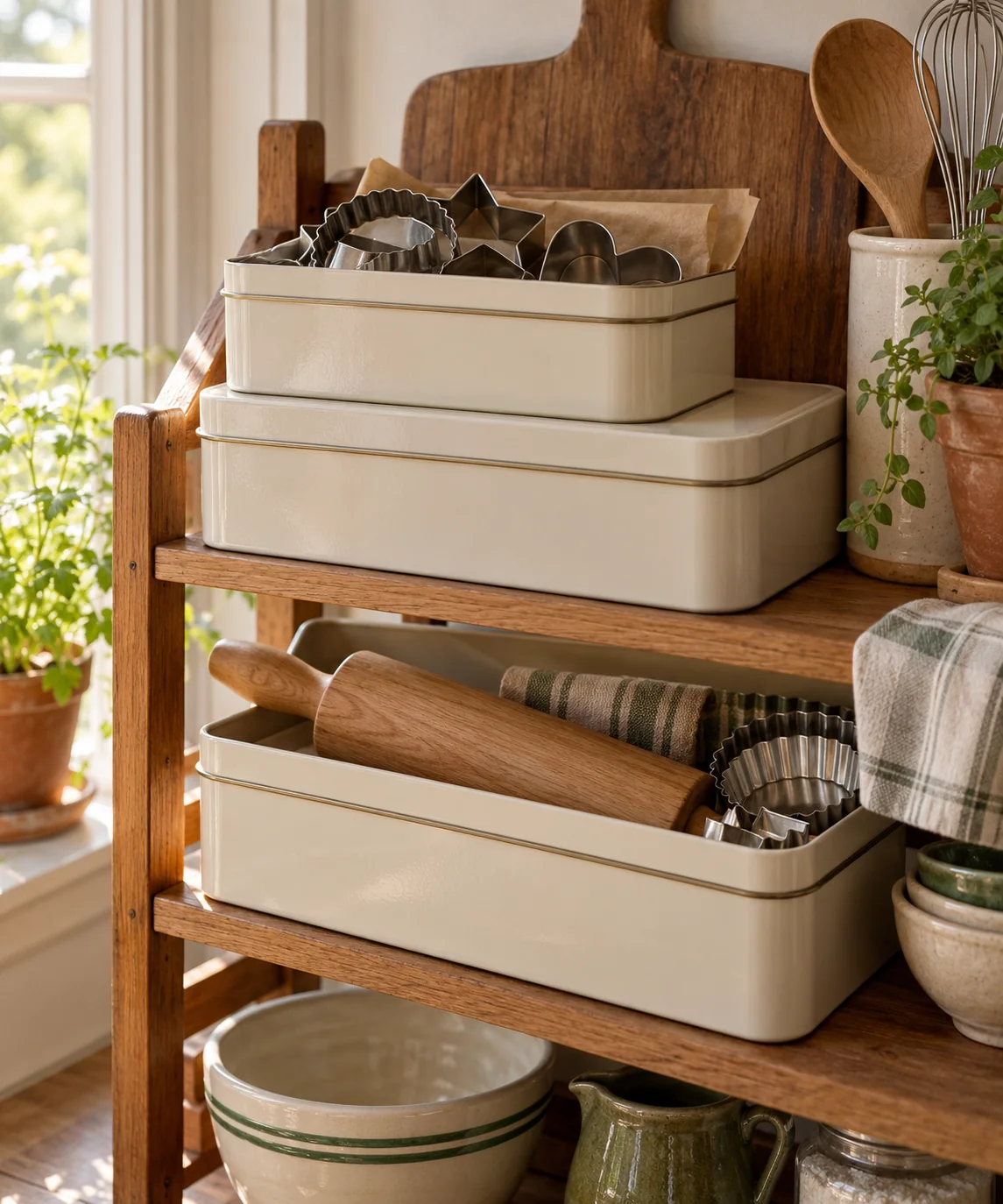
Assessing Tool Dimensions and Tin Volumes
Measure your standard rolling pins, pastry mats, and longest spatulas before assigning tins. Standard metal bread tins measure roughly eight to ten inches long, which comfortably accommodates short French rolling pins, bench scrapers, and folded silicone mats. Place longer dowels or standard baker pins in an open, lidless top caddy to prevent handles from catching. Test the container layout directly on your baker rack or pantry shelf, verifying that tins and their contents clear upper shelves comfortably for smooth, one-handed removal without catching against upper framework or neighboring organizer bins.
Nesting Cookie Cutters by Material and Profile
Group cookie cutters by material to prevent delicate tin-plated shapes from getting crushed beneath sturdy copper or hard plastic cutters. Arrange circular rings together inside one end of a tin, sliding smaller cutters inside larger ones to maximize interior volume. Reserve the opposite side of the tin for intricate or seasonal shapes, stacking them on edge like files rather than piling them loosely. This upright arrangement prevents bent outlines, allows instant visual identification without digging, and keeps cutting edges sharper by reducing scraping against neighboring metal pieces.
Corraling Parchment and Baking Liners
Standard parchment paper rolls often sprawl across drawers, unraveling whenever loose items shift. Dedicate a single loaf tin to baking paper goods, holding a standard parchment roll, precut parchment sheets folded in half, and stacks of paper muffin liners. Standing cupcake liners upright prevents their fluted edges from splaying outward under cabinet humidity. If your parchment roll exceeds the tin length, place the roll diagonally or trim excess box cardboard, using the tin walls as a sturdy base that keeps unspooling sheets contained cleanly inside your prep zone.
Vertical Placement and Shelf Stability Limits
Loose metal bread tins lack interlocking bases, meaning high vertical stacks can shift or slide under cabinet vibrations. Where shelf height permits vertical grouping, limit stacked arrangements to two stable, flat-bottomed containers with the heavier tin anchored at the base. Storing tins side by side in a single tier remains the safest approach on wire baker racks or smooth laminate shelves. Keeping container heights modest ensures that grabbing a scraper or whisk during active baking never destabilizes adjacent caddies or creates an accidental drop hazard.
Routine Maintenance and Dry Storage Limits
Metal bread tins need protection against kitchen humidity and flour residue. Wipe tin interiors monthly with a dry microfiber cloth to remove powdered sugar and stray flour dust, avoiding damp sponges that could encourage rust on unpainted metal seams. Make sure metal cutters and washed rolling pins are completely dry before returning them to enclosed tins. If working in a coastal or humid kitchen, slip a reusable food-grade desiccant pack into the cutter tin to protect raw metal edges from surface oxidation over quiet winter months.
YOUR STARTING POINT
A little checklist.
Original editorial guidance. Images are AI-generated concepts, not photographs of completed projects. Our sources and approach.
Questions to consider
Can I use rusted vintage tins for storing baking tools?
Avoid using rusted tins for tools that directly touch food. Surface rust can flake off onto pastry cutters or silicone mats. Select powder-coated, enameled, or clean food-grade tins, or reserve aged tins strictly for boxed dry goods.
How do I store rolling pins that exceed tin lengths?
Keep extra-long rolling pins in the uppermost lidless tin, allowing handles to extend past the rim safely. Alternatively, stand long pins upright in an earthenware crock or lay them flat along the back edge of your rack.
Will metal cookie cutters scratch the inside of vintage tins?
Repeated friction can scratch soft tin coatings over time. Line the bottom of your cutter tin with a trimmed sheet of parchment paper or a clean cotton tea towel to cushion the metal edges and silence rattling during movement.