Household Reset Routines · THE GUIDE
Compact Balcony Floor Sweep and Folding Chair Stowage
Narrow terraces and compact balconies provide valuable outdoor respite, but small footprints accumulate windblown debris rapidly. Leaves, urban dust, and potting soil settle between floor slats and against exterior walls, creating slip hazards and staining decking if neglected. At the same time, bulky patio seating can obstruct emergency egress and restrict daily movement across tight spaces. Implementing a routine floor sweep combined with folded furniture stowage restores usable square footage and protects your surfaces. With deliberate layout habits and practical clearing sequences, a tiny balcony remains safe, clean, and easily accessible throughout changing weather conditions.
Jump to the checklist ↓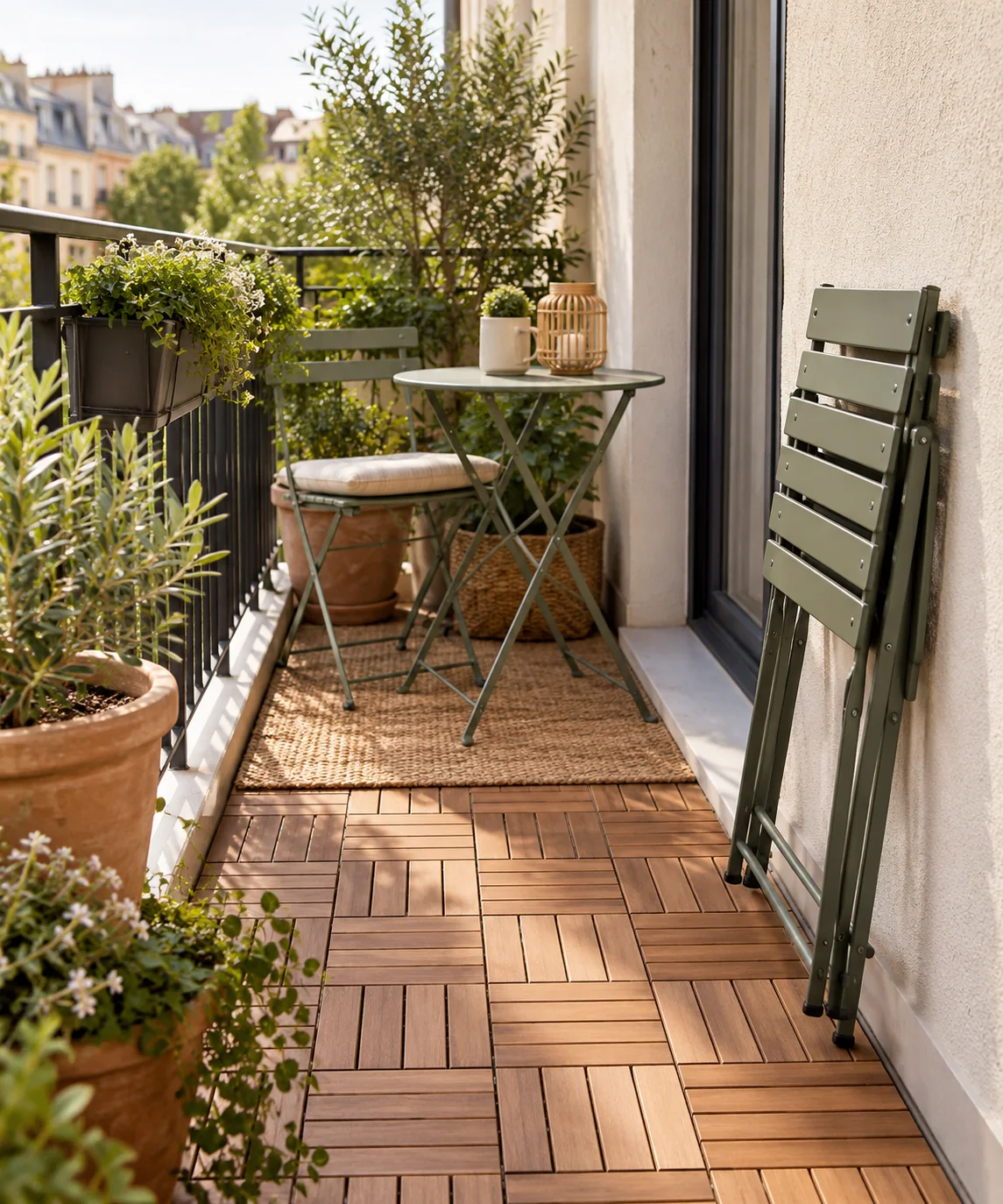
Clearing the Floor Plane Efficiently
Before sweeping, lift lightweight floor accessories, such as door mats or small saucers, onto stable raised tables or benches to expose corners. Work from the exterior parapet wall inward toward the doorway using a stiff-bristled handheld brush or narrow terrace broom. This direction helps prevent debris from drifting back out through railing gaps or dropping onto terraces below. Sweep windblown leaves, dried grit, and organic matter into a long-handled dustpan, disposing of the waste directly into a household compost or refuse bin rather than brushing material over balcony perimeters.
Managing Slatted Decking and Tile Gaps
Interlocking deck tiles and timber slats frequently collect trapped grit in their drainage channels. If left untouched, wet organic debris decomposes within these gaps, causing timber discoloration and sluggish rainwater runoff. Run a narrow nylon crevice brush or stiff whisk broom along the groove lines to loosen packed soil before completing your main surface sweep. Avoid washing the area with heavy buckets of water that can overwhelm drainage scuppers or splash neighboring units; a routine dry sweep maintains clean seams without creating moisture issues.
Stowing Folding Bistro Chairs Safely
Folding wooden or metal cafe chairs maximize terrace versatility, yet leaning them carelessly can invite tipping during sudden breezes. Collapse chairs fully, engaging any integrated locking mechanisms provided by the manufacturer. Lean the folded frames flat against a solid structural wall rather than against balcony railings or exterior glass panels. Keep the exit path to the access door open and unobstructed in accordance with building evacuation guidelines. During severe weather watches or high-wind advisories, move folding furniture indoors entirely.
Wall Clearances and Airflow Buffers
Resting outdoor furniture tightly against stucco, masonry, or timber siding traps exterior moisture, potentially promoting dirt accumulation or surface staining on exterior finishes. Position stored chairs with a modest gap away from the wall to encourage natural air circulation behind folded slats. Similarly, ensure chair feet rest on clean, level, and well-drained flooring surfaces rather than standing in low spots where water pools. This placement reduces moisture transfer while helping avoid accidental abrasions against the building envelope.
Structural Limitations and Load Inquiries
Balcony envelopes carry strict structural weight thresholds established by original engineering specifications and municipal building codes. Never assume a balcony can support clustered storage bins, heavy soil volumes, or dense furniture groupings based on visual appearance or corner placement. For questions regarding permissible weight limits and storage rules, consult property management, housing association bylaws, or a qualified structural engineer. Prioritizing minimal, easily portable furnishings keeps floor surfaces clear and simplifies ongoing maintenance.
YOUR STARTING POINT
A little checklist.
Original editorial guidance. Images are AI-generated concepts, not photographs of completed projects. Our sources and approach.
Questions to consider
Why should folded furniture be kept away from balcony railings?
Storing furniture against railings can create physical pivot points or climbable surfaces, and loose frames risk shifting against perimeter barriers. Storing folded items flat against a solid building wall keeps walkways open and protects outer perimeters.
How do I clean narrow gaps in balcony deck tiles without hosing?
Use a stiff-bristled whisk broom or narrow nylon crevice tool along the channels to lift settled soil and organic matter. Collecting the loosened debris into a dustpan prevents sediment from clogging drainage grates or washing down onto lower balconies.
What is the best way to manage folding chairs during windy weather?
Fold chairs flat and position them in a sheltered area out of direct wind corridors. Because light straps cannot guarantee stability against strong gusts, manufacturer guidelines and building policies generally recommend moving lightweight folding furniture inside ahead of major wind events.