Container Vegetable Gardens · THE GUIDE
Compact Citrus and Thyme Pot Pairing for Sunny Decks
Pairing a potted dwarf citrus tree with an underplanting of creeping thyme makes practical use of container volume on a sunny deck or terrace. Dwarf citrus varieties thrive in roomy containers with ample warmth, but exposed potting mix can dry rapidly under full sun. Establishing a low cover of creeping thyme shields the soil surface from harsh drying winds and intense solar exposure while utilizing available surface area. Because both plants appreciate bright light and well-drained growing media, they can coexist productively in a single container. However, shared root zones require careful monitoring of water, fertility, and pot weight, especially when placed on elevated wooden decks.
Jump to the checklist ↓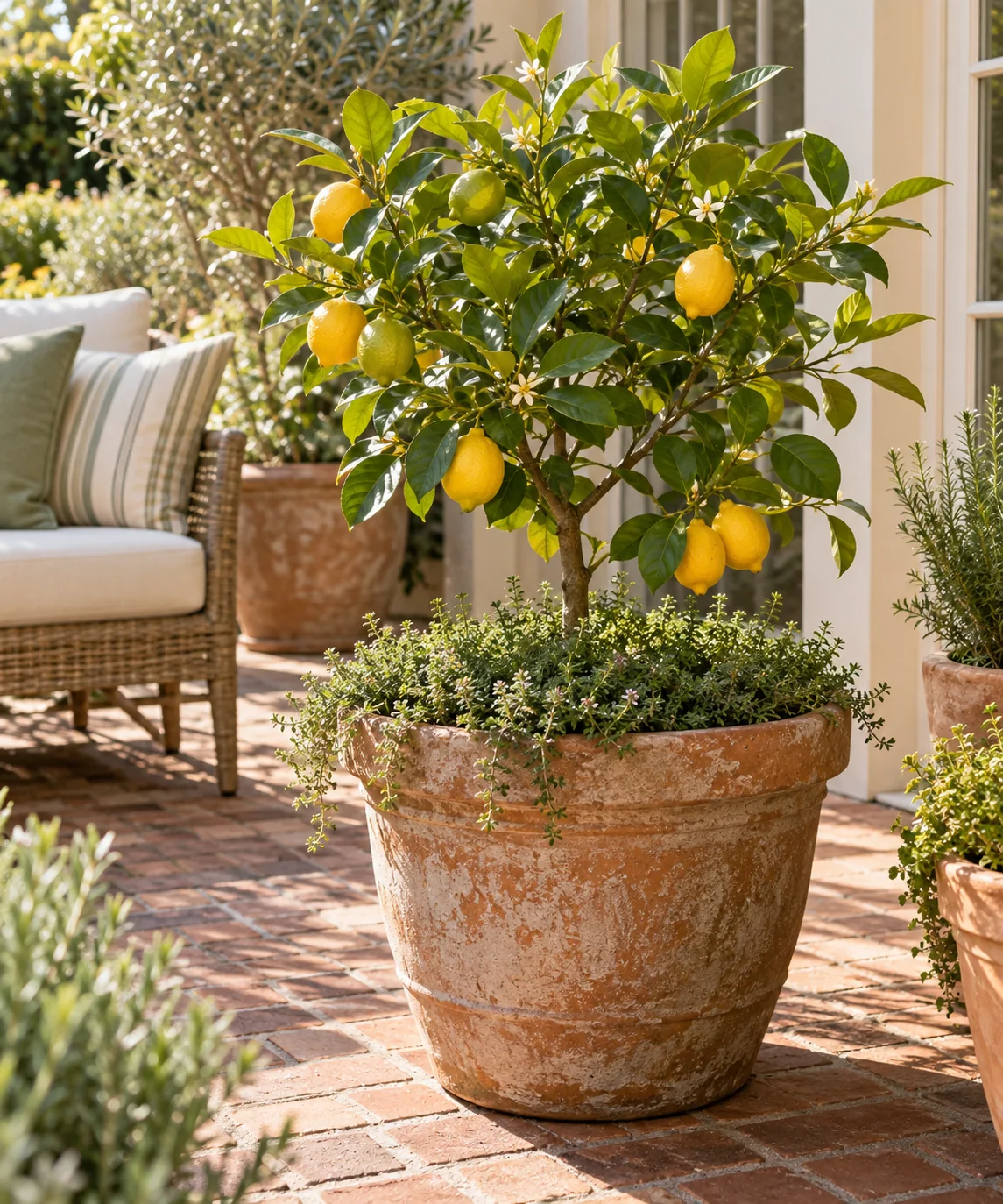
Container Sizing and Structural Weight Considerations
Select a sturdy container measuring eighteen to twenty-four inches in diameter with generous depth for root expansion. Saturated potting mix, mature root balls, and heavy ceramic or stone pots accumulate substantial weight, potentially exceeding one hundred to two hundred pounds. Before placing heavy planters on residential decks or balconies, check weight allowances with property management or consult a qualified structural professional. Confirm the pot has multiple open drainage holes so water moves freely past the root zone rather than collecting at the base.
Planting Arrangement and Trunk Clearance
Set the dwarf citrus centrally, keeping the root flare level with or slightly above the surrounding soil surface. Space small creeping thyme starts around the perimeter, maintaining an unplanted ring of several inches around the citrus trunk. Keeping soil and dense foliage away from the base of the tree protects the trunk bark from excessive moisture, which can invite collar rot or fungal infections. As the thyme spreads, gently prune runners that begin creeping toward the central graft union or stem.
Sunlight Requirements and Watering Dynamics
Place the combined planter in a sheltered spot receiving at least six to eight hours of direct sunlight daily to encourage citrus flowering and maintain tight thyme growth. Although thyme is drought-tolerant once established, citrus trees require consistent, deep watering during the active growing season. Rather than assuming the root zones occupy completely separate layers, recognize that citrus feeder roots also disperse near the surface. Check moisture by probing beneath the thyme foliage into the top two inches of soil, and irrigate thoroughly until water drains from the base.
Fertilization and Canopy Maintenance
Container citrus trees are heavy feeders requiring regular applications of citrus-specific fertilizer containing nitrogen, potassium, and micronutrients like iron and zinc. Apply slow-release granules evenly across the surface before thyme coverage becomes too dense, or part the herb mat to deliver nutrients directly to the soil. Rinse any fertilizer dust from thyme leaves to prevent foliage burn. Shear thyme lightly after blooming to maintain compact growth and prevent dense mats from obstructing your view of the soil condition.
Seasonal Protection and Mobility Planning
In climates subject to freezing temperatures, dwarf citrus must be moved indoors or to a frost-free enclosure for winter. Due to the significant weight of large planters, position the pot on a heavy-duty wheeled dolly or rolling plant caddy before filling and planting. Overwinter the arrangement in a bright, south-facing room away from forced-air heating vents. Routinely inspect both the thyme mat and the citrus foliage for common greenhouse pests like spider mites, scale, or aphids during the indoor transition.
YOUR STARTING POINT
A little checklist.
Original editorial guidance. Images are AI-generated concepts, not photographs of completed projects. Our sources and approach.
Questions to consider
Do creeping thyme and dwarf citrus compete for nutrients in the same pot?
Yes, to a degree. While thyme has relatively modest nutrient needs, citrus is a heavy feeder whose active feeder roots also utilize upper soil zones. Applying balanced citrus fertilizer ensures both plants receive adequate nutrition.
Can other culinary herbs be planted beneath container citrus?
Low-growing, shallow-rooted herbs like dwarf oregano or prostrate rosemary can work if they share similar sunlight and drainage preferences. Avoid aggressive, water-demanding herbs such as mint, which quickly overrun root systems and soil volume.
How can I accurately check soil moisture beneath a dense thyme mat?
Part the thyme foliage with your fingers near the outer rim of the pot and insert a finger or moisture meter two to three inches deep into the substrate. Do not rely solely on thyme foliage appearance to gauge moisture needs.