Household Reset Routines · THE GUIDE
Compact Hearth Tidy and Kindling Basket Replenishment
A functional fireplace or wood stove brings warmth to a living room, but stray wood splinters, ash drift, and disorganized fuel piles can quickly overtake the surrounding floor. Establishing a dedicated hearth reset routine keeps the immediate floor clean while ensuring supplies are staged safely for upcoming fires. Using a sturdy metal fire bucket and an all-natural horsehair hearth brush allows you to manage dry kindling and surface debris cleanly. By observing necessary perimeter clearances and handling cold ash systematically, you create a tidy, hazard-free hearth layout that functions smoothly throughout cold evening routines.
Jump to the checklist ↓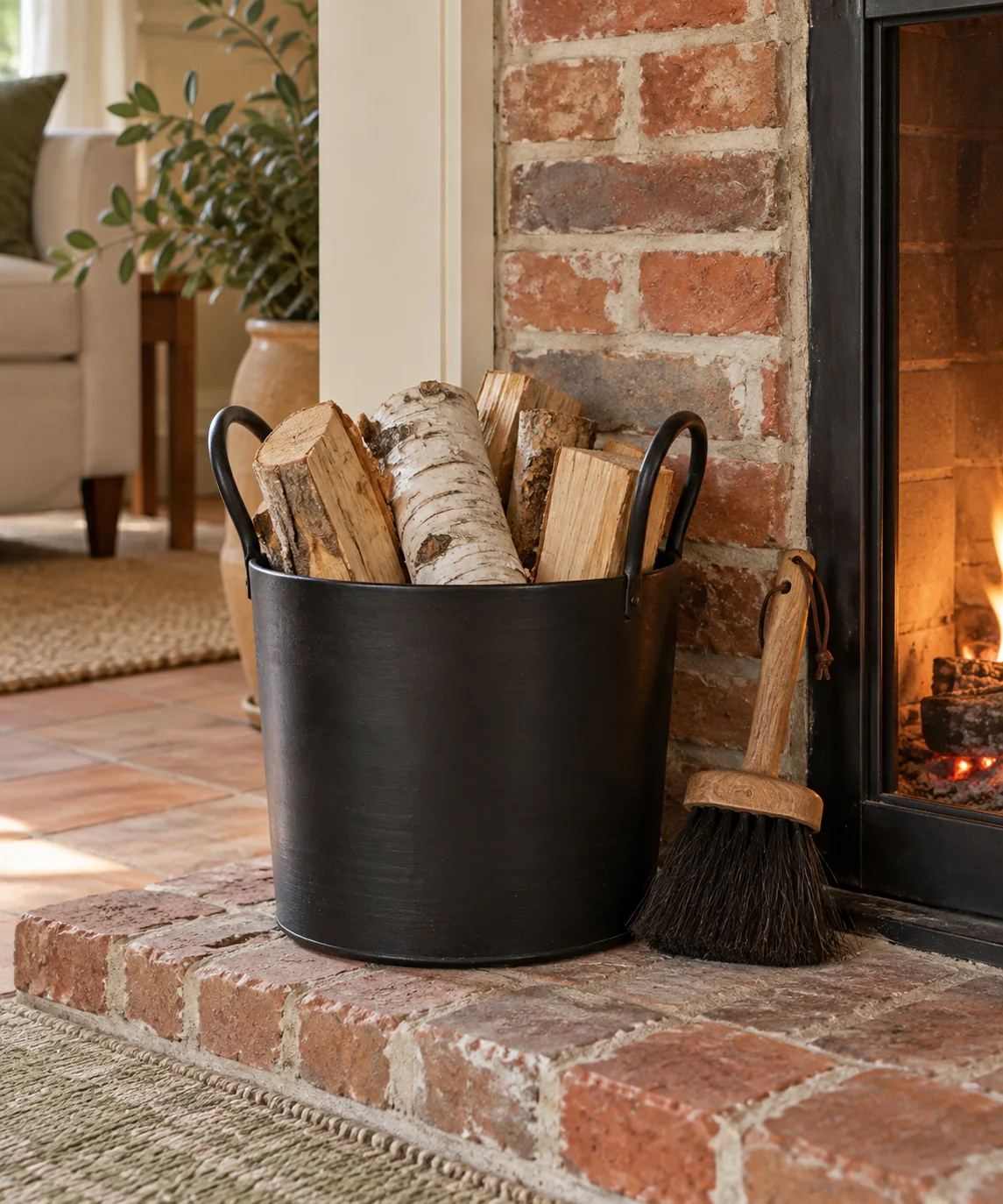
Checking Clearances and Fuel Separation
Safe placement of combustible kindling and storage containers depends on the specific fireplace or stove installed. Rather than relying on a generalized distance, consult the appliance rating plate, manufacturer installation manual, or local building code to determine required clearances to combustibles. Noncombustible hearth stone or brick provides a stable base, but stored kindling must remain well outside the arc of open doors, radiant glass, and spark paths. Keep containers positioned where they cannot block footpaths, stove controls, or hearth access.
Sweeping Cold Ash and Bark Debris
Before restocking fuel containers, examine the hearth floor for wood chips, stray bark, and loose ash. Verify that the firebox and hearth are fully cold to the touch before starting any cleanup. Use a dense natural bristle hearth brush and metal dustpan with slow, gentle sweeps to avoid stirring fine particulate matter into the living area. Cold debris should be transferred into a dedicated metal disposal bucket equipped with a tight lid and stored on a noncombustible surface.
Sorting and Stacking Split Kindling
Choose dry, seasoned kindling sticks split to lengths that fit comfortably within the metal storage bucket. Stacking splints vertically or crisscrossed allows adequate airflow and makes individual pieces easy to grasp without dislodging the rest of the pile. Keep all wood beneath the container rim so protruding ends do not snag clothing or topple onto the floor. Restricting indoor wood storage to a single day's supply minimizes clutter and limits the introduction of outdoor bark grit.
Tool Management and Staging Layout
Keep fireplace tools—such as tongs, poker, shovel, and brush—neatly stored in an upright stand or heavy metal canister on the cooler side of the fireplace. Securing tools in a dedicated holder prevents iron implements from tipping over against masonry or creating tripping hazards. Store the hearth brush with bristles suspended or turned upward so natural fibers retain their shape over time. This setup establishes an orderly maintenance zone without encroaching on active clearances.
Nightly Reset Habit and Hearth Checks
End each evening by checking the hearth once the fire has died down completely and surrounding surfaces have cooled. Sweep any stray bark splinters that fell during refueling, and verify that spark screens or firebox glass doors are latched securely according to the manufacturer's directions. Confirm that the kindling bucket remains positioned behind clearance boundaries with its handle clear for lifting. Consistent, minor maintenance preserves tidy floors and prevents fuel accumulation near the hearth.
YOUR STARTING POINT
A little checklist.
Original editorial guidance. Images are AI-generated concepts, not photographs of completed projects. Our sources and approach.
Questions to consider
Why is a metal container recommended for kindling near the hearth?
A solid metal container offers better ember resistance than woven wicker or plastic baskets. However, single-walled metal can still conduct heat, so the bucket must be kept outside certified clearance zones and never used to hold hot ash or active coals.
How can I sweep hearth debris without spreading fine dust?
Sweep slowly using short, deliberate strokes with a soft natural bristle brush, drawing debris directly into a metal dustpan. Avoid standard household vacuums lacking specialized fine-particle ash filtration, as standard filters can exhaust fine ash back into the room.
How much kindling should be kept next to the fireplace?
Limit indoor kindling to a compact container holding only what is needed for one or two fires. Storing larger quantities indoors clutters floor space, complicates clearance boundaries, and introduces unnecessary debris into the living area.