Container Vegetable Gardens · THE GUIDE
Compact Strawberry and Alpine Greens Multi-Pocket Tower
Vertical pocket planters provide an efficient method to produce fresh fruit and compact salad greens within a compact, one-foot footprint. By combining day-neutral strawberries with slow-bolting alpine cut greens such as curly endive or baby leaf mustard, a stacked tower maximizes vertical surface area without claiming valuable patio floor space. This configuration demands thoughtful soil distribution, balanced pocket planting, and consistent moisture routing from top to bottom. Follow this structural framework to pair fruit and greens successfully, maintain healthy root zones in confined pockets, and enjoy steady, multi-tiered harvests throughout the season.
Jump to the checklist ↓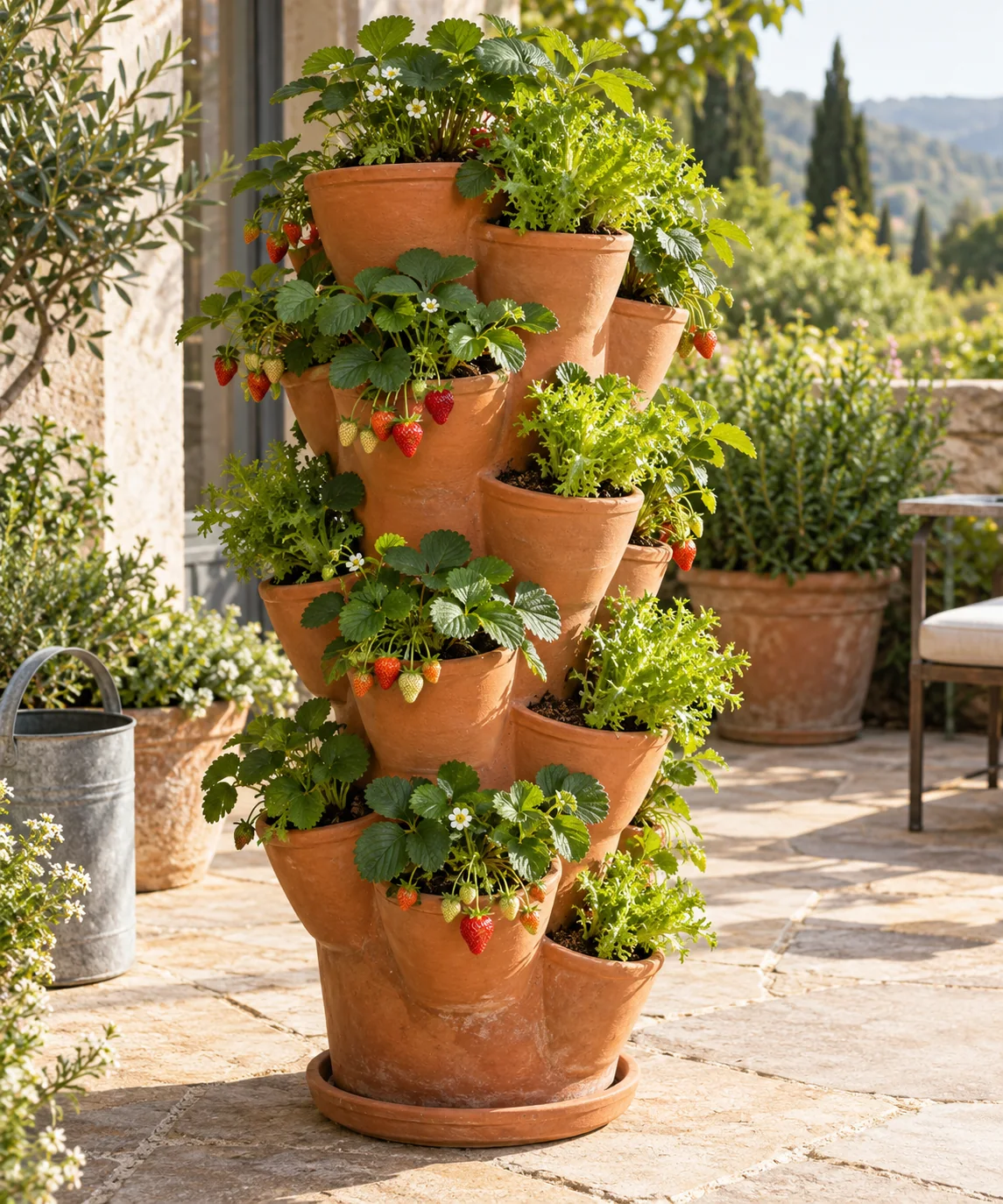
Selecting and Stacking Multi-Pocket Towers
Choose a tiered planter made from UV-stabilized, food-safe resin or durable earthenware with interlocking segments and dedicated side cups. A standard three-to-five-tier system offers multiple distinct planting pockets over a compact circular base. Ensure each tier features interior drainage channels that route excess water into the lower tiers rather than spilling over exterior edges. Set the tower on a level, solid surface clear of doorway paths. Because vertical towers develop a high center of gravity once filled, place them in corners sheltered from prevailing gusts rather than on exposed perimeters where wind forces could tip them.
Soil Composition for Confined Vertical Pockets
Pocket planters have restricted soil volume per cup, making media density critical. Heavy garden soil compacts tightly inside vertical tiers, preventing root respiration and stopping water infiltration. Blend lightweight potting compost with coconut coir and coarse vermiculite in equal proportions to retain moisture without waterlogging lower pockets. When filling, pack the soil firmly into interior central columns while keeping the pocket planting shelves loose, ensuring roots can establish rapidly toward the core reservoir where moisture and nutrients remain most stable.
Arranging Strawberries and Alpine Greens
Distribute plants across the tower based on growth habits and light exposure. Day-neutral strawberries thrive in the upper tiers where sunlight reaches the perimeter continuously, allowing fruit clusters and runners to drape over sides cleanly without contacting soil. Place compact alpine greens, such as curly endive, corn salad, or miniature mustards, in the mid-to-lower pockets. These greens benefit from the partial canopy created by upper strawberry foliage, which helps prevent premature heat stress and bolting during warm summer afternoons.
Managing Water Distribution in Stacked Tiers
Water distribution inside vertical planters presents an inherent challenge: top tiers dry rapidly while base tiers accumulate drainage. To achieve balanced moisture, pour water slowly directly into the top reservoir until slight percolation shows in the lower cups, rather than soaking individual pockets from the outside. Check the moisture in upper and lower pockets daily in summer, and more often during hot or windy weather. Water according to actual moisture and planter instructions; do not assume all tiers need the same amount. Rotate the tower a quarter turn weekly so every pocket receives balanced directional sun exposure across the growing period.
Pruning Runners and Harvesting Micro-Crops
Routine maintenance preserves productivity in tight vertical pockets. Pinch off early strawberry runners throughout the main harvest window to direct the plant's energy into fruit formation rather than sprawling vegetative stems. For the companion greens, snip individual outer leaves cleanly with herb scissors once foliage reaches two to three inches in height. Leaving the inner growing points intact allows the greens to regenerate repeatedly, preventing empty pockets and ensuring continuous fresh salads alongside ripening berries.
YOUR STARTING POINT
A little checklist.
Further reading: Reference guidance ↗. Apply the reference to your setting and follow relevant product instructions.
Original editorial guidance. Images are AI-generated concepts, not photographs of completed projects. Our sources and approach.
Questions to consider
How many strawberry plants can fit in one vertical pocket?
Plant only one strawberry crown per pocket. Crowding multiple plants into a single cup restricts root expansion, reduces fruit size, and limits air circulation, which increases the likelihood of mildew developing among the leaves.
Can I leave a terracotta pocket tower outdoors over winter?
Terracotta absorbs moisture and can crack during freeze-thaw cycles. In freezing climates, empty the tower or move it into an unheated garage or shed after cutting back perennial strawberry crowns in late autumn.
Why are the bottom pockets wetter than the upper tiers?
Gravity causes irrigation water to settle downward through the central column. Counteract this by watering slowly from the top, checking drainage ports between tiers, and planting moisture-tolerant greens rather than strawberries in the lowest cups.