Small Kitchen Organization · THE GUIDE
Compact Teapot and Loose Leaf Storage Station on a Small Tray
Daily beverage rituals often scatter measuring spoons, infusers, tea caddies, and teapots across valuable kitchen counters, generating visual clutter and fragmented prep routines. Corralling these essentials onto a single, compact rimmed tray establishes a clear functional station without encroaching on food preparation zones. A dedicated perimeter contains water drips, loose tea leaves, and stray utensils while visually defining the tea-making corner. By grouping frequently used vessels within reach of the electric kettle, you streamline morning habits, protect countertop materials from heat or moisture marks, and maintain an organized, calm kitchen surface with minimal physical effort.
Jump to the checklist ↓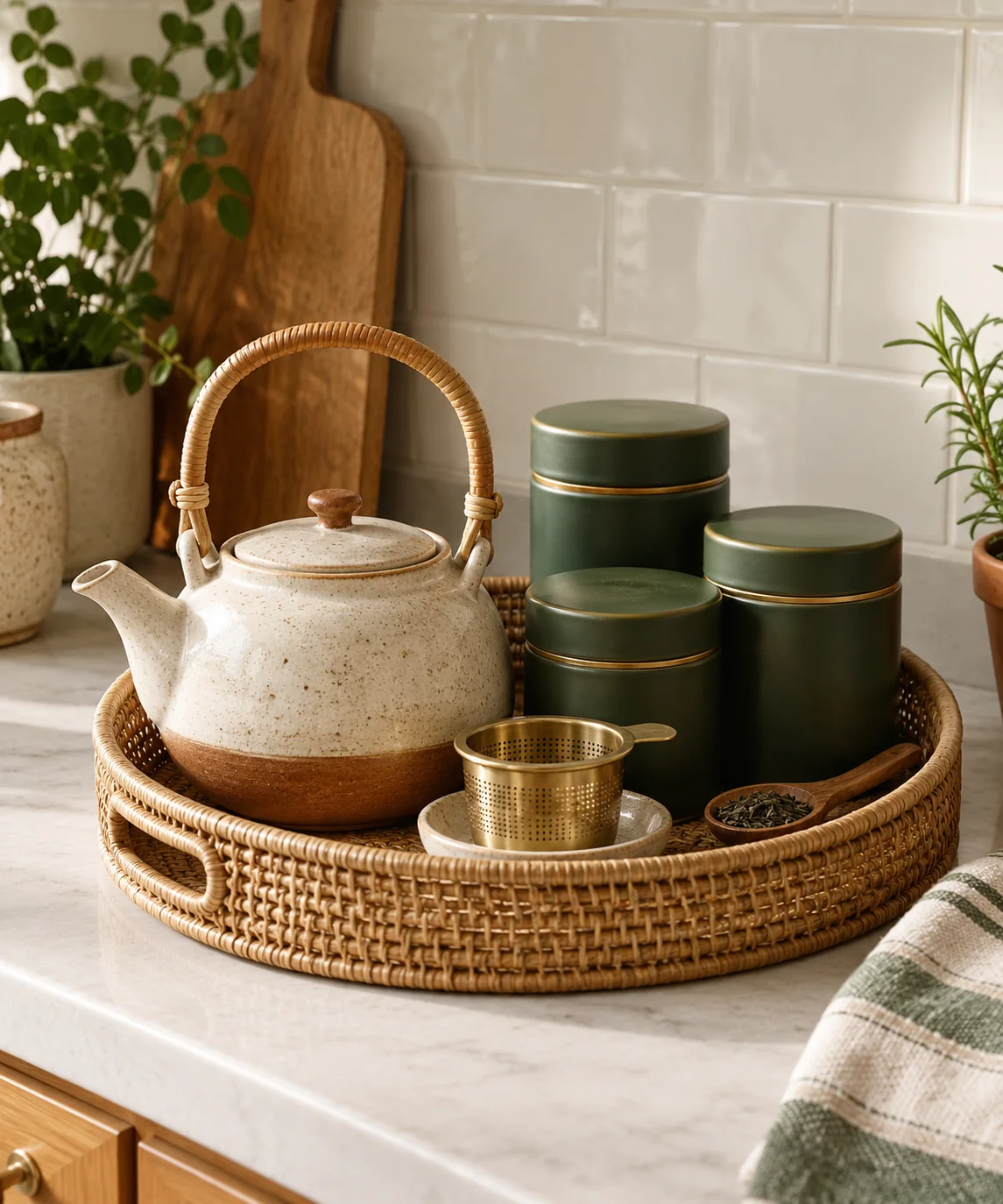
Selecting Tray Dimensions and Lip Heights
A functional tea tray requires a small footprint that fits neatly alongside your water source or kettle. Choose a circular or rectangular tray between ten and twelve inches in diameter with a lip at least one inch high. The raised rim prevents errant water droplets, tipped strainers, and spilled tea leaves from spreading across your clean counter. Select moisture-resistant materials such as sealed hardwoods, powder-coated metal, or glazed ceramic, avoiding untreated raw basketry or unsealed porous stone that absorbs persistent tea tannins during everyday use.
Arranging Essentials by Daily Ergonomics
Arrange your tea tray to balance balance, visual clarity, and simple retrieval. Position the primary ceramic teapot near the back or center where its heavier base anchors the station safely. Arrange two to three airtight tea tins along one side, keeping their label fronts visible so you can select varieties without shuffling containers. Place small accessories, such as a mesh basket strainer, resting dish, and brass tea scoop, in the remaining forward space. This logical orientation ensures one-handed accessibility during hurried mornings.
Managing Moisture and Counter Protection
Hot ceramic teapots and damp metal infusers introduce condensation and moisture rings to tray surfaces. Protect the tray bottom by setting a small absorbent stone coaster, cork pad, or washable linen cloth under the teapot base. Pair this with a shallow ceramic rest specifically for wet strainers after steeping. Elevating damp components off the main tray material prevents water pooling, which can warp wood or discolor lacquer over time. Empty the resting dish after brewing to maintain a hygienic, mold-free assembly.
Curating Tins to Prevent Clutter Creep
A small tray succeeds through strict curation, not bulk storage. Limit the station to two or three compact, opaque tins containing your everyday loose-leaf selections. Store secondary, seasonal, or herbal blends in a pantry cupboard, refilling the primary counter tins as needed. Opaque, airtight metal canisters protect delicate tea leaves from degradation caused by ambient kitchen light and fluctuating humidity. Restricting the tray's capacity prevents random items from accumulating, preserving the visual tranquility and purpose of the specialized counter zone.
Testing Spatial Flow Before Buying
Before purchasing a new display tray, assess your counter space using items already in your kitchen. Group your teapot, two mugs, and an infuser on a standard dinner plate or shallow baking dish next to your kettle. Observe whether the grouping interferes with cutting board placement, cabinet door swings, or appliance cords over several days. If the arrangement feels cramped or restricts food prep, downsize the container footprint or shift the station to an underutilized corner before finalizing your organizational layout.
YOUR STARTING POINT
A little checklist.
Original editorial guidance. Images are AI-generated concepts, not photographs of completed projects. Our sources and approach.
Questions to consider
What tray material is easiest to maintain near a kitchen kettle?
Powder-coated metal or glazed ceramic trays offer the easiest maintenance. They resist moisture, wipe clean instantly with a damp cloth, and will not warp, stain, or absorb hot water rings like untreated wood or natural wicker.
How do I keep loose tea leaves from scattering on the tray?
Use a deep tea scoop with curved edges rather than flat spoons, and measure leaves directly over the open tin or infuser basket. Keep a small resting saucer beside the tin to catch residual bits.
Can I keep an electric kettle on the same tray?
Keep the kettle on the counter beside the tray. Kettles require flat, stable heat-resistant surfaces and clearance for power cords, which can cause instability or water hazards if squeezed onto a small serving tray.