Container Vegetable Gardens · THE GUIDE
Companion Planting Bush Zucchini and Nasturtiums in Urns
Growing productive summer squash in container gardens requires balancing root volume, nutrient demand, and surface space. Broad urn-style planters offer generous soil reservoirs that help buffer root temperatures on sunny patios while keeping vigorous foliage off hard surfaces. Pairing a compact bush zucchini with trailing nasturtiums makes practical use of shared vertical layers within a single container. The zucchini extends broad upright leaves toward the light, while nasturtiums trail outward over the rim. This combination optimizes footprint efficiency, shades the soil surface to moderate surface evaporation, and simplifies routine care in modest patio spaces.
Jump to the checklist ↓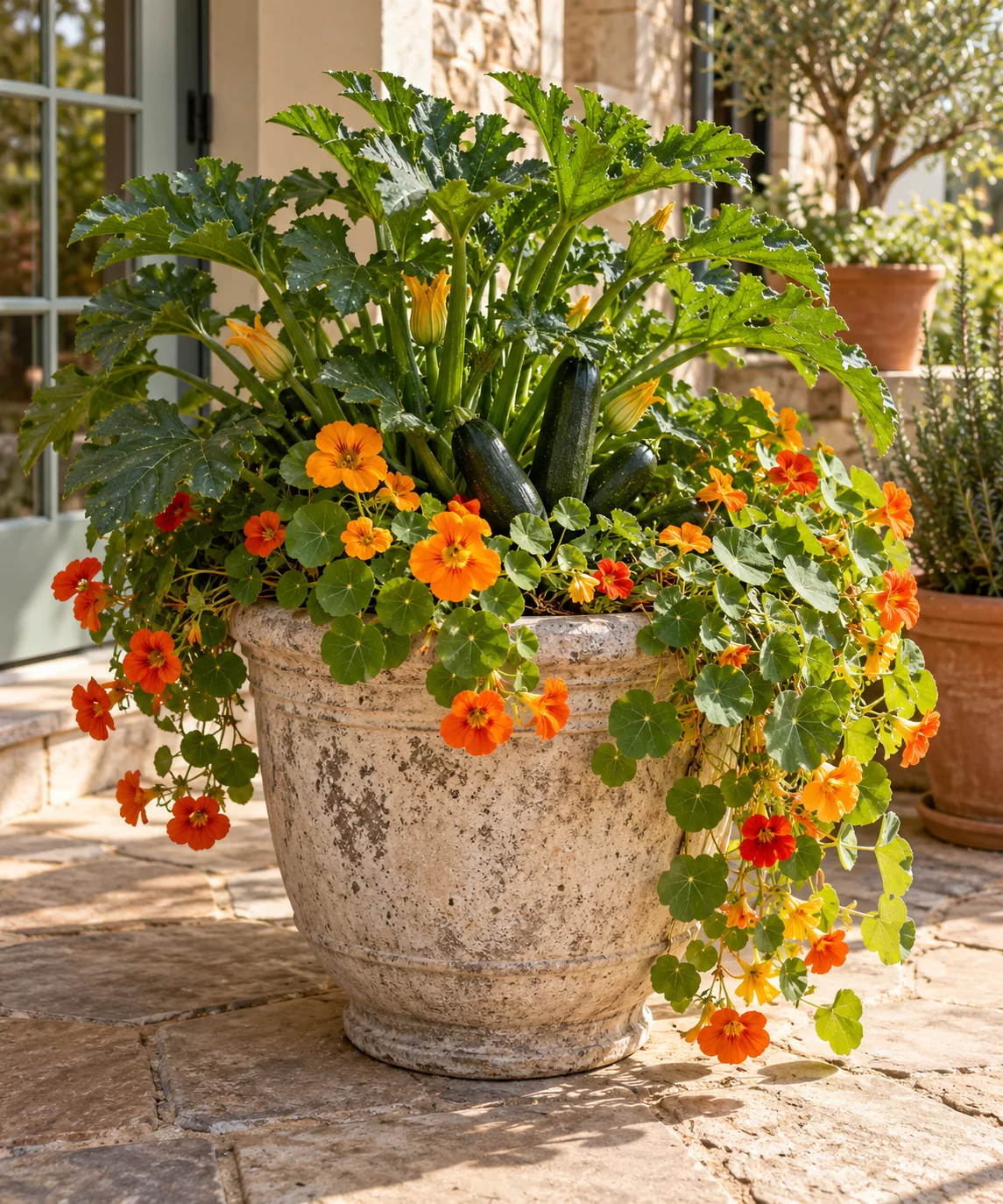
Selecting Container Dimensions and Drainage
Cultivating a single bush zucchini successfully requires a container with an internal diameter of at least eighteen to twenty inches and comparable depth. Broad-based urns offer a stable footprint on flat surfaces, though mature squash canopies catch the wind, so heavy containers should always be positioned on level ground away from exposed edges. Check that bottom drainage holes are completely unobstructed. Rather than adding gravel, which restricts root depth, cover holes with a small square of porous mesh to retain potting mix while allowing excess water to drain freely.
Container Layout and Plant Spacing
Position the bush zucchini seedling in the center of the urn so its crown can develop outward symmetrically. Plant two or three trailing nasturtium starts near the outer container rim, maintaining several inches of separation from the central squash stem. This arrangement minimizes immediate root competition while both plants become established. As the zucchini sends up upright leaf stems, the nasturtiums naturally spill over the container sides, keeping the main crown open to light and surrounding breezes.
Soil Moisture and Nutrient Requirements
Summer squash are heavy feeders that require consistent moisture to sustain flower and fruit production, while nasturtiums perform best with moderate fertility to prevent excessive leaf growth at the expense of blooms. Fill the container with a well-draining potting soil formulated for edibles, mixed with a moderate amount of balanced slow-release fertilizer. Check moisture by inserting a finger two inches into the mix, watering thoroughly when the upper layer feels dry. Ensure runoff flows out freely so roots do not sit in waterlogged soil.
Canopy Airflow and Foliage Maintenance
Dense container canopies can trap humidity around stems, creating favorable conditions for common fungal issues like powdery mildew. Inspect the interior foliage weekly, removing yellowing or damaged lower leaves with clean pruners to encourage cross-ventilation. If nasturtium vines begin to tangle around the zucchini crown, redirect or trim them to maintain clear airflow. Keeping the center of the urn open allows foliage to dry quickly after rain and lets beneficial pollinators reach open flowers.
Managing Harvests and Seasonal Lifespans
Bush squashes in containers produce best when harvested regularly at modest sizes. Cut courgettes when they reach six to eight inches in length to stimulate continuous female blossom production. Toward late summer, container squash plants often slow down as roots fill the available soil volume. As the main vegetable naturally declines, you can remove spent zucchini foliage, allowing the hardier trailing nasturtiums to fill the container surface and continue blooming until cooler autumn weather arrives.
YOUR STARTING POINT
A little checklist.
Original editorial guidance. Images are AI-generated concepts, not photographs of completed projects. Our sources and approach.
Questions to consider
Will nasturtiums compete with zucchini for container nutrients?
Bush zucchini roots run deeper and absorb significant moisture and nutrients, whereas nasturtiums tolerate leaner soil conditions. Planting nasturtiums along the perimeter and using a balanced potting mix helps both plants thrive without severe competition.
Can standard vining zucchini varieties be grown in an urn?
Standard vining squash varieties spread aggressively and are generally ill-suited for patio urns, where their long vines can easily sprawl across walking paths or pull the container off balance. Look specifically for compact bush cultivars that maintain an upright, central habit.
Do nasturtiums prevent pests from attacking zucchini?
While nasturtiums are frequently grown as companion plants, they do not guarantee pest immunity. Some gardeners observe aphids congregating on nasturtium stems, which requires manual monitoring and prompt intervention rather than assuming the squash is fully protected.