Laundry Space Organization · THE GUIDE
Conceal a Narrow Hamper in a Banquette Mudroom Nook
Mudrooms frequently suffer from piles of damp dog towels, muddy athletic jerseys, and outdoor accessories dropped near the primary entrance. Placing an ordinary laundry hamper on the floor obstructs narrow walkways and disrupts utility flow. By integrating a slender drop-in hamper inside an existing banquette or storage bench, you capture dirty textiles immediately at the threshold while preserving clean sightlines. This concealed arrangement segregates heavily soiled items before they reach central living zones, streamlining weekly wash routines without demanding permanent construction or sacrificing valuable seating space in busy residential entryways.
Jump to the checklist ↓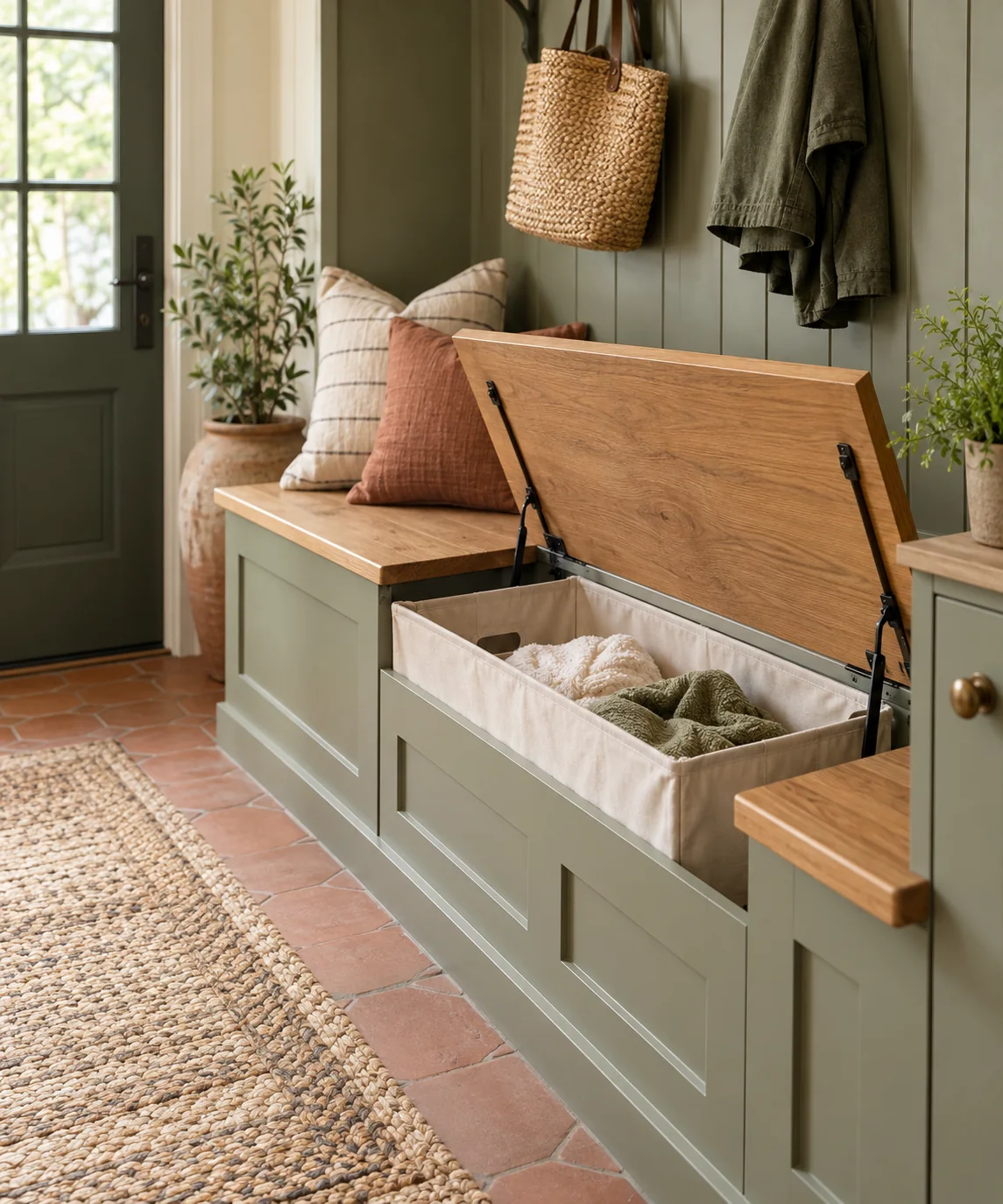
Assessing Banquette Interior Clearances
Before choosing a drop-in hamper bin, measure the internal height, depth, and opening width beneath the banquette lid. Account for existing hinges, lid supports, and interior framing corner blocks that reduce usable volume. A narrow insert measuring eight to ten inches wide can often fit beside standard storage bins while still allowing vertical clearance for lifting. Check that the bench lid opens sufficiently past vertical so that full hamper bags can be lifted straight out without catching on lid edges or putting lateral strain on factory hinge assemblies.
Selecting Insert Containers and Breathable Liners
Moisture retention inside enclosed wooden cabinetry can cause persistent odors and surface dampness. Choose an insert made of breathable materials, such as coated wire framing, open-weave synthetic webbing, or breathable canvas. If using a fabric liner, confirm that it includes sturdy handles and is fully removable for regular machine washing. Avoid unvented solid plastic tubs for damp laundry, as trapped moisture from wet outdoor gear or pet towels can lead to mildew development on interior bench panels.
Separating Towels and Damp Mudroom Gear
Mudroom textiles vary widely in soil level, from muddy dog towels to everyday outerwear. Consider using a dual-compartment insert or two narrow, freestanding totes placed side by side within the bench opening. Designating one compartment specifically for garden rags and pet wiping cloths keeps grit and pet hair separate from lighter household laundry. For items that are dripping wet from rain or snow, hang them on an open utility rail or wall hook to air out before placing them into the concealed hamper.
Operational Routines and Odor Management
An enclosed hamper depends on consistent transfer routines to maintain air freshness in the mudroom. Schedule laundry collection every two to three days rather than allowing damp textiles to sit inside the closed compartment for extended periods. Placing a sachet of activated charcoal along the bench base can help manage ambient moisture passively. Avoid spraying liquid deodorizers or aerosol fragrances directly into the wooden storage cavity, as repeated surface dampening can degrade unfinished interior wood or composite panels over time.
Practical Limitations and Space Trade-offs
Dedication of banquette volume to dirty laundry reduces available space for boots, seasonal gear, or household utility supplies. Furthermore, top-loading bench hampers function best for light-to-medium loads rather than heavy bedding or bulky winter parkas. Ensure household members understand the lid operation and verify that clothing is deposited inside the bin rather than left atop cushions. If bench access requires clearing away seating cushions repeatedly, evaluate whether a freestanding lidded hamper nearby might better support everyday routines.
YOUR STARTING POINT
A little checklist.
Original editorial guidance. Images are AI-generated concepts, not photographs of completed projects. Our sources and approach.
Questions to consider
Can saturated rain gear or wet towels go directly into the bench hamper?
No. Saturated textiles should never be placed directly into an enclosed wooden bench. Hang dripping wet towels or outerwear on open utility hooks to dry before placing them into the hamper to prevent moisture accumulation and timber swelling.
How do I prevent dirt and pet hair from collecting inside the bench compartment?
Use a removable hamper liner with tightly woven, washable fabric and a solid or fine-mesh base. Remove and wash the liner regularly, and periodically vacuum the interior corners of the banquette using a crevice tool attachment.
What should I do if the banquette lid does not stay open safely on its own?
If a heavy lid lacks built-in support mechanisms, do not prop it open haphazardly while lifting laundry. Review the furniture manufacturer's documentation for approved lid-support hardware, or choose an alternative open-bin hamper setup to avoid pinch hazards.