Entryway Organization · THE GUIDE
Conceal Daily Essentials Behind a Full-Length Entry Mirror
Narrow entryways require clear passage and functional utility without visual clutter. A full-length mirror is a practical necessity for final outfit checks, yet standard console tables often block movement in tight foyers. Concealing shallow storage behind a hinged mirror panel merges two critical entry functions into a single vertical footprint. This layout hides loose items like keys, lint rollers, mail, and sunglasses directly behind clean reflective glass. By utilizing wall depth rather than floor area, the entryway remains visually serene, streamlined, and free of sprawling surfaces where disorganized drop-offs typically accumulate over busy weekdays.
Jump to the checklist ↓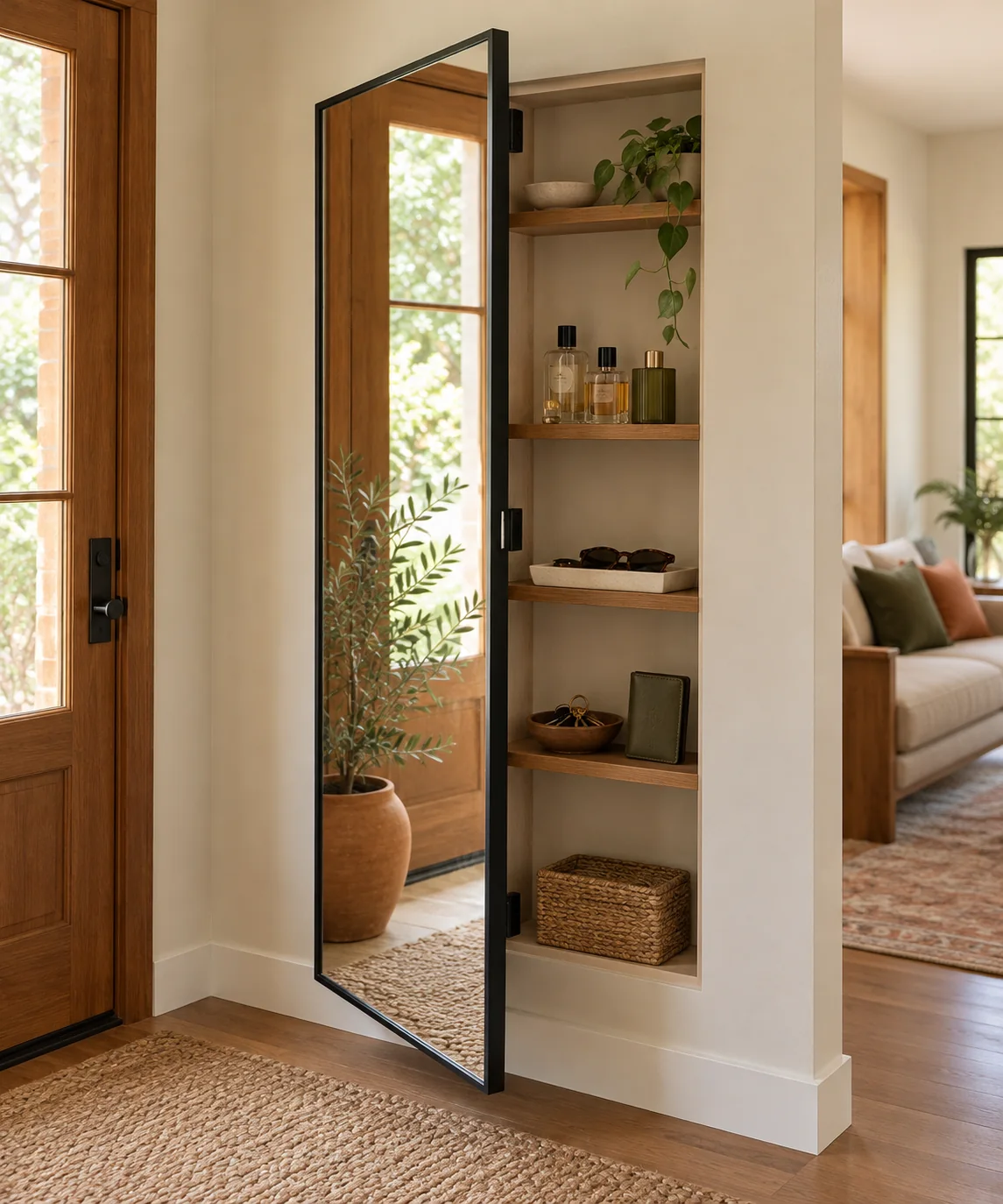
Assessing Wall Clearance and Swing Radius
Before choosing a hinged mirror storage unit, review the door swing and entryway walkway clearances carefully. The mirror door requires an unobstructed path to open fully without colliding with the entry door, wall trim, light switches, or hanging coat racks. Test the proposed swing arc using temporary painter's tape on the floor to verify physical clearance. Users should be able to stand comfortably in front of the open cabinet without encroaching on primary hallway traffic. When planning the layout, orient the mirror door to hinge away from incoming traffic so opening the cabinet does not block someone entering the residence.
Determining Storage Depth and Shelf Spacing
Shallow mirror cabinets work best when sized conservatively for small everyday essentials. An interior shelf depth of three to four inches generally accommodates items like sunglasses cases, wallet trays, pocket accessories, and daily keys without creating an excessively bulky wall projection. Measure your tallest typical items, such as sunscreen bottles or mail envelopes, to determine required vertical shelf spacing. Adjustable shelving allows flexible reconfiguration as storage routines evolve, while shallow depths prevent smaller objects from being pushed out of sight behind larger items.
Arranging Frequency-Based Interior Zones
Organize the vertical storage space according to reach and daily routine. Position high-frequency grab-and-go items, such as house keys, transit cards, and daily sunglasses, between chest and eye level for effortless access during rushed morning departures. Reserve lower tiers for less urgent items, such as spare pet accessories, lint rollers, or shoe care tins. The highest shelf can hold occasional necessities, such as spare keys or small travel kits. Grouping items by usage pattern minimizes search time and prevents small clutter from scattering across open surfaces.
Selecting Secure Closures and Edge Pulls
A wall-hung mirror cabinet requires reliable closure hardware so the heavy door remains flush and stable against the cabinet carcass during household vibrations. Look for models equipped with factory-fitted magnetic catches or cushioned soft-close hinges that prevent rattling or sudden rebound. When selecting a unit, check for a discreet finger groove along the frame or an integrated low-profile edge pull. This provides a natural grip point that keeps fingers off the glass surface, reducing frequent mirror cleaning while ensuring the door latches securely when closed.
Routine Maintenance and Space Discipline
Because enclosed storage conceals daily clutter from view, it can quickly accumulate discarded receipts, loose change, and unwanted miscellaneous paper. Schedule a brief periodic audit to clear out non-essential items and keep interior shelves orderly. When cleaning the mirror, spray glass cleaner directly onto a microfiber cloth rather than onto the glass itself; overspray can seep behind the mirror backing or damage the wooden cabinet frame. Restricting storage strictly to essential departure gear ensures the unit functions smoothly as a dedicated entry station.
YOUR STARTING POINT
A little checklist.
Original editorial guidance. Images are AI-generated concepts, not photographs of completed projects. Our sources and approach.
Questions to consider
Can this setup hold heavy outerwear or bags?
No. Shallow hidden mirror cabinets are engineered solely for small daily personal accessories. Hanging heavy bags or coats inside risks straining the cabinet frame and hinges, which can compromise the alignment of the mirror door.
How do I prevent items from falling when opening?
Select units with small shelf lip guards or add low-profile non-slip shelf liners. These retain sunglasses, compacts, and cardholders in place whenever the mirror door is swung outward during busy morning routines.
Will this work in a very narrow hallway?
Yes, provided the frame projection does not exceed five inches. Ensure the open swing still leaves adequate passing width, or choose a unit designed to swing against an adjacent return wall.