Indoor Plant Styling · THE GUIDE
Conceal Plant Care Tools Inside Decorative Ceramic Cachepots
Every indoor gardener requires functional maintenance tools, such as compact pruning snips, moisture meters, cleaning cloths, and plant markers. Leaving these utilitarian items exposed on open shelving can disrupt a carefully styled living space. By repurposing an opaque decorative ceramic cachepot as a concealed storage crock, you can keep routine care supplies within arm’s reach while seamlessly blending them into your existing bookshelf display. This approach keeps living foliage front and center while tucking necessary gear into an aesthetically unified container that complements your interior palette and prevents household clutter.
Jump to the checklist ↓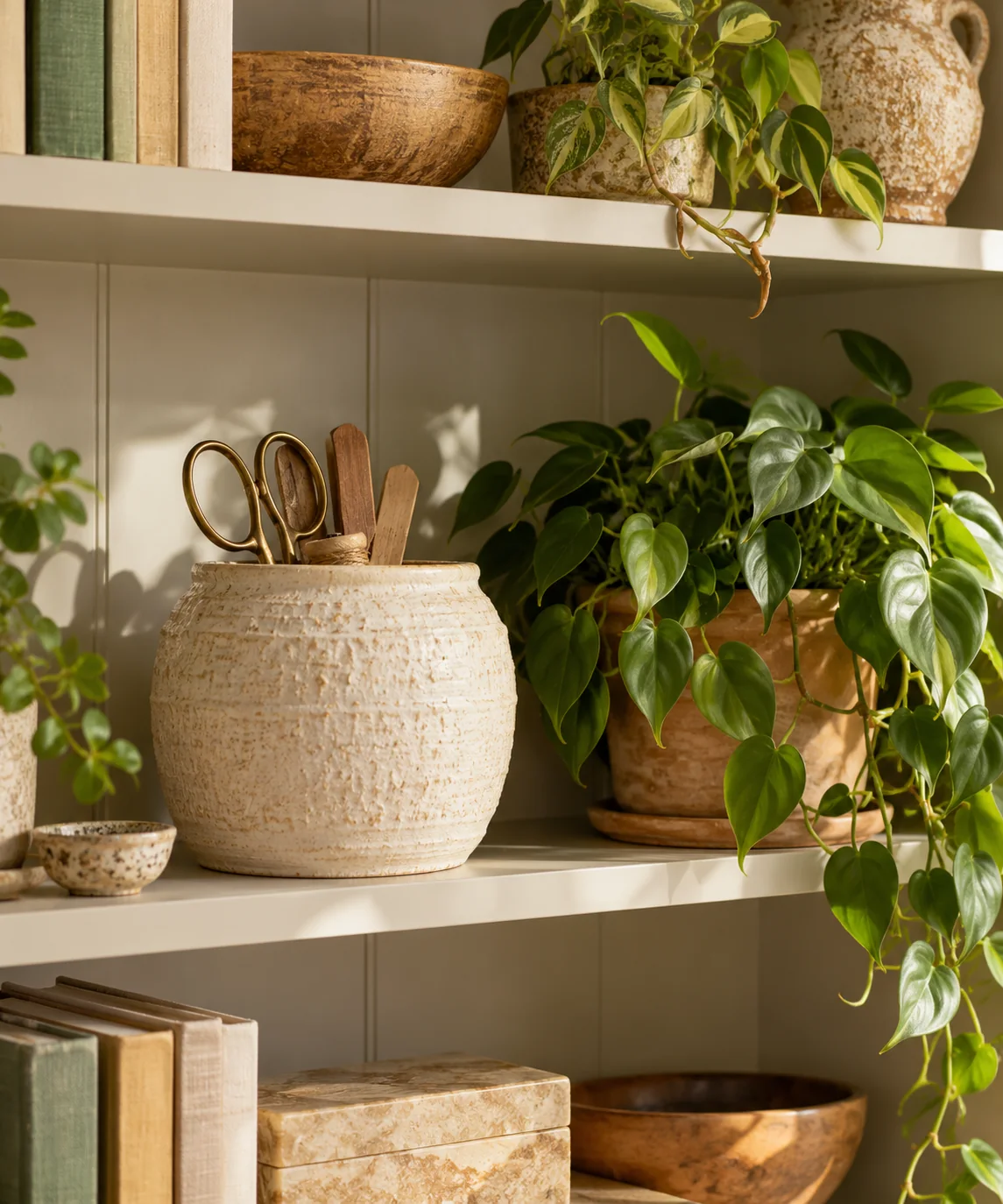
Selecting the Ideal Vessel Size and Opacity
Choose an opaque ceramic vessel with an unpierced base and straight or gently tapered sides. Glazed stoneware or dense earthenware pots work best, as they completely obscure interior contents from standard viewing angles. A vessel measuring six to eight inches tall with a five-inch rim provides adequate volume for compact snips, wooden labels, and small cleaning brushes. Avoid translucent glass or slotted decorative crocks, which expose the metallic and plastic tools stored within.
Preventing Interior Scratches and Tool Wear
Metal pruning shears, pointed brass snips, and soil probes can chip or scrape the unglazed inner ceramic walls of fine cachepots. Line the interior bottom of your vessel with a circular cutout of natural cork, dense felt, or silicone sheet. This padded barrier cushions the impact when inserting tools, dampens noise during retrieval, and protects pointed metal blades from dulling against hard kiln-fired pottery surfaces during daily organization and storage routines.
Managing Residual Moisture to Avoid Oxidation
Storing plant tools alongside living greenery requires strict moisture management. Always dry brass snips, bypass pruners, and soil meters completely with a soft cloth before placing them inside the cachepot. Trapping residual moisture inside an unventilated ceramic vessel accelerates tool rust, corrodes metal springs, and fosters unpleasant mildew odors. Reserve small spray bottles for open caddies, or ensure they are completely sealed and exterior-dry before placing them inside.
Integrating the Vessel Across Bookcase Vignettes
Position the tool-holding cachepot directly adjacent to a healthy, potted trailing plant on an accessible shelf. Matching the glaze finish, texture, or clay body to neighboring planters establishes visual unity across the display. Treat the tool vessel as a structural sculptural element: balance its solid profile by placing it beside looser, airier leaves, such as a trailing philodendron or fern, allowing small tips to drape slightly over the rim without obscuring quick tool access.
Establishing an Accessible Daily Maintenance Routine
Store the cachepot on an intermediate shelf between waist and chest height to keep tools readily accessible without requiring step stools. Group items vertically inside using internal divider cups if necessary, keeping handles upright for immediate identification. Avoid crowding the vessel with excessive supplies; limit contents to your primary pruning, wiping, and measuring essentials. Periodically audit the interior to discard broken markers, worn ties, and accumulated leaf debris.
YOUR STARTING POINT
A little checklist.
Original editorial guidance. Images are AI-generated concepts, not photographs of completed projects. Our sources and approach.
Questions to consider
Can I store a filled misting bottle inside the tool cachepot?
It is safer to store misting bottles empty or keep them on a waterproof tray. Enclosed ceramic pots retain leaks or minor condensation from pump nozzles, which can corrode brass snips or wooden markers stored in the same space.
How do I keep small tool handles standing upright inside a wide pot?
Place a smaller, narrow glass jar or weighted cardboard tube inside the cachepot. This internal organizer segments snips and tweezers vertically, preventing tools from falling flat and tangling at the bottom of the larger vessel.
Will ceramic tool pots cause bookshelf shelves to bow over time?
Check the shelving manufacturer's specified weight rating per shelf and distribute heavier items across the span. While a small cachepot with hand tools is relatively lightweight, concentrated point loads on long or thin unsupported spans can contribute to gradual shelf deflection.