Laundry Space Organization · THE GUIDE
Conceal Utility Clutter Behind a Linen Curtain Panel
Open laundry alcoves in hallways or kitchens often expose functional appliances, plumbing connections, and utility storage to adjacent living areas. Installing permanent bifold or hinged doors can obstruct narrow passages and consume valuable floor clearance, making routine laundry access cumbersome. A suspended linen curtain panel offers a tactile, lightweight barrier that conceals utility clutter while preserving straightforward walk-up access. Using a breathable woven fabric on an adjustable tension rod creates a visual partition that installs without permanent wall modifications. With careful fabric selection, attention to appliance manufacturer clearances, and proper maintenance, this approach provides a tidy, reversible concealment option suited for rental and owner-occupied homes alike.
Jump to the checklist ↓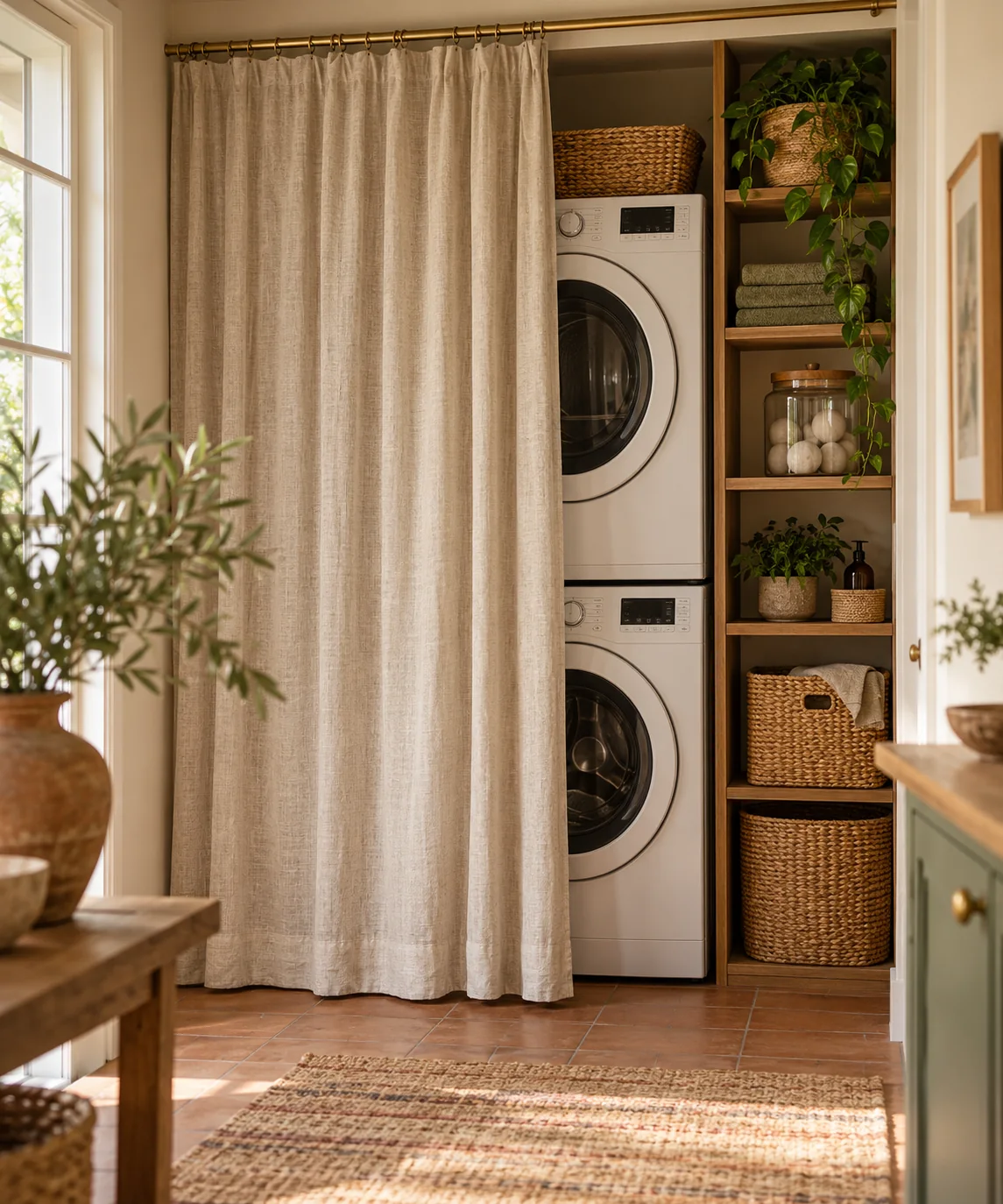
Fabric Selection and Opacity Considerations
Not all fabrics perform equally well in utility areas where air movement, heat, and laundry activity intersect. Medium-weight linen or linen-cotton blends provide enough opacity to obscure laundry appliances, utility hoses, and detergent supplies without blocking access. Lighter sheer fabrics often reveal the outlines of cluttered shelves behind them, while excessively heavy upholstery textiles can be stiff, difficult to draw aside, and slow to dry if splashed. Opting for unlined, naturally textured woven fabrics allows the panel to hang neatly, withstand regular handling, and maintain a relaxed appearance without requiring rigid structural support.
Evaluating Tension Rod Hardware and Mounting Surfaces
In rental properties or alcoves where drilling into wall framing is prohibited or undesirable, a heavy-duty spring-tension or twist-lock rod offers a non-invasive mounting method. Check the manufacturer load rating on the rod to ensure it can support the weight of your chosen fabric without bowing. Inspect the alcove walls before installation; tension rods require flat, structurally sound surfaces, such as solid door jambs or reinforced drywall corners, to maintain reliable friction. Wipe contact points clean of dust and residue before tightening, and verify that rubberized end pads seat evenly to prevent slipping over time.
Planning Panel Dimensions and Floor Clearance
Determining curtain length in a utility zone requires balancing visual coverage with practical maintenance. A panel that drags or pools on the floor collects floor dust, lint, and moisture from wet laundry transfers. Measure the drop from the installed rod so the bottom hem hovers slightly above the finished floor surface rather than resting directly on it. This small gap protects the textile edge from damp soles and rolling laundry baskets while allowing room for regular vacuuming or sweeping. Confirm the curtain width includes adequate fullness so the fabric covers the alcove opening without stretching taut across the front.
Appliance Clearances and Manufacturer Ventilation Guidance
Appliances generate heat, air movement, and vibration during normal washing and drying cycles. Before hanging any textile in front of mechanical equipment, review the appliance manufacturer user manuals for mandatory clearances to combustible materials and requirements for makeup air intake. Curtains are combustible textiles and must never contact hot dryer venting components, exhaust ducts, or operating machine surfaces. If an appliance alcove requires open ventilation during operation, keep the curtain drawn completely open while running cycles, closing it only once the machinery is powered off and fully cool.
Textile Care, Dust Management, and Routine Upkeep
Utility alcoves naturally accumulate airborne dryer lint, detergent dust, and occasional humidity, requiring periodic laundering to keep the curtain clean. Review fabric care labels for washing and drying instructions, noting that natural linen is prone to shrinkage when exposed to high heat. Washing on a gentle cycle and hanging the panel while slightly damp allows natural gravity to ease out minor wrinkles. Regularly check the tension rod to ensure vibration from nearby appliances has not loosened the friction mount, retightening the mechanism whenever necessary to maintain a secure hold.
YOUR STARTING POINT
A little checklist.
Original editorial guidance. Images are AI-generated concepts, not photographs of completed projects. Our sources and approach.
Questions to consider
Can hanging a curtain in front of a washer or dryer cause overheating?
Hanging any combustible material directly against or too close to appliances can interfere with required airflow and ventilation. Always check your appliance manual for required clearances, ensure vents remain completely unobstructed, and leave the curtain fully drawn open while machines are in use.
How can I prevent a tension rod from loosening near vibrating appliances?
Thoroughly clean wall contact surfaces to remove dust and oils before installing. Choose a rod with wide, non-marking rubber end pads, tighten it firmly according to the manufacturer instructions, and inspect the tension periodically to confirm normal appliance vibration has not shifted it.
Which curtain heading style is easiest to operate in a laundry alcove?
Curtain rings with clips or sturdy grommets glide along tension rods with minimal resistance, making it easy to sweep the panel aside with one hand when carrying a laundry basket. Rod-pocket styles create significant friction and can pull on the tension rod during daily use.