Rental-Friendly Decor · THE GUIDE
Conceal Utility Corner Clutter with a Textured Fabric Folding Partition
Exposed appliances, vacuums, and ironing equipment disrupt visual flow when laundry or utility connections sit within open-concept living zones. Renters cannot erect partition studs or screw track systems into shared drywall, but a freestanding textured fabric folding screen establishes an effective visual boundary. Because fabric panels dampen acoustic reflections and soften clinical machinery profiles, they transform awkward alcoves into cohesive perimeter architecture. Implementing a screen requires assessing appliance clearances, airflow needs, and floor stability to preserve utility access while shielding daily functional clutter from sight.
Jump to the checklist ↓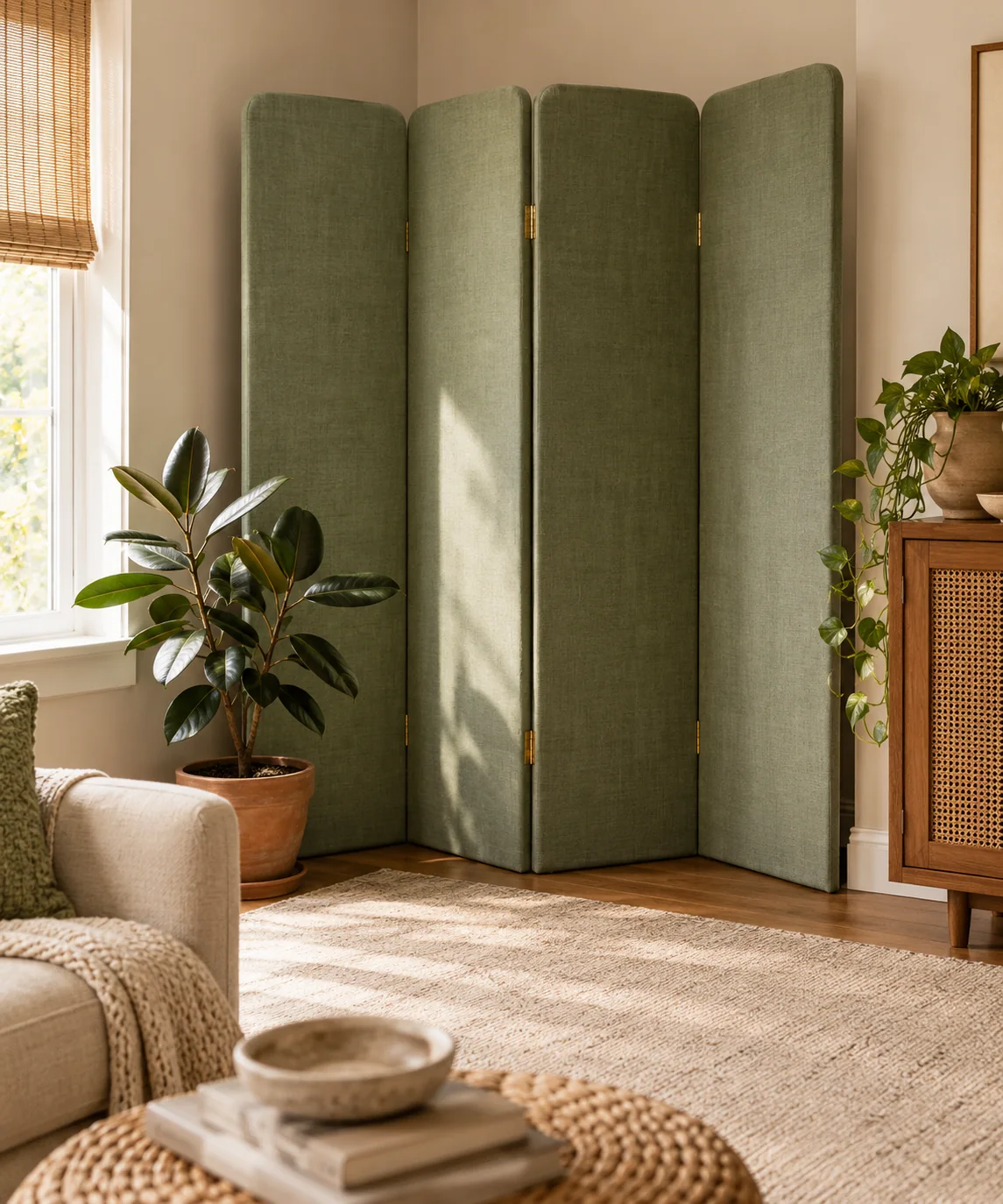
Measuring Width and Floor Trajectory
A folding screen requires an alternating zig-zag or accordion fold to stand upright without wall anchors. Extending panels completely flat eliminates structural stability and leads to tipping. Measure the width of the utility alcove opening and add approximately 25 to 30 percent additional screen width to account for the necessary panel angles. For example, a 120-centimeter opening typically requires approximately 150 to 160 centimeters of nominal partition width to span the gap securely. Before setting up the divider, check that the floor surface along the partition path is relatively level, as sudden shifts in height across thresholds can cause individual panels to twist or rock.
Ventilation, Code Clearances, and Safety
Screening household utilities requires strict adherence to manufacturer clearances and local building regulations. Appliances such as water heaters, clothes dryers, and dehumidifiers generate heat and rely on continuous airflow to operate safely. Rather than relying on arbitrary clearance estimates, consult each appliance manual for specific minimum distances from combustible materials like fabric screens. Crucially, electrical service panels generally require dedicated, unobstructed working clearances under local electrical codes—often at least 90 centimeters of completely clear space in front—and must never be concealed behind partitions. Avoid enclosing fuel-burning equipment where partition panels could restrict critical combustion air.
Fabric Choice and Practical Durability
Selecting dense, tightly woven textiles like canvas or upholstery-grade linen blends provides dependable visual opacity compared to thin decorative paper screens. Tightly woven fabrics resist punctures and snags from stored cleaning wands, ironing boards, or vacuum attachments kept behind the divider. Choosing double-sided upholstery wrapped over sturdy timber or metal frames ensures that both the interior utility zone and the surrounding living space present a tidy appearance. Where acoustic dampening is desirable, thicker woven fabrics help soften minor mechanical rattles, though they do not replace proper appliance maintenance or dedicated acoustic isolation.
Daily Access and Ergonomic Layout
Consider chore routines when planning the screen configuration so accessing everyday cleaning items remains practical. Arrange the panel folds so the section guarding high-frequency gear swings open smoothly on two-way hinges without requiring the entire screen to be shifted. Keeping the primary access panel easy to pivot allows one-handed retrieval of brooms or vacuums without dragging panel feet across hardwood floors or snagging area rug edges. If certain equipment is accessed multiple times daily, orienting the opening nearest the alcove wall edge minimizes repetitive screen adjustments and preserves floor stability.
Balance and Stability on Mixed Flooring
Freestanding partitions are sensitive to drafts and accidental knocks, especially in busy hallways or utility passages. When placing a screen across transition strips between tile and floorboards, compensate for uneven surfaces using dense adhesive felt pads of varying thicknesses or adjustable leveling glides under panel corners. Avoid hanging organizer pockets, caddies, or cleaning tools directly from the screen frame; off-center weight compromises the balance of freestanding hinges and substantially raises the risk of the partition toppling inward against stored equipment.
YOUR STARTING POINT
A little checklist.
Original editorial guidance. Images are AI-generated concepts, not photographs of completed projects. Our sources and approach.
Questions to consider
Can a folding screen be placed in front of an electrical breaker panel?
Electrical codes generally mandate a dedicated, clear working space (often 90 centimeters deep and 75 centimeters wide) in front of breaker panels at all times. Because screens obstruct direct line-of-sight and physical access during an electrical emergency, do not place partitions or furniture within this required clearance zone.
How can fabric screen panels be cleaned in a dusty utility corner?
Gently vacuum the fabric periodically using an upholstery brush attachment set on low suction to lift settled lint and dust. For spot cleaning, dab stains with a damp microfiber cloth and mild neutral detergent, testing a hidden area first to check for fabric discoloration or water rings.
How can pet owners prevent a folding partition from tipping over?
Enhance stability by deepening the accordion fold angle rather than opening the screen nearly flat. Positioning the partition ends firmly against adjoining structural walls or choosing screens equipped with broad, low-profile stabilizing foot bases also helps resist accidental bumps.