Container Vegetable Gardens · THE GUIDE
Concrete-Look Lightweight Trough for Culinary Kale
Culinary kale is a resilient cool-season crop, yet managing oversized stone containers on residential decks and patios presents practical handling and structural considerations. True stone and poured concrete planters introduce substantial permanent weight, making cleaning and seasonal repositioning cumbersome. Contemporary composite troughs made with fiber reinforcements provide a clean architectural appearance while offering manageable empty weights. Selecting an appropriately proportioned trough for Lacinato or curly kale allows gardeners to grow sturdy brassicas outdoors into cooler months. Careful attention to root depth, floor protection, drainage provisions, and local deck weight allowances ensures a productive leafy harvest throughout the autumn season.
Jump to the checklist ↓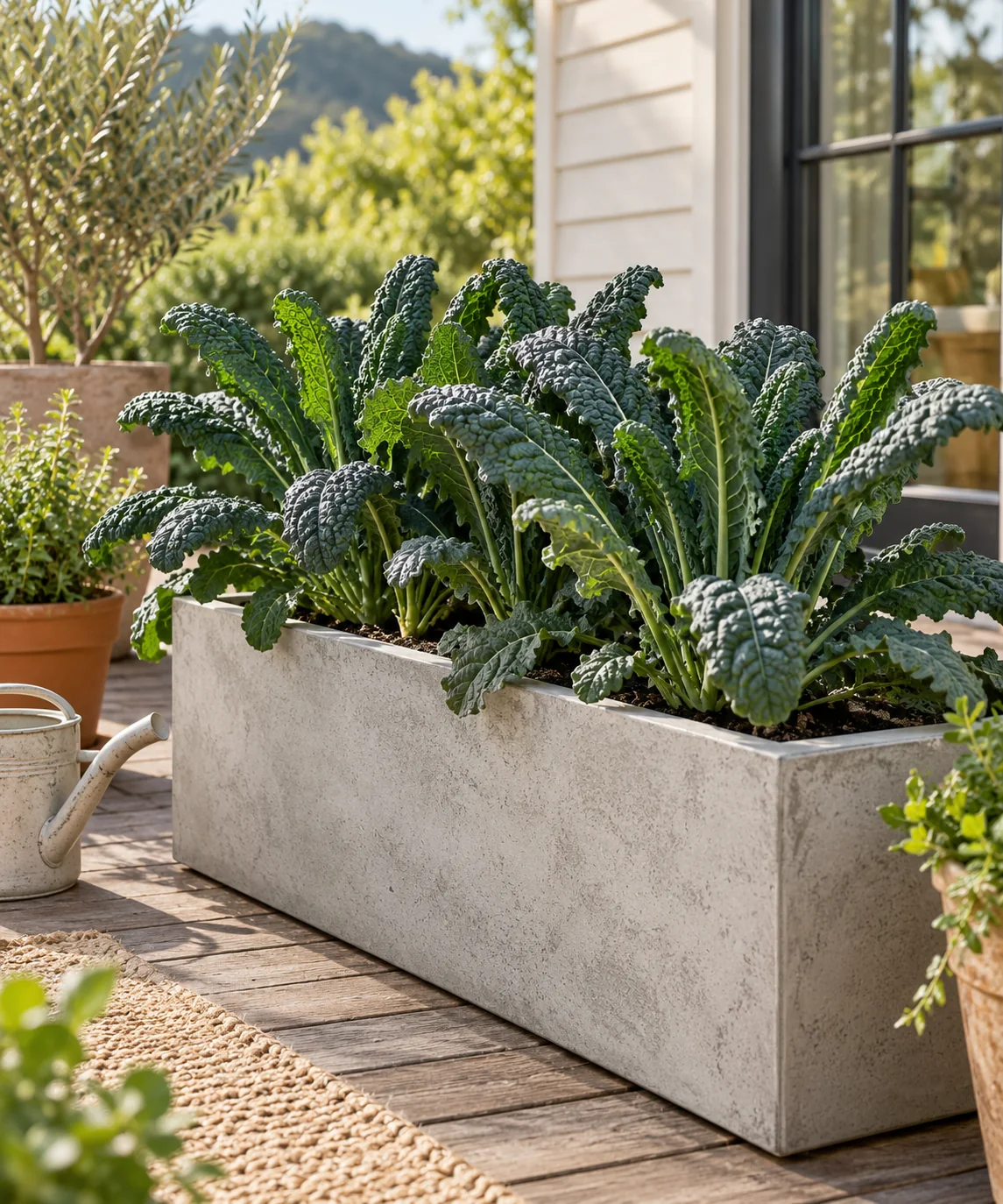
Composite Material Characteristics
Composite containers often blend crushed stone, mineral powders, fiberglass, and binding resins to emulate the appearance of cast masonry. While these vessels are generally lighter to handle when unpacked than solid concrete, their strength and longevity depend on wall thickness and reinforcement quality. When selecting a composite trough, examine the rim and interior surfaces for embedded mesh and uniform construction. Avoid flimsy containers that flex excessively under lateral hand pressure, as damp potting mix and mature kale foliage exert steady outward pressure against planter walls.
Root Volume for Brassica Crops
Culinary kales develop extensive root networks and sturdy central stems as foliage expands. A continuous trough should offer generous interior depth and width so roots can anchor securely and access consistent moisture. Restricting brassicas to shallow or cramped troughs causes rapid moisture depletion and slows leaf expansion during cool, breezy weather. Providing adequate spacing between plants allows each kale specimen to develop a healthy root zone without intense competition for water and dissolved nutrients.
Planter Placement and Safe Circulation
Even when starting with a composite vessel, the combined mass of wet growing media and mature plants becomes heavy once established. Place the empty planter in its intended location before filling it with potting mix. If periodic repositioning is necessary for maintenance or cleaning, set the empty trough on a heavy-duty rolling plant dolly rated for outdoor container weights. Arrange the container to leave generous, unobstructed walking space around doors, stairs, and main pathways to ensure clear transit during all seasons.
Substrate Balance and Container Stability
Because tall kale varieties develop broad foliage that catches seasonal gusts, containers need sufficient ballast to remain upright. Opt for balanced, well-aerated potting media formulated for outdoor edible containers rather than ultra-light indoor mixes. Avoid placing loose stones or gravel in the bottom of the container, as this reduces usable soil volume without improving drainage. Rely instead on an even distribution of moist, quality potting medium across the full depth of the trough to maintain a stable, low center of gravity.
Drainage and Surface Protection
Kale requires reliable drainage to prevent saturated conditions around root systems. Confirm that the planter comes equipped with functional factory drainage openings; if drainage features are absent, check manufacturer specifications before modifying the vessel to avoid cracking composite walls or voiding warranties. Elevate the container slightly using non-staining pot feet or risers to permit free drainage runoff and prevent trapped moisture beneath the base, helping to protect outdoor wood or composite decking.
YOUR STARTING POINT
A little checklist.
Original editorial guidance. Images are AI-generated concepts, not photographs of completed projects. Our sources and approach.
Questions to consider
How can I evaluate the durability of a faux-concrete planter?
Check product specifications for reinforced fiberglass or mineral composite construction. Look for solid corner construction, uniform wall thickness, and minimal flex when applying moderate pressure along the upper lip.
Can kale remain in a patio trough through cold weather?
Kale withstands moderate frost, but container soil cools more rapidly than ground soil. In regions experiencing sustained sub-freezing temperatures, consult local extension resources and consider moving portable planters to sheltered ground positions if temperatures drop sharply.
Do composite troughs crack when exposed to freeze-thaw cycles?
Quality resin and mineral composites tolerate temperature fluctuations better than brittle unglazed ceramics, provided excess water can exit freely. Keeping drainage passages clear prevents standing water from freezing, expanding, and causing structural fractures.