Rental-Friendly Decor · THE GUIDE
Consolidate Hobby Essentials on a Three-Tier Metal Utility Cart
Dedicated creative zones often demand more footprint than a rental layout comfortably permits. When dining tables double as craft stations or reading chairs serve as knitting nooks, loose materials quickly scatter across shared surfaces. A slender three-tier metal utility cart provides mobile, concentrated storage that keeps your ongoing projects accessible yet completely contained. Because the unit glides on casters, your tools remain right beside your workspace during active sessions, then smoothly roll into an unused closet alcove when company arrives. It is an adaptable, non-permanent organizing fixture tailored specifically for multipurpose living rooms.
Jump to the checklist ↓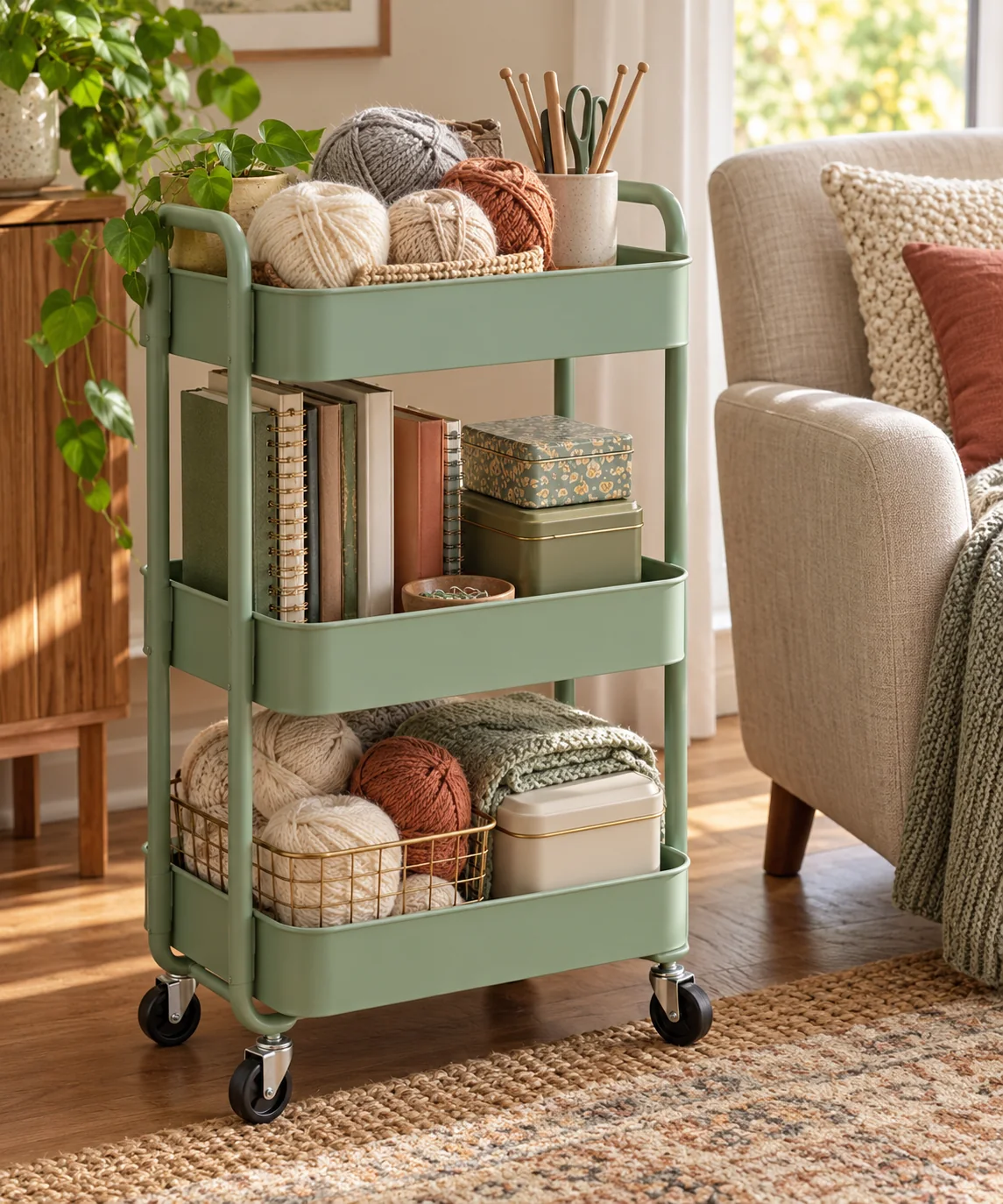
Vertical Sorting by Weight and Usage
Place your heaviest supplies on the lowest metal tray to help keep the cart balanced when wheeling between rooms. Middle baskets accommodate intermediate gear such as sketchpads, folded fabrics, or reference materials stored upright with bookends. Reserve the top tier for items requiring frequent reaching: shears, pencils, clips, and active thread spools. Organizing by weight distribution makes transit smoother while keeping your most-used creative tools visible and easily reachable without unnecessary bending.
Subdividing Tiers with Internal Organizers
Open wire or stamped metal baskets can cause slender notions to tip or slip through bottom perforations. Line each shelf with flexible shelf liners cut to size, then insert modular bins, shallow organizer trays, or clean repurposed tins. These smaller containers compartmentalize loose erasers, knitting stitch markers, and paint tubes into designated compartments. Grouping similar supplies in drop-in organizers prevents contents from sliding around the cart bed when rolling across floor transitions.
Rolling Clearance and Threshold Navigation
Before loading your cart with delicate items, check caster mobility across flooring transitions between your primary work area and storage locations. Small caster wheels roll easily across firm hardwood and low-pile rugs, but plush carpet requires deliberate, two-handed guidance. Inspect closet openings to confirm that the bottom clearance easily accommodates the caster base. Where floor thresholds or sliding door tracks create raised bumps, guide the cart slowly and squarely across the ridge to prevent items from shifting.
Closet Stowage Footprint and Door Swings
Utility cart dimensions vary by brand and model, so measure your specific unit alongside the destination storage closet. Check vertical clearance beneath hanging garment bags or low shelving to ensure the cart rolls inside without snagging clothes. Maintain sufficient clearance around the cart handle and sides so your hands can comfortably grip the unit without scraping door jambs. If storage depth is tight, orient the cart narrow-side forward alongside larger items like hampers or ironing boards.
Cleaning Maintenance and Load Boundaries
Wipe the powder-coated frame periodically with a soft, dry cloth to remove accumulated fiber lint, paper shavings, or studio dust. Avoid harsh chemical cleaners or abrasive scouring pads that might scratch the painted finish or promote corrosion around wheel hardware. Always consult the manufacturer's stated weight limit for your specific cart model and avoid overloading individual tiers, which can strain caster stems and bend metal supports. Clear lint and stray threads from caster axles regularly to keep wheels turning freely.
YOUR STARTING POINT
A little checklist.
Original editorial guidance. Images are AI-generated concepts, not photographs of completed projects. Our sources and approach.
Questions to consider
Can I push a fully loaded utility cart across thick carpet?
Thick carpet increases resistance on small casters, risking tipping if pushed too quickly. Grip the frame with two hands rather than the top rim, and distribute your heaviest items across the bottom tray to maintain balance.
How do I keep tall items like rulers and brushes from tipping over?
Place tall tools inside heavy ceramic mugs or weighted pencil cups placed in the top tier. Grouping several tall tools within a single rigid caddy prevents them from catching on door frames during transport.
What should I do if the cart casters squeak or stick?
Inspect the wheel axles for trapped hair, threads, or dust buildup. Carefully snip away caught fibers using embroidery scissors, then wipe the caster stems clean with a dry lint-free cloth to restore smooth, silent movement.