Compact Home Offices · THE GUIDE
Construct a Cork-Lined Micro-Booth Inside an Empty Pantry Cabinet
Deep utility cupboards, broom closets, and redundant kitchen pantry units offer space-saving potential for ultra-compact remote work nooks. While shallow shelving limits standard desk arrangements, an empty cabinet can accommodate a compact work ledge once adjustable shelves are removed. Lining the cabinet interior with natural cork panels helps soften interior sound reflections and flutter echoes while covering utilitarian cabinet walls. The cork also provides an accessible pin surface for reference notes, calendars, and checklists—all concealed behind closed doors at the end of the day.
Jump to the checklist ↓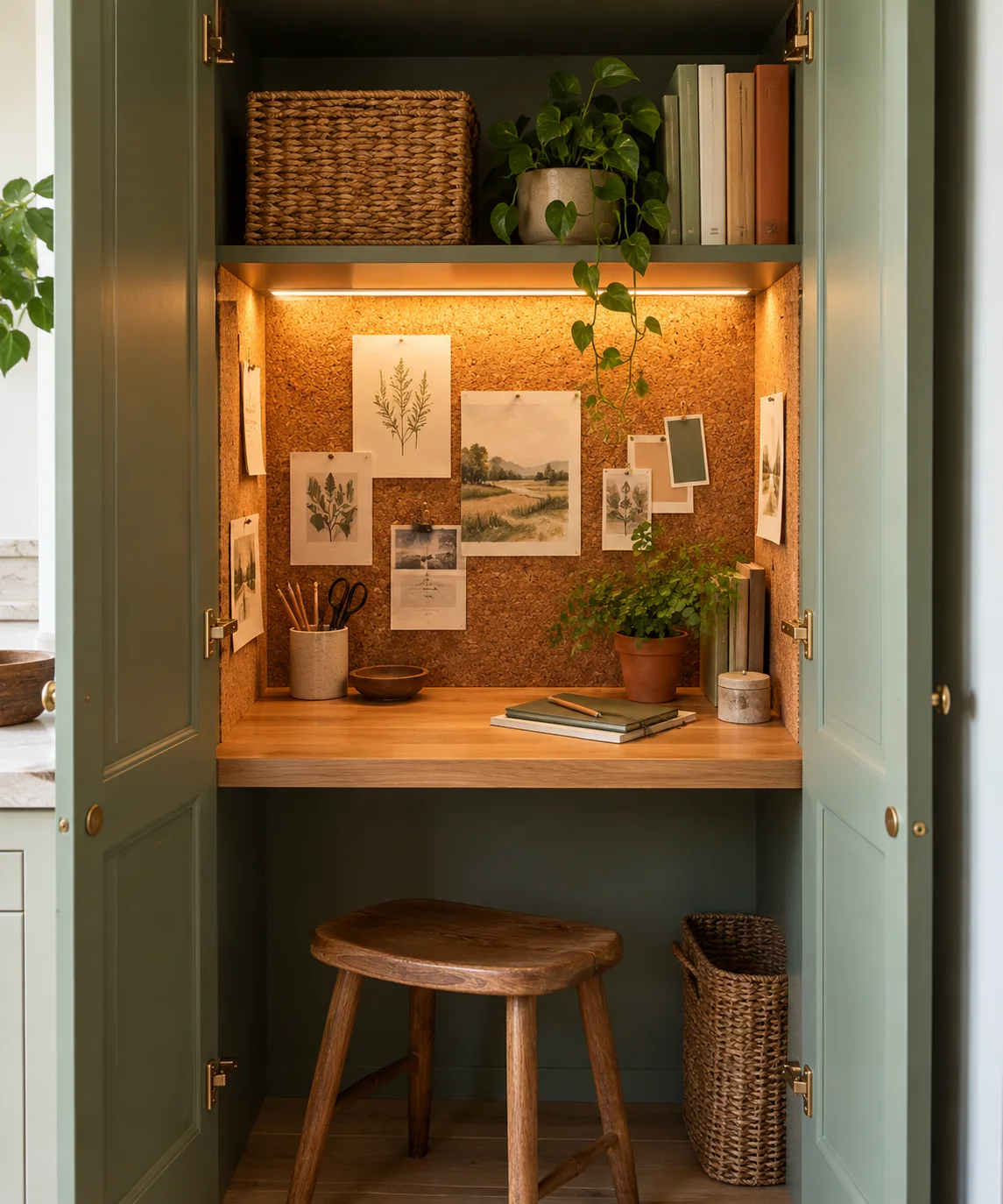
Assessing Cabinet Dimensions and Seating Clearances
Before removing shelves or planning a work surface, check the internal cabinet depth, width, and clear opening between door hinges. Working comfortably within a cabinet typically requires verifying whether your laptop and forearms fit without your elbows constantly colliding with the side panels. Test the height of your intended seat against the proposed work shelf to confirm adequate knee clearance. Ensure the cabinet door opening allows an office stool or chair to slide close enough for comfortable posture without catching on face frames, door catches, or hinge hardware.
Selecting and Handling Natural Cork Liners
Cork tiles or rolled cork sheets vary widely in density and thickness. Panels around six millimeters thick generally provide enough depth for standard pushpins without tearing, while thinner cork can crumble under repeated tacking. Before applying cork, unroll or unpack the material and let it acclimate flat in the room for at least twenty-four to forty-eight hours, weighting down corners if necessary. Use a sharp utility knife along a straightedge to cut edges cleanly, scoring gradually rather than forcing a single deep cut that might fray the edges.
Planning Reversible, Low-Tack Cabinet Mounting
In rental properties or high-quality cabinetry, permanent adhesives or aggressive contact cements can permanently ruin interior veneer or melamine finishes. Removable mounting tape, light hook-and-loop strips rated for clean removal, or mounting cork onto lightweight foam boards held by existing shelf-peg supports offer safer alternatives. Avoid forcing oversized boards into the frame, as tight pressure can bow thin cabinet backings or scrape side finishes. Ensure any tacks or pins used later do not pierce through the backing board into structural cabinet walls.
Managing Task Lighting and Interior Air Circulation
Enclosed utility cupboards offer no natural daylight and very limited passive airflow, which can cause heat from electronic devices to accumulate quickly. Add battery-operated or plug-in low-voltage LED task lighting to the underside of an upper shelf, opting for cool-running fixtures rather than halogen bulbs that generate heat and dry out cork. Keep cabinet doors fully extended open during work sessions to encourage ambient airflow, and position a compact personal fan nearby if the alcove feels stuffy or warm during long calls.
Routine Maintenance and Realistic Ergonomic Limits
Natural cork panels collect airborne dust over time, especially in enclosed spaces near kitchens or entryways. Lightly vacuum the surface every few months using a soft brush attachment, and spot-clean marks with a well-wrung cloth dampened in plain water. A converted pantry remains an ultra-compact, occasional workspace rather than an all-day ergonomic workstation. Tight vertical enclosures naturally restrict posture shifts and peripheral sightlines, so planning regular breaks away from the cupboard helps ease shoulder tension and eye strain.
YOUR STARTING POINT
A little checklist.
Original editorial guidance. Images are AI-generated concepts, not photographs of completed projects. Our sources and approach.
Questions to consider
Will cork panels block loud household noises during calls?
No. Cork panels soften internal echoes and vocal reflections inside the cabinet, which can improve microphone audio clarity. However, lightweight cabinet doors and thin cork layers will not block exterior household noise such as conversation, television audio, or kitchen appliances.
How should power cables be safely routed into a pantry workspace?
Route cords through existing cabinet grommets or pre-drilled shelf openings where available, or keep cabinet doors slightly open to avoid pinching cables. Avoid drilling into structural cabinetry or running wires where door hinges could crush or strip cord insulation.
What seating works best for an enclosed cabinet desk?
A compact armless chair, backless stool, or storage ottoman that fits easily between the cabinet doors works best. Verify that the seat height allows your knees to clear the lower edge of the counter comfortably.