Reading Corners · THE GUIDE
Construct a Hanging Book Ledge Beside a Low Lounge Seat
Low lounge seating creates an inviting, relaxed posture, but low chairs often leave adjacent floor space awkward or overcrowded if paired with wide traditional bookcases. In compact rooms, utilizing the vertical wall strip directly alongside the chair preserves walking lanes while organizing current reading materials. Front-facing display ledges project only three to four inches from the wall, presenting covers cleanly without intruding into side clearance. By planning vertical intervals tailored to your seated arm reach, you establish a functional private nook that keeps favorite volumes accessible, visually organized, and entirely off the floor surface.
Jump to the checklist ↓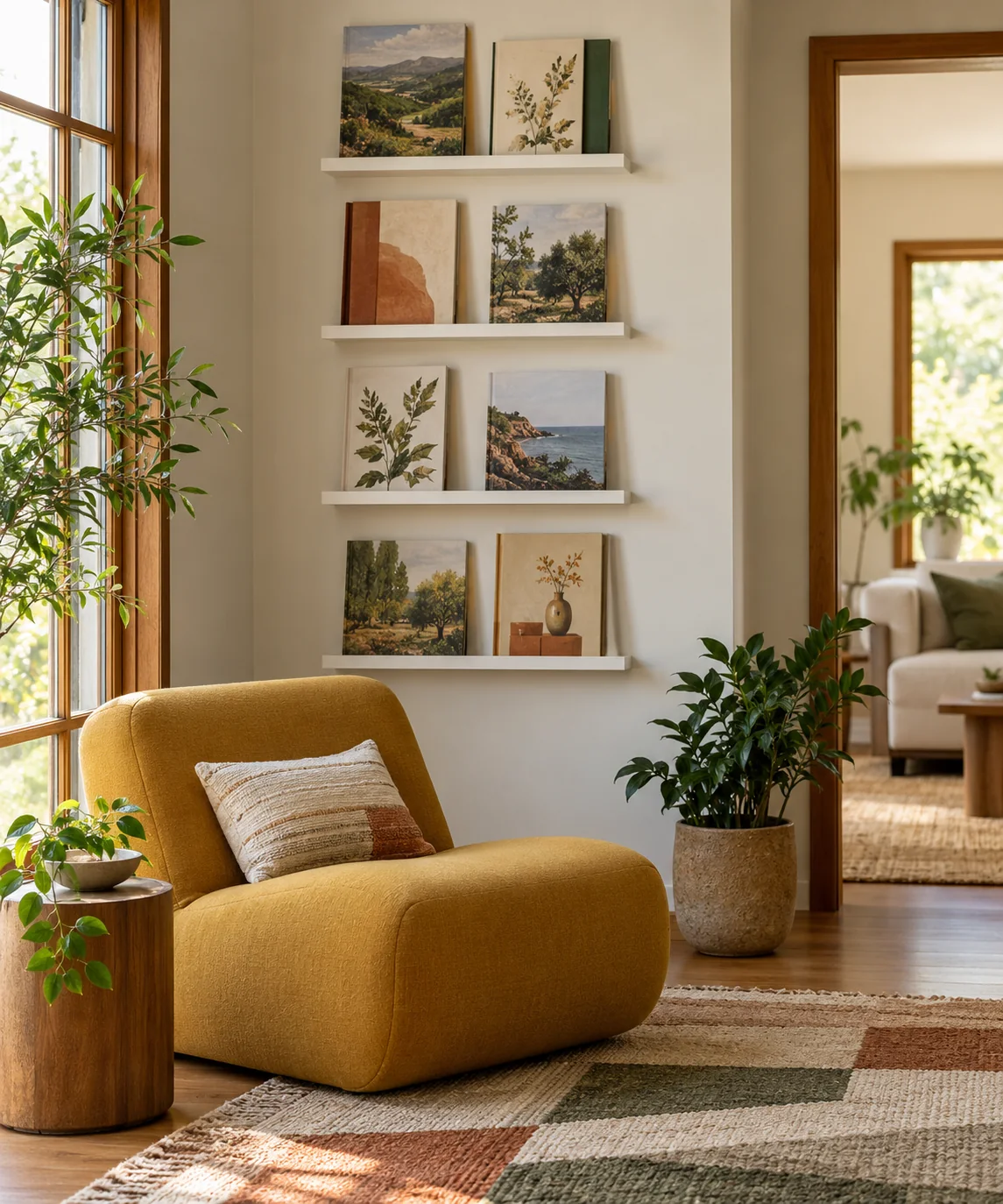
Planning Seated Ergonomics and Wall Clearances
Integrating a wall-mounted book display beside a low lounge chair requires careful attention to natural reach and movement corridors. Before drilling or mounting any rails, sit in the chair to assess your comfortable arm sweep and sightlines. The lowest ledge should allow you to lift books without straining or twisting uncomfortably, while higher tiers must remain clear of shoulders and head movement when leaning back. Using low-tack painter's tape to map prospective shelf positions helps you visualize the arrangement and test clearances in real-world use.
Selecting Ledge Profiles and Retaining Lips
Dedicated picture ledges and display rails differ from conventional floating shelves by featuring a raised front barrier that keeps leaning items from slipping forward. When selecting ledges, look for a channel depth adequate for the spine thickness of your intended books, along with a front lip high enough to retain cover bases securely. Verify that the ledge material—whether solid timber, extruded aluminum, or powder-coated steel—matches the manufacturer's intended purpose and provides a rigid, level resting surface.
Adhering to Manufacturer Weight Limits and Wall Anchors
Display ledges hold books face-out, which naturally restricts total storage volume compared to deep book cases. Always consult the manufacturer's specified weight limits and installation instructions rather than estimating capacity by eye. Secure brackets directly into wall framing studs wherever possible; if mounting into drywall or masonry, use anchors specifically rated for the expected combined weight of the shelf and contents. Distribute weight evenly along the ledge and avoid stacking books multiple layers deep, which can exert outward leverage on fasteners.
Balancing Reading Illumination and Surface Glare
Positioning lighting near a wall display requires balancing legible page illumination with reflective glare. High-gloss dust jackets and glossy page finishes can reflect harsh highlights if a light source is directed straight at the wall. A dedicated floor lamp with an adjustable shade or directional reading beam placed beside or slightly behind the chair directs light onto your reading plane while keeping the adjacent wall display comfortably subdued.
Rotating Display Volumes and Shelf Maintenance
Because shallow display ledges accommodate a modest selection of titles, they function best as an active queue for current reading rather than dense archival storage. Rotating featured titles periodically keeps the display visually engaging and prevents individual shelves from becoming overloaded over time. During book rotations, dust the channel surfaces with a dry microfiber duster to prevent particulate buildup. Avoid applying wet cleaning sprays directly onto shelves while books are in place to safeguard paper edges from moisture exposure.
YOUR STARTING POINT
A little checklist.
Original editorial guidance. Images are AI-generated concepts, not photographs of completed projects. Our sources and approach.
Questions to consider
How should the weight capacity of a hanging book ledge be determined?
Always rely on the manufacturer's published load ratings rather than visual estimates. Verify that the mounting hardware and wall anchors used are rated for both the shelf's weight and the books you intend to display.
How much buffer space is recommended between the chair and wall ledges?
Allow enough space so that you can sit down, recline, and stand up without bumping shoulders or elbows against the shelves. Testing the distance while seated helps establish a comfortable clearance for your specific chair.
Why are picture ledges preferred over flat floating shelves for face-out book display?
Picture ledges incorporate a front retaining lip that prevents upright or leaning books from sliding off the edge, whereas flat floating shelves offer no barrier against forward movement when books are jostled.